Sabrina the Good Little Witch

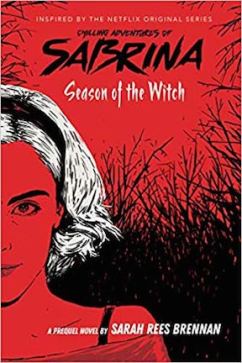
SabrinaSeasonWitchIn Season of the Witch, Sabrina Spellman was only 15 years old. She hadn’t experienced her dark baptism, she hadn’t signed her name in the Dark Lord’s book of souls, and she wasn’t enrolled at the Academy of Unseen Arts. She didn’t possess a grimoire—she didn’t even have a black cat named Salem yet.

At this point, Sabrina wasn’t much of a witch. She came from a long line of spellcasters, however; and her father was a highly respected and powerful warlock. Said her cousin Ambrose: “You’re such a good girl. Sometimes I wonder how you’re ever going to make a wicked witch.”

Despite her pedigree, Sabrina was never going to be wholly wicked. Her mother, after all, was lovingly mortal. Unlike her pernicious cousin, she had a sunny and indefatigable disposition. She hoped that she would survive her upcoming dark baptism and be a light in the darkness. To her, magic was a way to make the world a better place.

That was the conflict roiling inside Sabrina. On her sixteenth birthday she would have to make a decision—would she give her soul to Satan or renounce the Church of Night altogether? “I wanted to do both,” she confessed. “I felt like I was being pulled in two different directions, and nobody cared that I would be torn in half.”

The main reason for Sabrina’s indecision was her boyfriend Harvey Kinkle. The two met in kindergarten and now as teenagers they couldn’t keep their hands off each other. “I’ve loved Harvey my whole life, and I’ve had a crush on him almost as long,” said Sabrina. “He was my first kiss, and I’ve never wanted another.” When Harvey and Sabrina went on their first date, their chemistry was electric. “That’s how witches burn,” wrote author Sarah Rees Brennan.

Season of the Witch takes place during the summer before the Sabrina Netflix series begins. It’s a fun prequel filled with lots of “Hail Satan!” interjections, quotable Latin incantations and gloriously over-the-top similes such as “The moon shone behind you like a crown of bone, and the night streamed behind you like a cloak of shadows.” Overall, it’s probably the best Sabrina novel you’ll ever read.

The book features alternating chapters that focus on the main cast. It’s on these white-on-black pages that author Brennan really shines. The chapter about Harvey’s older brother, in particular, is especially strong. Like Sabrina, Tommy Kinkle had an all-consuming love for Harvey. But unlike Sabrina, he paid dearly for his devotion. His story will break your heart.

[Chilling Adventures of Sabrina: Season of the Witch / By Sarah Rees Brennan / First Printing: July 2019 / ISBN: 9781338326048]

A Slimy Sequel

SpawnSlimeBeastThe Wash was a vast area of mud, quicksand and dangerous tides. Although beautiful from a distance, especially during the summer when the sun sparkled in the morning mist, it was unquestionably Britain’s most inhospitable location.
But love blooms even in the most unlikely places. Just ask Gavin and Liz Royle. Back in 1975, the two young academics fell in love while on a treasure hunt in the treacherous marshland. They never found their hidden booty but they found each other.

They also found the Slime Beast, a reptilian-like swamp creature that slurped human viscera like Nissin Top Ramen. Yum! After a series of grisly murders (and lurid subplots), the gill-man was vanquished in a fiery showdown (see my review of The Slime Beast for more details). Gavin and Liz returned to London, got married, started a family and lived happily ever after. The end.

Now on their 40th wedding anniversary, the couple inexplicably returns to the Wash. Liz thinks it’ll be romantic. Gavin, on the other hand, thinks his wife is daft. Why couldn’t they spend a nice relaxing weekend in Cornwall or Devon or some other sunny vacation spot? Why did they have to return to a place where monsters dwell?

Naturally, things get messy right away. And stinky too. “An overpowering, suffocating smell assailed (Gavin’s) nostrils. Not human excrement or urine, something a thousand times worse. It was the scent of the Slime Beast, a fetid odour incorporating everything that was vile and evil, a putrescence unknown to mankind.”

Gavin knows immediately that another Slime Beast is on the prowl. In tow with a reluctant wildfowling guide, and armed with a satchel of ineffective weapons, he vows to slay the “slime-oozing Satan.” There’s no time for preparation or strategy, the novel is only 111-pages long. Conflict and resolution occur swiftly, and Gavin knows he’s got to hurry before the final chapter arrives.

Fans of the first Guy N. Smith adventure will undoubtedly be interested in this sequel. I definitely was. But honestly, there’s no space for a second (or third) Slime Beast novel on my bookshelf. One is enough. Despite a couple of delightfully horrid moments (and a funny bit about giant crabs), the author doesn’t have anything particularly new or substantive to say. The spawn is no different than the progenitor.

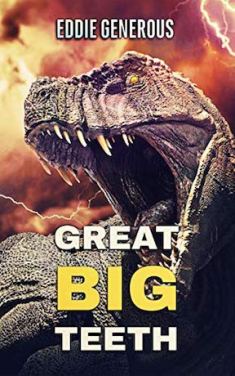
[Spawn of the Slime Beast / By Guy N. Smith / First Printing: June 2015 / ISBN: 9781907846878]

Journey to the Center of the Underground Inbreeders

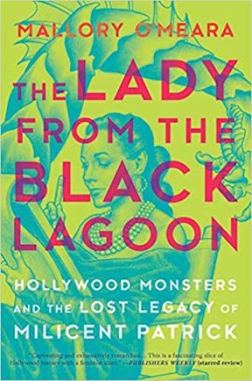
GreatBigTeethIn 1977, a pregnant hippie on a nine-day bender fell down a hole and discovered her version of Pellucidar—a hollowed out, underground chamber filled with dinosaurs. It was an Edgar Rice Burroughs, Jules Verne and Mysterious Island nightmare. Said the author: “Jane Hartman was stuck in an anomaly that spanned several million years, possibly one hundred million years. Hell, maybe longer.”
She survived her slippery slide to Middle Earth and eventually gave birth to a son named Doobie. And just like an inbred version of Adam and Eve, Jane and her son conjoined to create a new Garden of Eden. A couple of generations passed and Jane became the revered matriarch of a tribe of cave dwellers in their own private savage land.

Dinosaurs in the Garden of Eden: For most people (including Young-Earth Creationists) that would be enough. For author Eddie Generous, however, that was just a two-page setup. The real action began when an earthquake dropped the mountainside community of Happy Village into the infernal abyss (half a century after Jane went down the rabbit hole btw). That’s when the novel explodes in a time warp of improbable anachronistic weirdness, sexual misadventure and great big teeth.

First there’s Stevie Drew, a high school junior, who was “the wrong side of the tracks incarnate.” Despite the ever-present dino danger, he couldn’t escape his teenage libido. “He needed to focus on his situation,” wrote the author, “and not worry about how nice Emily’s ass felt against his crotch.”

And secondly there’s David Bowie Bowtie, a Kamandi-like hero who killed chicken-snakes (Velociraptors) and wrassled tank-pigs (Nodosaurs). Even though his gene pool was as shallow as a toilet bowl, he was a noble savage who helped the newcomers navigate the treacherous prehistoric chasm. I’m sure Jack Kirby would enjoy this wonky version of the Last Boy on Earth.

But the best thing about this novel was sweet Jane Hartman herself. Even though she’d been living in a cave for 50 years, she couldn’t escape the influence of the swingin’ 70s. All of her kids had ginchy names like Sonny Bono, Sunshine Nicks and Shroomshine, and her taste in music never progressed beyond Peter Frampton, David Bowie and the Bee Gees. No punk, rap, speed metal or BTS for her.

Jane had been out of circulation for a while and her fuzzy logic was unendingly funny. At some point she discovered an underground Batcave connected to the surface world. Filled with snacks, booze, sex toys, ammo and DVDs (and maybe a giant penny and an over-sized Joker playing card), the bunker gave Jane a glimpse into how the world had changed in her absence. It became obvious to her—after finding a life-sized sex doll that looked like Linda Hamilton, circa 1984 (“Not yet tough, but with a lot of potential,” according to the author)—that people now fucked animatronic robots. Being a groovy chick with no sexual hang-ups whatsoever, Jane starts sleeping with the doll right away.

And later, after spending some time in the “Great Viewing Room” she figured out a way to keep her tribe safe from all the toothy dinosaurs, “thunderdome housecats” and meddling interlopers. “Watch and learn,” she told her kids as she popped a disc into the DVD player. They huddled together in the dark to watch a movie called Home Alone. Taking inspiration from a young Macaulay Culkin, they started making plans for the future.

[Great Big Teeth / By Eddie Generous / First Printing: February 2019 / ISBN: 9781925840568]

She-Creature from the Black Lagoon

LadyBlackLagoon“Women have always been the most important part of monster movies,” says author Mallory O’Meara, “because women are the ones horror happens to. Women have to endure it, fight it and survive it.”

But there’s not a wide range of female representation on screen. In the horror biz, women are either scream queens, warty, unfuckable witches or oversexed busty vampires.

Says O’Meara: “Monster stories are powerful. They explore prejudice, rejection, anger and every imaginable negative aspect of living in society. However, only half of society is reflected in the ranks of the people who create these monsters. Almost every single iconic monster in film is male and was designed by a man: the Wolfman, Frankenstein, Dracula and King Kong”—the list goes on and on.

There is one notable exception, however. Back in 1953, a special effects and makeup designer named Milicent Patrick was tapped to create a Devonian-inspired hybrid creature for an upcoming movie from Universal Pictures. To this day, Patrick’s iconic design for the Creature from the Black Lagoon remains one of the best-known and well-loved cinematic monsters of all time.

But Patrick didn’t appear out of thin air like a genie from a bottle. She’d been working in Hollywood for 15 years by then and her resume was pretty impressive. Before designing the Creature (or “Creech” as he was affectionately called on set), she attended the same prestigious art school as Mary Blair and Chuck Jones. As an animator at Disney she worked on both Fantasia and Dumbo. And at Universal she created the Xenomorph from It Came from Outer Space. She was smart and ambitious and easily made her mark in a male-dominated industry. “She didn’t have superpowers or a magic wand,” states O’Meara. “She was simply intelligent and savvy and good at what she did.”

Unfortunately, Patrick’s Hollywood legacy was unraveled by pettiness, jealousy and a big jolt of Hollywood sexism. To promote the upcoming release of Creature from the Black Lagoon, she was booked on a multi-city publicity tour. By all accounts, the cross-country trek was a smash success. Patrick was a beautiful woman who was quick witted and comfortable in front of the camera. She also had a 41-inch bustline and jiggled like a plate of jelly when she walked into a room. One magazine described her as “a statuesque beauty abundantly endowed by nature to take advantage of Hollywood’s wide-screen techniques.” Yikes! Reporters were curious about the movie and exorbitantly interested in Patrick herself.

All this attention (lascivious and otherwise) irked her boss back in California. As the head of the makeup department at Universal Studios, Bud Westmore was accustomed to taking credit for anything under his purview. Even though he had nothing to do with the Creature’s design, he felt like he deserved the media acclaim Patrick was getting. Being upstaged by one of his underlings—a woman no less!—was a big blow to his ego. As a result, Patrick (the beauty behind the beast) was cut loose to appease Westmore. She remained a part of the Hollywood community for the rest of her life, but she never worked again in her preferred profession. She died in anonymity in 1988.

But hold on a sec. Author Mallory O’Meara has written a highly personal history of the queen of monsters. The Lady from the Black Lagoon: Hollywood Monsters and the Lost Legacy of Milicent Patrick shines a light on Patrick’s career, clarifies her contributions to the Creature from the Black Lagoon (and other monster movies) and firmly establishes her place in film history. The book is chatty and nuanced and never wavers from O’Meara’s strong point of view.

Milicent Patrick’s rise, fall and disappearance behind-the-scenes in Hollywood is a fascinating story. To this day, she’s the only woman to have designed an iconic movie monster for a major studio—and you have to admit: the Creature is the coolest of them all. “She should have been hailed as a hero,” says O’Meara in conclusion. “She’s not just the queen of monsters, she’s the goddamn Joan of Arc.”

[The Lady from the Black Lagoon: Hollywood Monsters and the Lost Legacy of Milicent Patrick / By Mallory O’Meara / First Printing: March 2019 / ISBN: 9781335937803]