Monsters don’t care if you believe in them or not, said a local rummy. “You gotta put your faith in something, even if you can’t see it. Believe me, the Nietzsche Anathema is fucking real.”
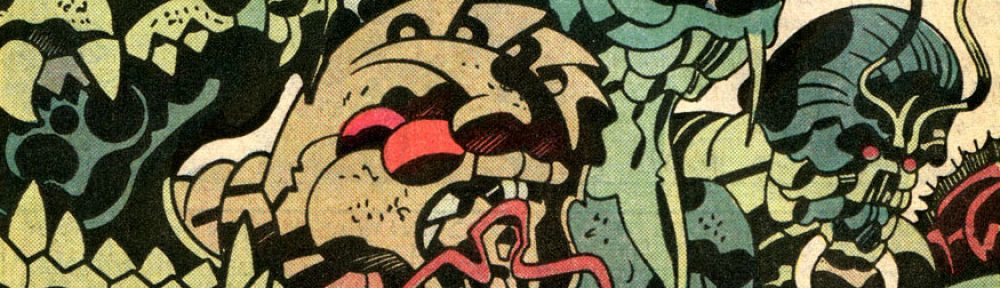
Nietzsche Anathema was a fancy name for a monster supposedly living in the local man-made lake. According to a dusty old book about Maine folklore, the creature was tall like Bigfoot. Plus: it’s hands were webbed and its eyes were as black and cold as a shark.
Frankly, it all sounded like a bizarre horror-science fiction mashup. No one literally believed in the far-fetched tales of monsters and deformed fish with missing eyes and a taste for the flesh of children.
The scariest thing in the forest was actually Francis Owens, a Vietnam War veteran with post-traumatic stress disorder. He was the caretaker for Owens Lake and he roamed the area with ill-intent. Francis was a madman—not the creature from the Augusta lagoon—but he knowingly manipulated the Nietzsche Anathema legend for his own benefit.
Author Glenn Rolfe begins his novelette with the murder of Francis Owens’ brother. The death eventually attracts the attention of a detective named Bruce Maddox and includes a confluence of characters including Quincy, a truant who enjoyed hanging out in the woods, and a runaway orphan from New Hampshire named Leilani.
After all these years in seclusion, the Nietzsche Anathema finally comes out of hiding. It couldn’t resist all the sudden commotion in the forrest. Here’s how the author describes first contact with the monster: “Even hunched over, it looked to be at least seven feet tall. Its slender torso was slightly twisted and covered in thick, black scales. The long legs ended in flippers. Its hands were webbed and its head was dark with wet clumps of hair hanging like seaweed braids from its scalp. The face featured a half-formed human nose that gave way to an awful teardrop-shaped orifice.”
It was the “teardrop-shaped orifice” that made the creature uniquely creepy and deadly. It would latch onto your mouth and fill your body with lake sludge and unknown toxins. One victim “felt as though someone were violently attempting to crack the front of his skull open with Thor’s mighty hammer.”
It Came From the Lake ends like all great creature feature stories, id est the author makes sure to leave the door open for a sequel. To quote the monster’s namesake Friedrich Nietzsche: “Whoever fights monsters should see to it that in the process he does not become a monster.”
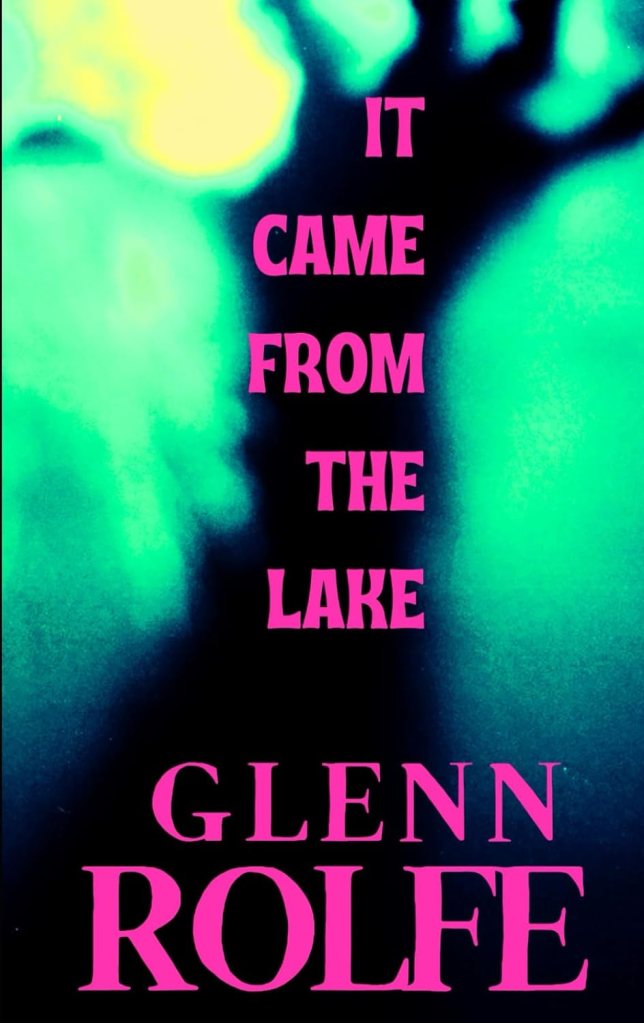
[ It Came From the Lake / By Glenn Rolfe / First Printing: January 2024 / ISBN: 9798876518064 ]
 Monster Book Club