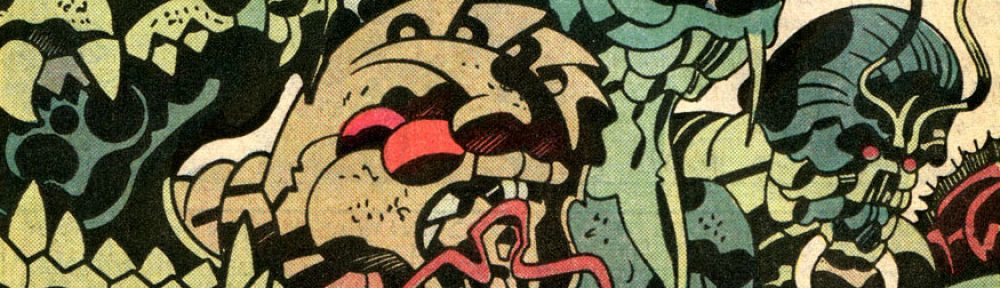
 Readers don’t have to wait long for the killer kangaroo to show up in Alan Baxter’s latest novelette. The Australian buck begins its blitzkrieg hop right away on page two: “The roo’s mouth closed over its victim’s neck,” writes Baxter. “The flesh peeled up and away with a wet tear.”
Yes, there’s a ferocious kangaroo bedeviling a small town in the Aussie outback. But why is it so bloodthirsty and violent (and where the heck did its sharp teeth come from)? Normally these grass- and shrub-grazing animals are harmless and pastoral “like upright deer,” says the author.
The explanation dutifully comes during the final chapter, but observant readers who can identify the book’s outside/inside story will probably figure everything out pretty quickly. Or, if not, they can simply read the author’s Forward and Afterword. That’ll do the trick.
Only 400 people live in Morgan Creek (a town described as a “human blemish on the pristine outback”). Most of the local men are layabouts and wife beaters—the worst of the bunch is old Bill Catter. He’s so bad, his wife Pauline prefers to sleep in an abandoned goldmine at night rather than in her own bed. “No one likes that shit cunt,” says one neighbor. “We should have run him out of town years ago.”
And now Morgan Creek’s got a rampaging roo to worry about. Over seven feet tall and insanely jacked, the animal could be seen in the moonlight flexing its muscles like a parody of Mr. Universe.
Just because it looked like a kangaroo, however, didn’t mean it actually was a kangaroo. In truth, it could be anything. Up close its fur had a musky and dusty odor, says Baxter, like something spicy and smoky. Like something brought forth from the fiery pits of Hell, perhaps?
After decapitating, eviscerating and dismembering a handful of unlucky residents (it’s all good fun btw), the monster is eventually trapped in the town’s abandoned goldmine. This is when Bill Catter, his wife Pauline and the roo have their final showdown. Spoiler alert: the last paragraph provides a #MeToo kick in the pants. I think the men of Morgan Creek are about to get hammered.
In his foreword, author Baxter freely admits that he shamelessly wrote The Roo to be as ocker as the outback. The word “ocker” is slang for “aggressively boorish in a stereotypically Australian manner.” That’s a great way to sum up this book. Mission accomplished, mate.
[The Roo / By Alan Baxter / First Printing: March 2020 / ISBN: 9780980578263]
 There’s no question about it. Wolverine is a tough nut to crack. In this book alone, for example, he’s pumped full of lead, burned alive, fed to sharks, attacked by ninja and blown to pieces. Later, he jumps out of an airplane without a parachute. Twice. “It will only slow me down,” he says.
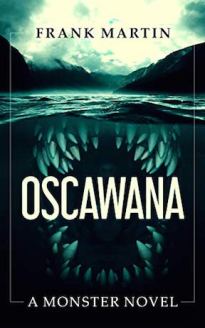 There are many things I hate (Starburst candy for one, cow’s milk for another). But specific to this site, I especially hate authors who write monster novels and don’t fully commit to the genre.
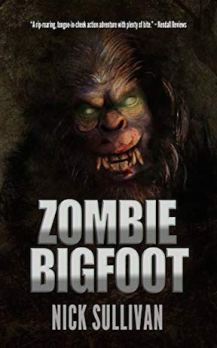 Russ Cloud was a wildlife expert and the star of a reality program called Survivor Guy. But over the years a lot of copycats had chipped away at his show’s popularity—shows like Man vs. Nature, The Naked Survivalist and The Mormon Family Robinson.
 According to editor Christofer Nigro’s introduction, the inspiration for this 2019 short story collection goes all the way back to 1965. That was the year Creepy #7 appeared on newsstands.
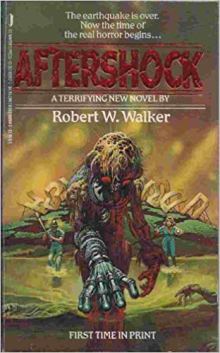 Aftershock starts on the day Los Angeles is smacked by the biggest earthquake in recorded history. The initial tremor began “like a deeply released, contented sigh from a lover in warm slumber,” and quickly escalates to a 9.4 on the Richter magnitude scale.
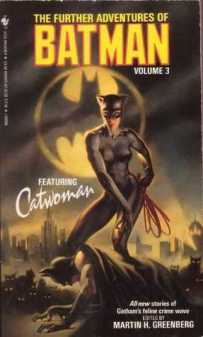 At night, Gotham City belongs to Batman. But it doesn’t belong to him alone. Somewhere in the shadows lurks a stray cat yowling in fury and endless desire.
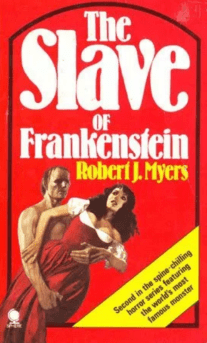 The Slave of Frankenstein takes place two years before the start of the U.S. Civil War. It’s 1859 and the focus of the entire nation is concentrated on Harpers Ferry and the forthcoming hanging of abolitionist John Brown. “Our universe is suspended somewhere between Heaven and Hell,” says a concerned patriot.
 Back in 1961, President John F. Kennedy pulled the plug on a proposal to invade Cuba with a cast of giant crabs. It was Eisenhower’s crazy idea and JFK hated it. The newly elected president didn’t want anything to do with his predecessor’s cockamamie science fiction plan.
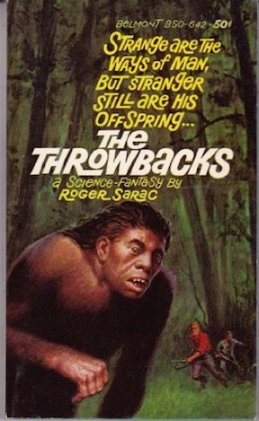 Roger Sarac never explicitly gives a name to the shaggy humanoid beast at the heart of his novel. “It’s like a bear, and yet it ain’t,” he writes. “It’s sort of manlike, yet it ain’t. It’s just a thing without a proper name.”
