Monsters Are People Too

When I was a kid there was a place in my bedroom dedicated to monsters. Admittedly there wasn’t much to it—a small stack of Famous Monsters of Filmland mags, a Frankenstein movie poster, a Godzilla model kit and a Creeple Peeple Thingmaker—but it certainly stoked my imagination in ways superheroes, Hot Wheels and basketball trading cards never did. 

My meager collection of monster gewgaws also made me a little bit sad. I would daydream endlessly about living in a world filled with reanimated mummies, human flies, howling wolf men, walking skeletons and giant tarantulas. I desperately wanted monsters to be real. 

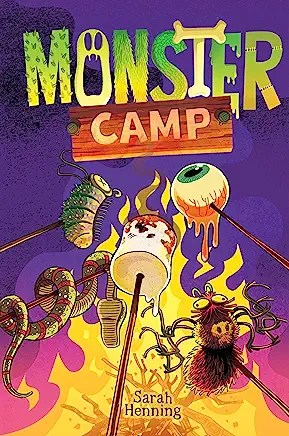
In this way, I was a lot like the 11-year-old protagonist in Monster Camp, the latest novel by Sarah Henning. Sylvie Shaw pined for a world with monsters, for fangs and claws and spectral apparitions and for magic spells and beasts in the woods and full-moon shapeshifting.

The middle schooler loved monsters so much she dressed willfully like a vampire every single day. She looked a bit like Vampirina, but her classmates mockingly called her Draculette. Even after school, she continued her undead roleplaying.  

Naturally her dad was a little worried about her. “You need to get used to life as a boring old human,” he said. “The sooner you come to terms with the fact that you’re not a vampire, no matter how much you pretend to be, the better your actual life will get.”

Without her father’s consent, Sylvie enrolled in a nearby summer camp for monsters. There were only two rules at Monster Camp: be kind and be yourself. Sylvie would be free to be as monstrous as she wanted to be as long as she wasn’t monstrous to anyone else.

But Monster Camp presented a problem for “Sylvie the Vampire.” Like all preteens, she wrestled with identity issues. In her mind, she was a human and a monster. How could she be herself when she didn’t even know what that meant? 

Everyone at camp was friendly—even the ones with fangs. To Sylvie’s delight she was surrounded by a variety of spooky creatures including werewolves, witches and ghosts. Also in this Brothers Grimm utopia was a kelpie, a goblin, an invisible boy and a half-vampire-half-human girl. The Loch Ness monster was also at Monster Camp and living happily in a nearby river. Nessie relocated to the United States because tourists in Scotland were giving her panic attacks. 

Spending a week at Monster Camp brought out the real Sylvie—in the worst possible way. Despite her sympathies for monsters, she couldn’t escape her humanness. She was willing to lie and cheat to get the things she wanted: friends, popularity and privilege. 

It was easy to forgive Sylvie because she wasn’t a mean girl in any way. She was actually pretty likable. She was simply young, insecure and trapped in an awkward situation. For her, Monster Camp was the first tentative step along a path of self-awareness. Monsters were people too she discovered in the most literal way possible. 

[Monster Camp / By Sarah Henning / First Printing: May 2023 / ISBN: 9781665930055]

Killer Zombie Mermaids

Not every story about human-like amphibians is meant to be an homage to the Creature from the Black Lagoon (Abe Sapien, for example. Or maybe Kermit the Frog). Still, it’s always nice to see a nod to the legendary Universal monster when the opportunity presents itself. 

Here’s how author Graeme Reynolds describes the lair for his gnarly water creatures: “The tunnel begins to open up until it becomes a vast cavern, lit by green and glowing fungi. On the far side of the cave, a small waterfall spills out into a large, black lagoon.”

The inhabitants of this black lagoon aren’t lonely gill-men pining for a sexy scientist named Kay Lawrence (R.I.P. Julie Adams). They are the female progeny of an ancient witch—“a woman of the water, like the mer-folk and the sirens.” For thousands of years Jenny Greenteeth and her 28 water-hags have been killing, dismembering and eating people in the lakes and rivers of North West England, from Preston to Liverpool. 

A spat of recent water-related deaths attracts the attention of Samantha Ashlyn, an investigative reporter for a small-time news website. Almost immediately she sees the “horrific parodies of women” in action and knows what needs to be done. She vows to kill the fucking she-creatures once and for all.

But there’s a lot to accomplish before Samantha finds her way down to the black lagoon. First and foremost, she needs to untangle a multi-generational mystery that includes her dead parents, her uncle, her children and even her best friend. It all leads to a shocking resolution that changes Samantha’s life forever. 

Ol’ Jenny Greenteeth is a monster, that’s for sure, but her priscine handmaidens are a pitiful crew. When they attack their victims, they do so with a shocking sexual intensity. There’s a reason this novel is called Dark and Lonely Water. The killer mermaids are trapped in an eternal cycle of servitude, loneliness and depravity.

Readers will figure out pretty quickly that Samantha’s uncle is entangled in Greenteeth’s centuries-long curse. Not only did he willingly enable her spirit to exist, but he also doomed all future generations to a watery anti-life. “The goddess comes before all,” he tells his niece. “She is our family and this is our destiny, our holy charge and our legacy.”

Samantha, as you might guess, doesn’t agree with her nutty uncle. “Screw you,” she tells him. “You’re just another fucking prick destroying women’s lives. You think this is some sort of blessing? It isn’t. It’s the worst thing in the world.”

[Dark and Lonely Water / By Graeme Reynolds / First Printing: February 2023 / ISBN: 9781957133279]

Shit Happens

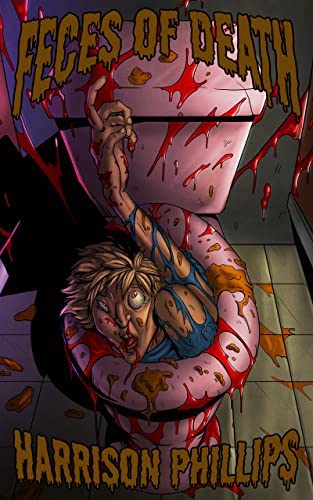
Author Harrison Phillips admits upfront that his latest novel Feces of Death is based on true events. What does that mean exactly, I wonder? Was Phillips a plumber at one time? A wastewater treatment operator? A trash collector? Maybe he was a dung beetle in a former life?

Whatever the case may be, it’s obvious that Phillips knows his shit. There are endless descriptions of animatum excrementa throughout the book, and most of these descriptions are gleefully rendered. Be forewarned: At some point you may think to yourself “Why am I sitting here on my comfy couch, drinking milk thistle tea, listening to lo-fi beats and reading a book about shit?” It’s a fair question, I have to admit. 

Here’s how the author describes his monster fecal fatberg for the very first time: It was slimy and sticky, a mottled green, black and brown mound. An awful smell emanated from it—like a rancid concoction of dried vomit and decomposing waste.“It was like a mountain of shit,” explains Phillips, “shimmering in the darkness.” 

But it gets worse … waaaay worse. If you’re thinking about reading this book you better batten down the hatches and get ready for an avalanche of rampaging, sentient shit. For example: “The thing down in the toilet sprang forth from the water and entered John, squeezing itself into his anus. A terrible burning sensation exploded from his rectum, as if he’d just been given a gasoline enema, and a lit match had been inserted into his sphincter.” 

The novel begins like all comic book supervillain origin stories. There’s an unfortunate accident, a series of unforeseen events and the unlikely emergence of abominable evil. Flint Marko and Clayface (among others) know what I’m talking about. 

Three weeks later, the shits emerge from the sewers in great swarms. They varied vastly in shape and size. Some were as big as a large man, while others were the size of a dog. Some had wide, gaping maws full of razor-sharp teeth. Others seemed to be entirely formless, malleable blobs of excrement. “Nobody was safe from the wrath of the shits,” says Phillips. 

The fecal onslaught is terrible, but it isn’t the most horrible thing in the book. There’s one snippet that’s gross and cruel. Hopelessly inebriated at a party, a 16-year-old girl is taken to the bathroom, pushed face-first into the toilet bowl and raped from behind. 

“Sorry babe,” says her teenaged assailant with an evil laugh, “but I didn’t get a chance to put a rubber on. You might need to get an abortion in a couple of months!” 

The girl didn’t laugh. She didn’t move a muscle. She didn’t even take a breath. That’s because her face was gone, eaten by a hungry shit monster emerging from the toilet. Final verdict: Feces of Death is nasty business. Don’t say I didn’t warn you.  

[Feces of Death / By Harrison Phillips / First Printing: March 2023 / ISBN: 9781957133294]

Killing Monsters Was Her Business and Business Was Good

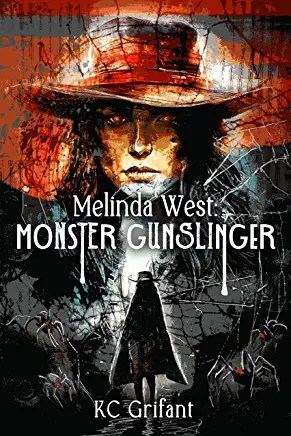
The world was filled with all sorts of creepy-crawly critters and that made Melinda West happy. The 29-year-old sharpshooter was a gunslinger-for-hire and she enjoyed killing monsters. To paraphrase St. Mustaine: Killing monsters was her business and business was good.

In K.C. Grifant’s new novel set in the Wild (Weird) West, Melinda and her dreamy sidekick Lance Putnam come face-to-face with a glut of monstrous creatures, including giant flying scorpions, soul-sucking bugs, large canines made of ice, mind-controlling slugs, snakes with fish heads, owls with spider legs and an enormous 20-foot snow kraken. According to Melinda and Lance, any monster could be squashed, and they were the ones to do it.

But all things eventually come to an end—or that’s what the pair thought. They didn’t want to hunt monsters for the rest of their lives. They had plans to buy some land, build a home, get married and start a family. With one final payload, they announced their retirement. 

Sadly, their retirement only lasted one measly day. Melinda’s subconscious told her that she would never experience a moment of peace. There would always be more monsters to kill. With a heavy heart, she and Lance embarked on their most epic adventure yet. 

They both knew that monsters came from a nearby mountain range colloquially known as the Edge. But what they didn’t know was this: the Edge wasn’t a landlocked geographic location—it was a nebulous portal connecting Earth to a multiverse of demons and wizards. 

Melinda and Lance needed to find the Edge quickly because a big nasty demon was busy collecting souls to enlarge the gateway between worlds. If it was successful, reality would never be the same again.

Grifant’s prose really comes alive when describing her boss demon (“a monster making and feasting on an abundance,” she says). Even though Adamophelin took many forms, the author never stumbles with her descriptive language. “It took a step forward,” she writes at one point, “like a bull that had learned to walk on hind legs. It was both hideous and captivating to look at, and when it spoke it sounded like a snake learning to speak through a human mouth.”

Melinda West: Monster Gunslinger features an anachronistic clash of traditional genre tropes and modern-day semiotics. It’s a fun mashup that mostly works. In particular, Grifant has gone out of her way to include a diverse and inclusive cast of characters in her quest narrative. Good for her.

One final comment. Melinda West is a big lady (her boyfriend describes her as “a sullen gal taller than a snake on stilts”), but for some reason we’re never explicitly told how tall she is. Why is that? Is she as tall as Brittney Griner or She-Hulk? Gisele Bündchen? Michelle Obama? I want to know. 

[Melinda West: Monster Gunslinger / By K.C. Grifant / First Printing: February 2023 / ISBN: 9781957537375]

Love It to Death

Author Joshua Rex and a mob of ancient Chinese philosophers agree: Life and death are just one long thread, the same line viewed from different sides. 

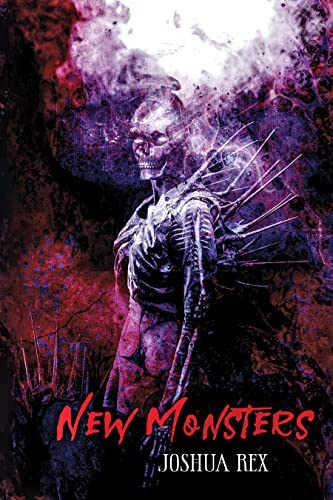
But don’t get too romantic or philosophical about it. Life and death ain’t no bed of roses. They are both, says Rex in his outstanding new anthology titled New Monsters, “the domain of unspeakable perversion and insanity.” 

Take for instance a story called “Death. In the Present Tense.” The journey from living to dying becomes a ghastly carnival ride for a young boy obsessed with thanatotic adventures. To him, the world was only beautiful in decay.

While compiling his ongoing death journals, the boy is hoping to bump into “the cliched tall shadow, the hood and robes and the bone hands gripping the stick with the curving blade.” Instead of being smitten by the Grim Reaper, however, he gets hit by a car driven by his dad. The last thing he sees is his father behind the wheel with a woman by his side. She’s wearing a blood-red dress, and her hair is a blonde coif rising from a bare skull. Says the author: “The lipless mouth gaped, its laugh the sound of shrieking tires.”

The transformative power of death is central to a story called “The Blue Meat.” A pioneering family kills and eats a strange blue-skinned animal shaped like a moose with facial expressions more human than beast. The forest creature is eerily similar to the deer god from the movie Princess Mononoke but waaaay more creepy. The tasty Shishigami-like meat turns the family into monsters with the mandate of their blue-skinned “savior” burning within them. 

Other enjoyable stories in this collection include: “The Master’s Duty” about a zombie dog that understands the sacred duty shared by pet and master, “The Goliath” about a young boy’s freakish future and “The Squatter” about a ghoul’s inalienable right to live anywhere and do anything he wants. “Dreams in the Furman House” is a story about how brutality is celebrated as a form of kitsch. 

If you know anything about my reading habits, you know how much I like a good epistolary novel (Frankenstein, anyone? How about Dracula or Flowers for Algernon?). I was happy to encounter a fine example of epistle writing in New Monsters. And because of my inclination, It’s probably the best thing in the book. 

“The Betrothed” is the story of a wily opportunist who somehow inherits a country estate along with the hand in marriage to a comely young lady. “I am now so eager to see the estate and meet my young wife,” writes Julian in a note to his friend Rothchilde. “I shall waste not a moment in placing both tongue and gristle into Mademoiselle du Lyseine’s stinking places.”

Julian has seen a photo of his future wife and his blood was boiling hot. She had a face shaped for receiving kisses. Her hair was the color of light. And her bosom—“Mon dieu!” he exclaims enthusiastically. “I find myself increasingly unable to contain my lust, and have thus relieved myself of that tyrant confiture des testicules (Google Translate: testicle jam) with compulsive abandon.” 

Readers know instinctively that Julian is in for a big surprise when he arrives at the Castle of Prayers. As promised, his wife is waiting for him and is ready to satisfy the “primary needs and desires” of her new husband. Her intense devotion, unfortunately, is gross and never-ending. 

[New Monsters / By Joshua Rex / First Printing: January 2023 / ISBN: 9781957121413]

The Piper at the Gates of Dawn

As unpredictable as an out-of-season storm and as elusive as shifting shadows at twilight, the Greek god Pan has maintained a well-earned reputation for being a devil, a tempter of flesh and a sealer of sin.

He’s more than a vicious demon, however. Pan is the guardian of the natural world and spiritual embodiment of nature’s cycle of birth, death and rebirth. He’s a physical deity and occult metaphor, a loving shepherd, sexual liberator, playful trickster and folklore fiend. Like all great gods and monsters, Pan is many things to many people.

According to William P. Simmons, the editor of this short story collection, weird fiction was rich with appearances of Pan during the late 19th century and mid-20th century. The horny god continues to be relevant to hedonists, intellectuals, artists, writers, rebels and horticulturalists today. 

The authors in this volume represent various literary disciplines and sub-genres, from gothic romance and decadence to ribald comedy. Baptisms of Horror & Ecstasy is truly a bacchanalian (dionysian?) orgy of fiction and poetry. 

A handful of stories bear witness to Pan’s influence over comely virgins. “The Moon-Slave” by Barry Pain (1901) is about a princess who enjoys dancing seductively under the full moon. Only later does she realize that she’s inadvertently encouraging the ardor of Pan.

In “Dryas and Lady Greenleaf” by R. Murray Gilchrist (1903) a young lady is raped by supernatural influences that awaken her carnal lust. “Who can say whether I am a goddess or a nymph?” she muses at the story’s end. 

Seduced by the beauty of nature, a 17-year-old girl pines for the embrace of Pan in a story called “In the Woods” by Amyas Northcote (1922). When the lonely girl finally hears the shepherd’s pipes, she quickly realizes the folly of her naive passions. “The piping rose louder and more clear. Beautiful it was, and entrancing, but evil and menacing too. She was like a bird charmed by the serpent.”

There are a couple of duds in this anthology (“Old Pipes and the Dryad” by Frank R. Stockton and an excerpt from Kenneth Grahame’s The Wind in the Willows), but overall Simmons has assembled a terrific batch of prose and verse that “follow Pan’s hoofprints across the soil of myth, folklore and literature.” 

“The Story of a Panic” by E.M. Forester (1911) is probably my favorite story here. Pan doesn’t make an appearance in the narrative but he certainly inspires the “panic” felt by the cast of characters.

Fourteen-year-old Eustace Robinson is a peevish lad, “indescribably repellent,” writes Forester. After a mysterious (sexual?) encounter in the woods, the boy embraces a newfound homosexual lifestyle which represents some sort of erotic freedom. Eustace is last seen running afield, no doubt bleating like a billy goat in heat. 

[Baptisms of Horror & Ecstasy: Supernatural Stories of the Great God Pan / Edited by William P. Simmons / First Printing: January 2023 / ISBN: 9798369909966]

The Decapitator!

A group of American academics are schlepping across Peru looking for the existence of an ancient civilization mentioned nowhere in antiquity. Based solely on a hunch, they’re hoping to find evidence of a ruined city and a religious shrine ensconced inside a hollow mountain.

Local Peruvian authorities aren’t too happy about the expedition. As you’d expect, they’re hypersensitive to the mishandling of any found indigenous objects. And besides, they want a piece of the action for themselves. 

“If you truly uncover a hidden temple,” explains the leader of the government’s security detail, “then we will pave a hiking path. An Inca Trail or something like that. People from around the world will come and visit. There will be hotels, restaurants and gift shops. It is a winning situation for both of us. We’ll let you publish your research papers … but the profit will remain ours.”

This so-called “winning situation” includes a tricky 160-mile hike across the southern tip of the Andes. The jungle is filled with dangerous flowers, predators, poisonous plants and deadly insects. A cute doctoral student named Annika doesn’t make it out of the tangle alive—she dies from a snake bite during a pee break. What a way to go. Readers take note: if you want to know how to safely pee in the wilderness, this is the book for you. Don’t end up like poor Annika. 

The group of scholars and government agents eventually stumble upon their ancient religious temple—an enormous five-stories-high ziggurat nestled comfortably inside an abandoned copper mine. Unfortunately, they also stumble upon the temple’s chief deity: The God of Darkness. Otherwise known as the Decapitator. Time to get nostalgic and turn up your 80s-era thrash metal mixtape.

The Spider God is 13-feet tall and 30-feet long with segmented legs as thick as a man’s torso. It has the head of a jaguar (??) and wears a crown made of human bones. It’s a big and bizarre looking monster that’s been trapped in an underground labyrinth for nearly 200 years. 

The search party is in trouble deep. They are totally unprepared to outwit the mad spider-beast in its own lair. Their combined dreams of fame and fortune evaporate with each grisly beheading. The Decapitator’s skull-crunching carnage is unquenchable.

But all novels have to end and all monsters eventually get their comeuppance. Ironically, the novel’s fiery finale takes place in the pyramid’s sacrificial alter. The Spider God dies on the floor of the temple erected in its honor. 

[Temple of the Spider God / By Steve Metcalf / First Printing: January 2023 / ISBN: 9781922861474]

Rag Time

A mummy had come to New York City, but he wasn’t  the brittle and shambling kind of monster seen in old movies. This guy was far worse. He was a giant, fast-moving serial killer with a penchant for removing the heads and limbs of his victims. 

The death toll was increasing nightly, but the NYPD was unconvinced there was any supernatural deviltry afoot. The probability of a rampaging mummy in Manhattan was totally insane. Mummies weren’t real, they argued. 

They were wrong of course. Many cultures around the globe have been practicing mummification for thousands of years as a way to preserve (and honor) the bodies of the dead. Of all the famous monsters you can think of, mummies were the real deal.

Like it or not, New York’s police department had a nasty mummy problem on its hands. Actually, that’s not totally true. It had two nasty mummy problems, and both of them were connected to events dating back to Egypt in 1888. Skullduggery, desecration and murder begat a double-barreled curse that doggedly followed the original culprits from Abydos to Manhattan. 

With the police in denial, it fell to a couple of defrocked department detectives to unwrap the escalating mummy mystery. Tom Reardon and Dan Reese were once partners on the force, but recent events had derailed their careers and their personal lives. No spoilers from me, but I’ll say this: a rowdy game of strip poker may have been the pair’s undoing. 

No longer friends, but still dedicated to justice, Reardon and Reese team up once again. Explained author J.G. Faherty: “They were like two pieces of a machine that didn’t operate properly when separated, but when joined together, they created a powerful force.”

The former cops knew an ancient Egyptian curse had infected Manhattan’s elite society. They had the receipts. Strips of ramie linen were found at every murder scene, suspicious activity was taking place at the city’s Egyptian Cultural Museum and specific symbols were seen etched into dead bodies. 

Things get literal in a flash when Reese dies and wakes up in Egyptian Hell. He successfully navigates the Lake of Fire and winds up in the Hall of Judgment where he comes face to face with Osiris the ruler of the Underworld and Anubis the Accuser. Eventually returning to his earthly body, Reese sees the endgame clearly. I’d like to thank the author for providing a big dose of helpful exposition during this deep dive into Egyptian mythology. 

Still, it wasn’t easy for Reardon and Reese to vanquish the two powerful mummies and their double curse. But somehow they did it. They overcame all the obstacles in their path and all it took was a quick jaunt through Hell. 

[Ragman / J.G. Faherty / First Printing: January 2023 / ISBN: 9781787587434]

Project Manmaker

“Consider life and death,” write authors David Bischoff, Rich Brown and Linda Richardson in their mosaic novel from 1985. “Good and evil. Law and chaos. Black and white. Sex and oblivion.”

Yes, consider all the veriest stuff of life whose churlish churning and infinite interweavings, confusing comings and linear leanings constitute the essence of the universe’s febrile fecund fabric.

And when you’re done and you’ve figured it all out, give yourself a gold star. You’ve won the grand prize—the adoration and fealty of a 4,000-year-old sexy demoness named Anathae. 

Summoned from Hell using a pentagram made of Silly String, paper milkshake straws and swizzle sticks, Anathae is a perfect collection of human female curves and impish sultriness. “She didn’t precisely inspire men with fatherly feelings,” says the wry narrator. 

Thus brought forth, Anathae is forever bound to Willis Baxter, an amateur demonologist and professor of medieval literature at a small New England university. Befitting his academic background, Willis is a bookish boob and a sad sack with a big drinking problem. If you enjoyed Dudley Moore in the movie Arthur then you’ll probably enjoy the professor’s endless drunken pratfalls and screwups.  

Anathae quickly sees that her human benefactor needs a little help and initiates “project manmaker,” a crash course in self-confidence. “You’ve got a lot of potential,” says the she-imp. “You’re like a Mack truck without wheels. A hell of a lot of horsepower going nowhere in a hurry.”

What follows is a series of humorous episodes involving Willis and his well-meaning personal demon. With a little bit of magic and hellfire, Anathae does, in fact, help the absentminded professor bolster his low self-esteem. Lots of sex helps too. 

But surely there must be a downside to having an infernal girlfriend, right? Willis wants to know. “Does my relationship with Anathae fall into the category of consorting with demons?” he asks. “And, if so, am I automatically going to Hell?”

To that particular question, Willis discovers that Heaven and Hell aren’t two separate places—they’re actually one single place. Gods, devils, angels and demons are all the same. Like humans, seraphs and serpents are sometimes good and sometimes not good. They’re fluid. “I prefer a little mischief,” says Anathae with a randy wink. “I don’t want to inflict any real harm.” 

After three months of romance, Willis forgives himself for his divine regressions. “I love her and, I suppose if demons are capable of love, that she loves me too.” That’s what matters, he realizes, that’s the only important thing. Next on his agenda: joining Alcoholics Anonymous. 

[A Personal Demon / By David Bischoff, Rich Brown and Linda Richardson / First Printing: September 1985 / ISBN:  9780451138149]

Dr. Who’s Book of Alien Monsters

We in the monster biz can spot monsters a mile away. It doesn’t matter if they’re wearing socks made of Cervelt fibre or drinking small batch whiskey from Japan—monsters can’t hide from us. 

Conversely, we also know when monsters aren’t really monsters. Take for example all ETs and ALFs. They may look weird to us, but on their home planets they’re a part of an inclusive homogenized community. 

Using this as our guide, Peter Davison’s Book of Alien Monsters isn’t a book about monsters at all. It’s a first-contact anthology featuring interplanetary sentient beings. In other words, it’s a slim storybook of culture differences, biology and life experience. 

But I quibble. The nine short stories in this collection are filled with an assortment of quirky otherworldly creatures who make Earthicans tremble. Call them monsters if you like. I don’t mind. 

Also: Seven of the nine stories in this book feature the adventures of a young protagonist. If I had to guess, I’d say the target readership here is somewhere south of early adolescence. Since I’m older than 10, I had to adjust my expectations with each new story. It’s hard to imagine an adult being entertained by Allan Scott’s “Guess Who’s Coming to Dinner” for example. 

Even with these caveats, sitting down with Peter Davison’s Book of Alien Monsters isn’t a bad way to spend a Sunday afternoon (btw: If you didn’t know, editor Davison was the fifth actor to portray Dr. Who in the long-running TV show). 

Two of Davison’s top picks deal with self-identity and/or freewill—the perfect subjects for kids racing toward puberty. “Beyond Lies the Wub” by Philip K. Dick is an amusing story of instinct and survival. The wub is a 400-pound pig-like animal with no discernible way to defend itself in the wild. “We are a very old race,” says the wub. “Very old and very ponderous. Too heavy to run, too soft to fight, too good-natured to hunt for game.” The author patiently waits until the very last sentence to reveal how the wub survives from generation to generation. 

David Langford’s “Semolina,” is about an alien creature on a mission from Galactic Central to observe the human race. Fair enough. I’m sure mankind is already being studied by covert extraterrestrials. In fact, judging by the way it looks at me, my neighbor’s “dog” is probably on an intergalactic undercover assignment at this very moment. 

Semolina (the cosmic spy, not the pot of spaghetti) is on the case, but it needs to possess a mobile host to do an effective job. It can’t make a detailed report to its superiors by inhabiting a bowl of pudding or a bucket of marbles. The resolution isn’t a surprise, but it’s shockingly heartless for its intended youthful audience.  

[Peter Davison’s Book of Alien Monsters / Edited by Peter Davison / First Printing: January 1982 / ISBN: 978099283003]