The Curse of Dracula

By all accounts, Bela Lugosi didn’t have a happy ending. Career missteps, financial problems, addiction and bad health followed the actor to his grave in 1956. 

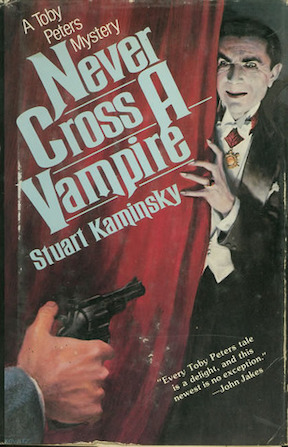
There are a flock of fans who would rather forget about Lugosi’s final days and remember instead his better days—back when he was Count Dracula, the iconic bloodsucking smooth operator. For these fans, Never Cross a Vampire by author Stuart Kaminsky helps rehabilitate Lugosi’s tainted reputation and romanticizes his twilight years. And you know what? That’s okay with me. 

The story begins when Boris Karloff contacts a private investigator named Toby Peters. Karloff is worried about his old friend. Someone has been playing games with Lugosi for over a month, sending messages written in animal blood through the mail saying, “He who mocks the vampire deserves his fate” and “Respect what you represent or suffer for it.” Most recently, someone mailed Lugosi a hat box containing a bat with a tiny stake through its heart. It was an old Hollywood story: Movie stars being harassed by over zealous fans. 

Clues point toward the Hollywood lair of the Dark Knights of Transylvania, a secret and exclusive organization dedicated to the vampiric lifestyle. Peters figures that one of these wannabe vampires is probably responsible for baiting Lugosi. He’s right. 

But who can it be? Is it Count Sforzni, the leader of the coven? The sexy Morticia Addams doppelgänger? The somber owner of a Cantonese restaurant? Or the elusive sun-deprived librarian? Maybe it’s Doctor Vampire, a stand-up comedian who dresses in Dracula drag during his nightclub shows?

The Lugosi case eventually intersects with a seemingly unrelated investigation involving William Faulkner. The famous author (currently in Hollywood working on a project for Warner Bros.) is accused of murdering a talent agent. The Faulkner case appears to be just a distracting subplot until the P.I. realizes that he’s the one linking the two mysteries together.   

The denouement comes late one night in a haunted house during a thunderstorm. In a surprising (not surprising) twist, it is Bela Lugosi, as Dracula, who brings the culprit(s) to justice. “Just another effective performance,” says the stately actor with a big self-satisfied grin on his face.

[Never Cross a Vampire / By Stuart Kaminsky / First Printing: January 1980 / ISBN: 9780312564711]

Battle Bots

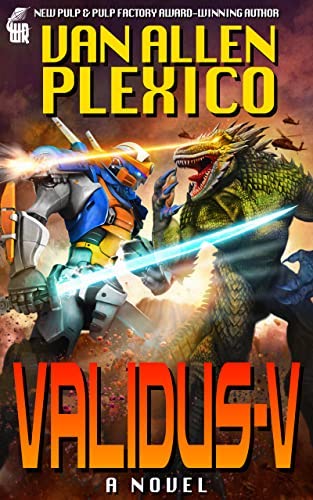
Mazinger Z (1972), Getter Robo (1974), Mobile Suit Gundam (1979) and Appleseed (1985) were some of the seminal manga titles that introduced giant robots to Japan and the rest of the world. 

Not everyone was hip to Japanese comic books back in the early 70s. Many kids in the U.S. discovered a version of giant robots in 1979 when Marvel Comics started publishing Shogun Warriors. Author Van Allen Plexico was one of those kids. 

Plexico even dedicates his latest novel to the talent behind the Shogun Warriors series. He writes: “This book is for writer Doug Moench and artist Herb Trimpe, who showed us all the way.” Trimpe, in particular, was the undisputed master of robots and monsters at Marvel in that era. 

A quick note here: “Happy” Herb Trimpe had his fans, no doubt about it, but in no way was he in the same league as Go Nagai (Mazinger Z) or Masamune Shirow (Appleseed). I think we can all agree that Marvel’s “American Mecha” couldn’t hold a candle to Japan’s mecha invasion. 

Regardless, Validus-V is the result of Plexico’s childhood love of giant robots and giant monsters. His book wouldn’t exist without Shogun Warriors, Transformers, Godzilla—and a host of other ancillary mecha and daikaiju merch.  

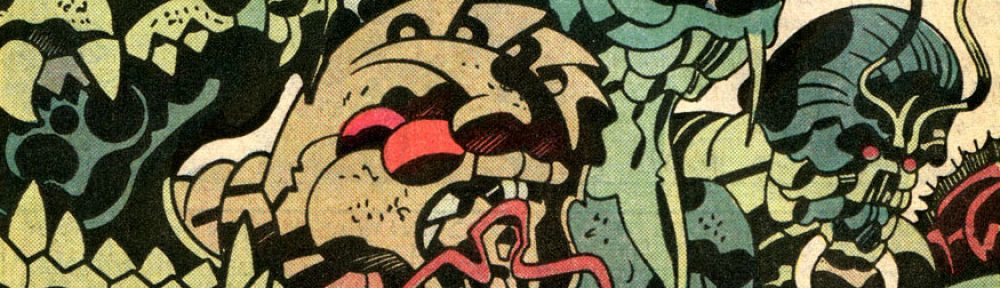
The novel begins in 1978 when a fistful of 300-foot creatures converge on the shores of Monster Island (a.k.a. Johnston Atoll, a radioactive reef southwest of Hawaii). These giant monsters include a centipede, a bat, a Bigfoot-like beast and a mighty lizard named Tyranicus.

Thankfully, there’s a quartet of Rock ‘Em Sock ‘Em robots nearby: the titular Validus-V, Tornader-X (and its alter ego Rednator-Oh), Z-Zatala and King Karzaled. Together they possess enough power to destroy all monsters.

The problem, however, is that the human-piloted robots are a fractious bunch. Honestly, they’re too busy fighting amongst themselves to tackle the impending monster mayhem. Similarly, the towering colossi from Johnston Atoll aren’t united either. It’s hard to have a raging mecha battle when there’s no strategic alliance between combatants. 

Like a lot of classic mecha manga (and anime), the fate of the world ultimately rests in the hands of a young kid. Up until this point, 16-year-old David Okada was merely preoccupied with doing homework and avoiding bullies—he had zero experience piloting a bionic war machine. But that changes quickly. Through a combination of luck, opportunity and necessity, he becomes an awesome robot pilot. “Clearly you’re some kind of prodigy,” notes a colleague. 

There’s a lot more going on here, of course. I didn’t even mention the escalating galactic war or the rampaging 40-foot ants living on Monster Island. Ultimately, Validus-V is greater than the clash of giants and aliens. Plexico knows that a story about robots and monsters is really about all the people caught in the confluence.   

[VALIDUS-V / By Van Allen Plexico / First Printing: July 2022 / ISBN: 9798841938194]

Slime Ball

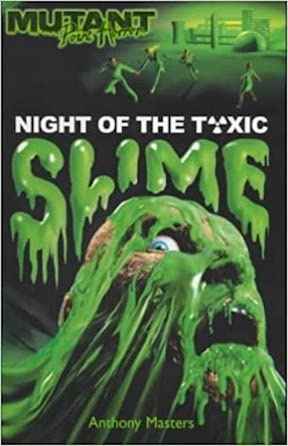
In one single day, a large viscous slime ball crushes a small coastal town in England. The local police are useless, the Royal Army and Marines are flummoxed and a Royal Navy surface combatant is sunk. The citizens of Shingleton are unquestionably doomed. 

But hold on a sec. There are three local teens who have a crazy idea about stopping the titular toxic creature. They just have one problem: no one will listen to their cockamamy plan. 

First, an Army sergeant makes fun of the kids’ monster theories. Then a Marines commander doesn’t like them wasting his time. “Chemical disaster over, I guess. Kids to the rescue,” he says patronizingly. Even a random geezer on the street tells the trio to mind their manners. “Why are you being stupid and winding people up?” he barks. “Typical of today’s youth, aren’t you? No respect. No sensitivity. Nothing.”

Meanwhile, the giant gob of sludge is rampaging down main street with impunity. It starts the day as a wiggly little worm and ends up being an 80-meter bulbous monstrosity. In just a short amount of time it destroys everything in its path. “This isn’t Shingleton any more,” says one of the teenagers. “This is Slime City!”

Everybody is asking the same unanswerable questions. What the heck is it? Where did it come from? Is it hungry? Does it have real intelligence or is it simply being controlled? Is it the wrath of God? Is it evil? 

Eventually a spokesman for the Ministry of Defense arrives to address the situation. According to him, the crawling slime is the result of experiments directed at producing a substance that would destroy household and industrial waste and eliminate the use of landfills. 

Unfortunately, the toxic chemical spilled out of an underground storage facility. But don’t worry, says the PR flak, with enough bombs and bullets, the problem will be contained. One more question from the mob: “When did the Ministry of Defense get involved with household waste? It’s not their job, is it?”

No, it’s not—and teens Jake, Laura and Chris have a theory. Instead of being an urban waste parasite, the monster was created as a weapon of war and the attack on Shingleton was a test of its capabilities. 

At the end of the novel, the super friends confront the MOD spokesman with their evidence. “Don’t try to cover this up,” they say, “we’ll call the press and tell them everything we know.”

Do as you wish, replies the Ministry of Defense rep with a shrug. “Who would listen to a bunch of kids?”

[Night of the Toxic Slime / By Anthony Masters / First Printing: January 2000 / ISBN: 9780439996402]

Webb of Horror

I don’t know much about author Stanley B. Webb. Was he born on a gas giant somewhere in the Jovian system? Maybe. Does he own an insectarium filled with deer flies and mosquitoes? It wouldn’t surprise me. Is he a distant relative to the recently deceased and legendary singer Loretta Lynn (née Webb)? I have no idea. 

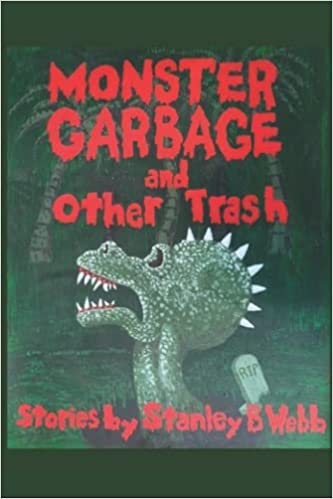
There is one thing I definitely know about Mr. Webb. He has a heathy sense of humor. How could he not? His latest short story collection is modestly called Monster Garbage and Other Trash

It’s a cute (and funny) title, no doubt about it. But Webb’s writing isn’t trivial at all. Whether he’s writing about sea monsters, dinosaurs, space aliens, giant bugs, robots or killer plants, he knows what really scares us. 

Many of the stories in this volume sound like something you’d hear around the campfire at night. They’re short and spooky with an obligatory kicker at the end. Summer camp counselors take note. “Old Town Halloween,” “Parlor,” “The Anti-Christmas Tree” and the titular “Monster Garbage” are all examples of this age-old story structure. These are my least favorite things in the anthology. 

Much better are the stories that seem like chapters from longer works. In fact, I would encourage the author to revisit some of the following stories and expand them into book-length adventures. 

“The Scavenger” solves the mystery of the Bermuda Triangle, a rural family wages a forever war against genetically engineered agricultural crops in “The Field of Vengeance” and in “Hellhole Fishing” a sea creature emerges from the remnant of a prehistoric lake. I also enjoyed “Chopper City” because it reminded me of The Omega Man, my favorite movie of all time. 

In my opinion there are two stories that rise above all the rest. “The Day of the Deer Flies” is a surprisingly intimate account of a nature-run-amok attack. A seemingly coordinated strike of deer flies and mosquitoes turns the Adirondack Mountains into a combat zone. For 11 pages, the author is very explicit with his descriptive language—maybe a little too explicit for some people. When you read the story, you’ll know what I mean. 

The other highlight of Monster Garbage and Other Trash is “Captain Baxter’s Journal,” an apocalyptic tale about the inevitable global warming crisis and the mind-boggling audacity of one scientist’s solution. 

Even though everybody is desperate to reverse the ravages of nature, Captain Baxter has doubts about his given assignment. “My conscious mind fails to recognize my surroundings,” writes Baxter in his ongoing captain’s log, “but my soul knows where I am. It’s hubris for any man to think that he can correct nature. I hate feeling that my ship is on a mission that will further harm the world.”

[Monster Garbage and Other Trash / By Stanley B. Webb / First Printing: March 2022 / ISBN: 9798432722485]

Old Monsters Never Die

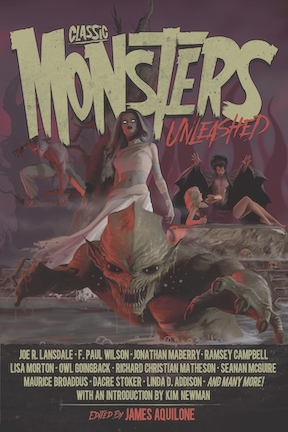
Frankenstein’s monster is over 200 years old and Dracula will be celebrating his 600th birthday soon. Imhotep has been around since the 27th century BCE and the Creature from the Black Lagoon is a throwback to the Devonian period. These monsters (and others) have been with us for a long time—and according to the contributors to Classic Monsters Unleashed they’re not going away anytime soon. 

Take, for instance, Tim Waggoner’s story “Old Monsters Never Die.” The Moonborn were a race of shapeshifters as old as mankind itself. From the very beginning they were our greatest predator and I have no doubt they will continue to prey upon us long into the future. 

The mummy from Rena Mason’s story “Rapt” was originally a Han Dynasty doyenne. Married to a Wu Kingdom chancellor, Lady Mei’s beauty and kindness was legendary. Historians called her the Helen of Troy of China. 

But as all jilted wives know, shit happens. For some reason Mei’s husband poisoned her, killed her family and did his best to erase her very existence. Two-thousand-plus years later, Lady Mei rises from her grave to exact her long-awaited revenge. “She understood at last, the power of everlasting love.”

Some of my other favorite stories in this collection include a prequel to the Creature from the Black Lagoon movie (“She-Creature from the Golden Cove” by John Palisano), a twisted version of The Phantom of the Opera (“The Viscount and the Phantom” by Lucy A. Snyder), the return of The Legend of Sleepy Hollow (“Hacking the Horseman’s Code” by Lisa Morton) and a clever mashup of Ralph Ellison and H.G. Wells (“The Invisible Man: The Fire This Time” by Maurice Broaddus). The Seanan McGuire contribution is also quite good. But then again, everything I’ve read by her has been excellent. 

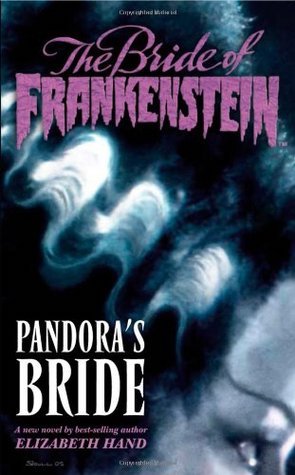
More than anything, I was happy to see multiple retcons of Bride of Frankenstein included in this Classic Monsters anthology. In fact, I’m beginning to think that it’s impossible to pen a bad Bride of Frankenstein story.

J.G. Faherty’s “Beautiful Monster” takes the Bride’s iconic “jigsaw puzzle body” to a completely different level and Dr. Frankenstein constructs the Bride using a Tinder-like app in “Something Borrowed” by Lindy Ryan (“I like this one’s eyes,” says the original monster as he swipes right). 

Author F. Paul Wilson imagines Frankenstein’s monster with the brain of a woman. I am so powerful now, she tells herself. So very powerful. “I will not be mistreated any more. I will not be looked down on and have doors shut in my face simply because I am a farm girl. No one will say no to me ever again.”

My favorite of these stories was written by Carlie St. George (“You Can Have the Ground, My Love”). The Bride, now known as “the Widow” or “Elizabeth,” knew that she was a monster. But she also knew she wasn’t Frankenstein’s original lumbering giant. She didn’t want to be a morbid recluse like him. “I’d like to walk this world,” she says. “I will discover my own story—and challenge the whole terrified trembling world to listen.”

[Classic Monsters Unleashed / Edited by James Aquilone / First Printing: July 2022 / ISBN: 9781645481218]

Anarchy in the Black Lagoon

It’s coming sometime, maybe—climate change and rising tides might one day transform Earth into a boiling hot tub. How long will it take? Who knows? But as temperatures continue to get hotter, experts tell us that sea levels will also continue to rise. 

That’s bad news for humans, says Dr. Brice Chalefant. As a marine biologist, he knows that we’re doomed to extinction unless we adapt to the emerging Neo-Devonian period. He becomes obsessed with finding a way to transform men and women into hybrid creatures with terrestrial and marine attributes. 

Instead of doing the logical thing like studying the DNA from frogs, salamanders and lungfish, Dr. Chalefant pursues another avenue of abstraction. He gets a tip that a fish-man was captured in a secluded Amazon bayou back in 1954. He’s positive that this creature from the black lagoon is the key to mankind’s future.

In this way, the original mid-century Creature movies—including the iconic debut and the sequels Revenge of the Creature and The Creature Walks Among Us—are folded into the continuity of Paul Di Filippo’s novel from 2006. (For better or worse, the author completely ignores a memorable episode of The Colgate Comedy Hour where comedians Bud Abbott and Lou Costello tangle with the Creature.)

Dr. Chalefant learns pretty quickly that the creature from 1954 is now dead, but that doesn’t stop his mad quest. When a childhood friend invents the world’s first time travel machine (!!), Chalefant makes plans to jump 400 million years into the past to walk side-by-side with the original Gill-Men. The doctor’s mission statement is simple: “I want to find a living specimen of the creature and bring him back to the present day, so I can analyze his physiology and genetics, with an eye toward splicing the good stuff into the human genome.”

The time machine, btw, isn’t a “big-ass Jack Kirby cosmic-Death Star” contraption. It’s merely a standard issue iPod from 2015. “Small applications of energy and information produce gigantic results,” says the smug inventor. 

Once the time machine is unpacked, Chalefant and his girlfriend skip around the Paleozoic era like two giddy tourists. They do, eventually, make contact with a village of Gill-Men, but they also experience the dangers and oddities of pre-history (big sharks, big bugs, etc.). 

In many ways, Time’s Black Lagoon is a standard issue tie-in novel. It continues the Gill-Man’s mythology and features lots of callbacks to the original source material. Unfortunately, Di Filippo makes one disastrous change to 70 years of Creature canon. Most readers, I suspect, will hate it. I’d love to bash the author for his unnecessary twist, but I won’t. You can read the book yourself and be disappointed just like me. 

[Creature from the Black Lagoon: Time’s Black Lagoon / By Paul Di Filippo / First Printing: August 2006 / ISBN: 9781595820334]

Gothic Monsters

Vampires have been around a long time in folktales and literature. It was author John Polidori in 1819, however, who popularized the urbane, Byronesque vampire that’s become so beloved to fans today. Bram Stoker had a lot to do with it too, of course, but it was Polidori (with a little help from Percy Shelley) who did it first. 

Unlike Dracula, Lord Ruthven (the titular hero in “The Vampyre”) was a beast with a curious moral compass. For example, he wouldn’t attack easy prey like a flirty party girl because of her lowly status. “His character was dreadfully vicious, the possession of irresistible power of seduction, rendered his licentious habits more dangerous to society,” writes Polidori. In other words, Ruthven had contempt for the adulteress, because he wanted his victims, the partners of his guilt, to be hurled from the pinnacle of unsullied virtue. 

For another thing, Lord Ruthven was fully committed to his victims—he wasn’t a one-night-stand kind of guy. He took his time to court and marry young ladies before sating his thirst. If Polidori was using this bloodsucking metaphor for marriage, we’ll never know. 

Like vampires, tales of shapeshifting werewolves have been around a long time too. Maybe in high school, like me, you read the Epic of Gilgamesh or the story of Zeus and Lycaon. Looking back, it was probably the 19th century that was the golden age for wolf men in literature.

Also like the vampire, the werewolf often carried the weight of symbolic erotic fantasy. And that’s definitely the case with Clemence Housman’s story from 1896 called “The Werewolf.”

A lone female inexplicably appears during a snowstorm to bewitch an isolated family. Introducing herself to the multigenerational household, she says “My real name would be uncouth to your ears and tongue. Instead call me White Fell, the great white wolf.”

And like a femme fatale, she successfully casts a dark spell over the twin brothers of the house. Writes Housman: “They being twins in loves as in birth, had through jealousy and despair turned from love to hate, until reason failed at the strain, and a craze developed, which the malice and treachery of madness made a serious and dangerous force.”

In an attempt to defeat the she-wolf’s sexual power, one of the brothers follows the beast through the woods at night. He knows, as legend decrees, that the werewolf’s form will be resumed and retained if human eyes witness the change at midnight. 

There’s no big surprise at the end of the story—man defeats beast again. After several tiresome pages of running through the snow, the wolf-hound is slain in an act of selfless brotherly love. “No holy water could be more holy, more potent to destroy an evil thing than the life-blood of a pure heart.”   

[The Vampyre, the Werewolf and Other Gothic Tales of Horror / Edited by Rochelle Kronzek / First Printing: April 2009 / ISBN: 9780486471921]

Dinosaur Déjà Vu

At night, I dream of being in an Agatha Christie novel. After so many years, I’ve never been the hero—like Hercule Poirot or Jane Marple—and I’ve never  been the villain. 

Instead I’m simply a member of the cast. If I’m lucky, I’m one of a handful of suspects, but usually I’m just a faceless spectator in Christie’s ongoing mystery investigation. 

Reoccurring dreams have always haunted me. When I was a kid, for example, I dreamt that dinosaurs roamed my suburban neighborhood. In one dream I’d look out my bedroom window to see a dinosaur in the backyard. In another dream I’d have to find a circuitous route to school to avoid a Tyrannosaurus rex. One time a dinosaur popped out of the air ducts in my home. More than a few times I became a tasty snack for some sort of gigantic prehistoric reptile. 

I experienced an eerie sense of déjà vu while reading Unidentified. Michael Esola’s latest novel could easily be a nostalgic recap of all my childhood dinosaur nightmares.  

The action takes place on Yerba Buena Island located in the bay between Oakland and San Francisco. A handful of tiny dinosaur-like creatures are hungry and they’re looking for something to eat. To be honest, the dinosaurs (20 feet tall and 50 feet long) are only “tiny” in comparison to their mama, who is taller than the Coit Tower. 

For 200-plus pages, random groups of people dash around in circles trying to avoid being eaten. A forrest of eucalyptus trees offers some protection, but not a lot. Writes Esola: “They were truly experiencing Darwin’s survival of the fittest theory firsthand. It was every man, woman and child for themselves, pure survival in its purest and rawest form.” The world has gone to shit, says one character in a panic. “We’re all fucked.”

Many people get eaten alive, of course (if you want to know what it’s like to be swallowed by a huge animal, this is definitely the novel for you). Some of the victims deserve their fate—a cranky hillbilly gets chomped pretty quickly. The most satisfying death, however, involves a hysterical Bible-thumping zealot.

“These creatures are not to be feared,” she asserts. “They have been created in the same manner as the Lord created humans—with the same care and painstaking attention to detail. They are the rightful rulers of this planet and the world belongs to them now.” 

The only way off the island, she says, is to kill a couple of children. The Lord is jealous and avenging, she reasons, and demands a sacrifice. She even convinces a few toadies to do her dirty work. It’s a good thing the Bible lady eventually gets ripped in half by two heathen monsters. Otherwise, Unidentified might have ended in a completely different manner. 

[Unidentified / By Michael Esola / First Printing: July 2022 / ISBN: 9781736673831]

Almost Human

There are all kinds of robots in this short story collection from 1965—wayward robots, security robots, dystopian robots, god-like robots, existential robots, diplomatic robots and even robot lovers. 

But there’s only one kind of story here. All the contributions from Isaac Asimov, Philip K. Dick, Lester del Rey and Robert Bloch et alia are excellent. For once, the book’s cover blurb isn’t ridiculously hyperbolic: “Science fiction at its exciting best!”

Engineers predict that robots will achieve humanlike intelligence by the year 2029 and they’ll probably reach singularity by 2045. In the future, metal men will no longer be soulless creations with only neutral electrical impulses to guide them. Jack Williamson (“With Folded Hands”) and Mamoru Oshii (Ghost in the Shell) both agree: “Robots are the ministering angels of the ultimate god arisen out of the machine.” 

Invasion of the Robots begins with a provocative story by Isaac Asimov called “Satisfaction Guaranteed.” Fifty years after the end of WWII, robots are just beginning to assimilate into society as general household handymen. Tony (TN-3) is assigned to a home in the suburbs and makes himself immediately indispensable (in more ways than one). Stories of humans falling in love with robots are pretty common, but Asimov’s story adds a delicious dose of comeuppance at the end. Guaranteed, it’ll make all the ladies in the house say “Yeah!”

The standout story in this anthology is easily “With Folded Hands.” At first glance, Jack Williamson’s acclaimed novelette is simply about robots making life easier for humans. “They were immune to human imperfections, able to save men from themselves,” writes Williamson. 

But the situation quickly spins out of control. The author has a message for all of his readers. He wants us to see how good intentions become the ultimate horror. “You can imagine what happened,” says Williamson when his theme is revealed, “bitter futility imprisoned in empty splendor. Something worse than war and crime and death: utter futility. We became pampered prisoners.”

And finally, Robert Bloch’s story shows how perverse a robot/human relationship can be. As an experiment, Bloch’s metal boy is raised just like a human child. Junior is an extremely Intelligent creation, but his life experience is limited. 

The only two people who see him on a daily basis are his creator Professor Blasserman and his nanny Lola Wilson. At some point (as you’d expect) Junior takes special notice of Lola. “I want you to oil me,” he tells her again and again. 

After pleading with his nanny to give him a lube job, Junior finally makes his move. The last thing Lola remembers as she falls to the mattress is the sound of the robot’s harsh metallic voice. “I love you, I love you, I love you,” he repeats over and over again. The funny thing is, writes Bloch, he sounds “Almost Human.”

[Invasion of the Robots / Edited by Roger Elwood / First Printing: April 1965]

Ogre Time

There was a monster roaming the woods of Starbright Springs, Washington—something big and fierce that combined the cunning of a man and the relentlessness of a territorial primate. In the past few days it had senselessly slaughtered horses, homeowners, hikers, campers, one Peeping Tom and all manner of unlucky woodland creatures.

Deputy Clint Wilmont had an idea. “It had to be a bear,” he reasoned. “What else could it be? Bigfoot??”

Was it a bear, like Deputy Wilmont thought? Or was it Bigfoot, the ubiquitous cryptid from the Pacific Northwest? Or maybe it was Batsquatch? A Neanderthal? An alien from outer space? Or some other bogeyman?

Being a generous sort of guy, author Brian G. Berry gives readers a peek at his monster pretty early. “It moved with the grace of a primate,” he wrote, “one whose origin rested not in the cycle of recent ages, but of dim and forgotten recesses of time; from when the jungles ran deep with mystery and sired indescribable horrors that battled with the predecessors of man. A pendulum of might and madness, it swung amongst the pines, a black shadow of fur and claws and eyes that burned with molten evil.”

Continued the author: “Mercilessly its kind pounded and tore asunder the creatures of the woods, leaving behind ghastly mounds and smudges and traces of woodland critters; heads and arms and broken forms lay slashed in pools of blood.”

But, again, what was it? It sure sounded like Bigfoot. Not until later did the creature get tagged with its titular name. “It was an ogre of myth,” wrote Berry, “eating babies and swallowing kids.” Right on cue, Berry’s ogre throws a hapless boy into its mouth like it was sucking down a knot of spaghetti. Gulp! 

In his afterword, Berry admits that his inspiration for Ogre came from a bunch of “classic” monster movies, most notably Grizzly (1976) and Abominable (2006). Over all, it’s a fine homage to the woodland horror genre—one of my all-time personal favorite genres. 

Ogre ends with a crazy otherworldly Repo Man-like twist. Rough and hewed as if by tools and not nature, the monster was apparently just a pawn in some unknowable cosmic masquerade. “The beast had no compunction of morality or care,” wrote the author, “and was merely a tool in a grim design.” 

[Ogre / By Brian G. Berry / First Printing: July 2022 / ISBN: 9798839926097]