
No lengthy preamble for me, I’ll just come right to the point: The Unblessed is a mess of a novel. The plot is rambling, repetitive and sloppy, and bounces around in the most illogical manner. Character motivations are fluid and questionable. Worst of all, the dramatic tension is artificial and ineffective.
But things don’t start off badly. Paul Richards’s book begins with a tantalizing backstory featuring an ancient African demon known as Anansi, the Spider God.
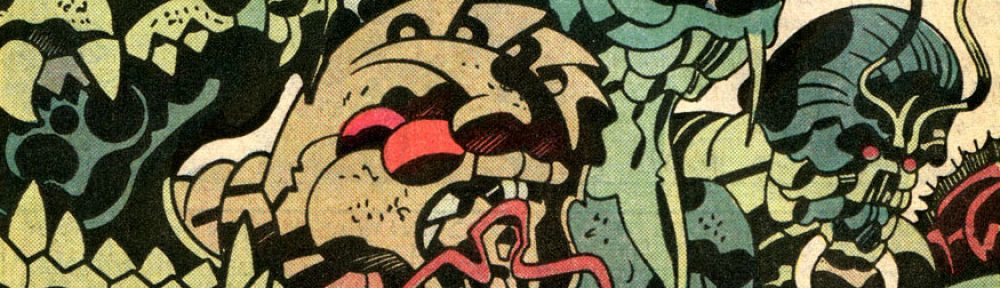
Described as a 15-foot-tall human with the face of a spider or maybe a giant spider with the face of a man (it’s hard to tell), Anansi came to America in the 16th century during the Atlantic slave trade. Now quarantined in Montana, the demon-god is awake and hangry.
This is when problems arise. The early expositional pages set in Africa are terrific. But once the author brings readers into the 20th century, the story becomes a haphazard patchwork of pulp clichés and golden age comic book tropes. If you’ve ever read the first 26 issues of Detective Comics you’ll know exactly what I mean.
Anansi is the greatest power in existence, a creature that‘s persisted in its present form for untold thousands of years—an “ultranatural,” says the author. The irony, however, is that the demon has no physical sense of musculature of its own. No matter how omniscient and evil it is, it remains wholly dependent upon the labor of its victims and acolytes for every physical need.
To assist in its quest for world domination, the Spider God anoints a herald as its proxy. Like Gabriel, Hermes and Norrin Radd, Maximillian Grey is a loyal intermediary imbued with unlimited authority, power and influence.
Once Grey is introduced, The Unblessed waves goodbye to nearly every substantive character and dangling plot point. Segueing into superhero territory, the final endgame pits the Anansi herald against his eternal nemesis Camurious in a 50-page slugfest. All the African Spider God can do is wail in the background and “summon an icy force of demonic wind.” The monster of Montana is nothing but a crybaby and a damoiseau in distress.
[The Unblessed / By Paul Richards / Second Printing: June 1988 / ISBN: 9780821723807]
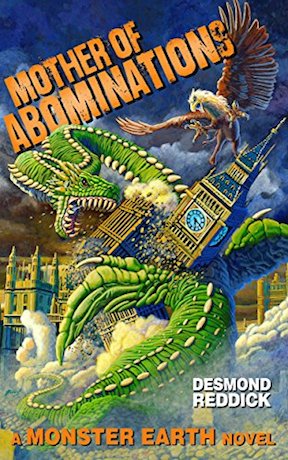 Bree Kenny was a 10-year-old little girl when she saw her parents crushed by “the great griffon.” Since then, her life had become one huge allegory for using violence to solve her problems.
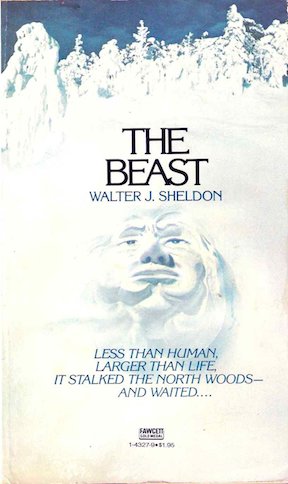 The Beast is a salacious piece of work. First published in 1980, Walter J. Sheldon’s bigfoot novel is filled with all sorts of touchy topics like bestiality, rape, cannibalism, religion and grubby small town politics.
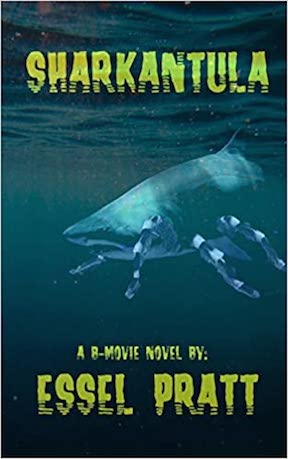 “Throwing the gun” is an age-old trope of genre fiction. I don’t know exactly when it first popped up (probably in a Western or Detective movie), but I clearly remember reading Action Comics as a kid and seeing criminals toss their empty guns at Superman after running out of bullets.
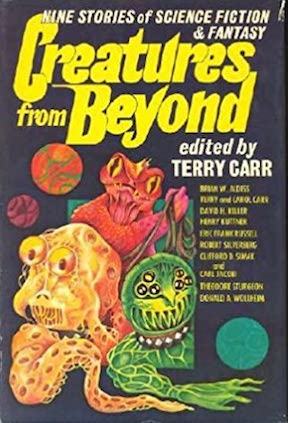 During his time on this island earth, Terry Carr edited an astonishing number of tip-top science fiction anthologies. Not for nothing, he also co-edited one of the first books I ever read. World’s Best Science Fiction 1968 included a batch of great stories including Harlan Ellison’s career tentpole “I Have No Mouth, and I Must Scream.”
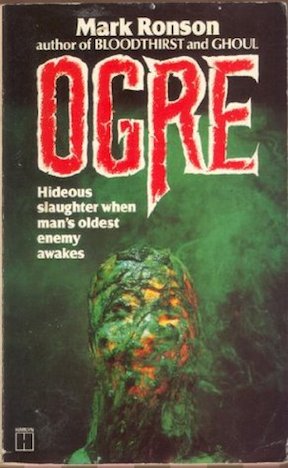 In the beginning, the monster in Mark Alexander’s novel is far from overwhelming. Initially it’s described vaguely as a sheet of silver reflecting in the sun. A little like Reynolds Wrap Aluminum Foil, I suppose.
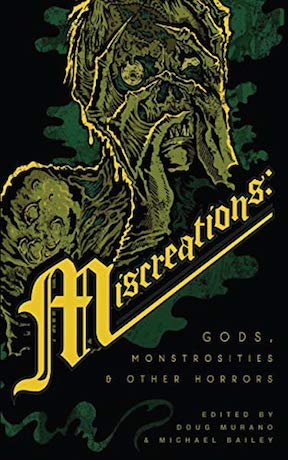 I agree with author Alma Katsu. In her chatty foreword to this book, she says that Mary Shelley created the greatest and most iconic monster of all time. Forget about giant gorillas and colossal kaiju, Frankenstein’s Prometheus remains king of the monsters.
 Monster Book Club