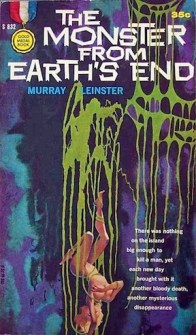
 Gow Island was a pile of drab rocks in the middle of the ocean—3,000 miles from New Zealand, 2,000 miles from Chile, 600 miles from the Antarctic ice cap and a million miles from home.
It was unending dreariness and monotony for the 19 military personnel assigned to the isolated and remote government outpost. Many of the inhabitants were suffering from acute island fever (or as author Murray Leinster put it, they were “rock happy”). “Propinquity plus tedium plus tension plus extreme uneasiness inevitably produced some queer situations,” observed Mr. Drake, the island’s dour administrative officer.
He weren’t kidding. On a normal day, Drake did his best to keep Gow running smoothly for the U.S. Navy. He had full responsibility for the conduct of affairs, and the morale and the efficiency of the island. To do so, he willingly put his private concerns on the backburner. He was particularly discreet about his romantic interest in his secretary, Mamie Van Doren.
The military post’s boring routine was interrupted one day when an airplane crashed onto its runway. There were 10 people onboard the plane when it left Antarctica. By the time it reached Gow, however, the pilot was the only one remaining. And he didn’t last very long. He shot himself in the head before he could be safely extracted from the cockpit.
First responders immediately spied eight bullet holes in the airplane’s flooring. Checking out the cargo hold, they also found a quartet of cute Adélie penguins and a bushel of thorny and weird-looking plants. That was it—no military personnel, no passengers, no copilot, no nuthin’. The situation was suspicious, to say the least.
Suddenly, the airplane’s curse became Gow Island’s curse. Navy personnel (along with a couple of unlucky dogs) started disappearing, and Drake and his crew quickly grew hysterical with fear of a nameless and indescribable menace. Was it the penguins or the otherworldly vegetation from the aircraft that was responsible for the ambuscade? I’ll give you one guess.
The Monster From Earth’s End is a wildly understated novel. The horror is subdued, the circumstances are forthright and the resolution is measured. It’s a quirky little book and I liked it very much. If you’re curious, the movie adaptation from 1966 (The Navy vs. the Night Monsters) is cheap and laughable, but enjoyable as well.
Gow Island was a bit like Thomas Hardy’s Wessex. Even though it was a pile of rocks in the middle of nowhere, it was a major character in the novel. With its dangerous and foreboding atmosphere, it was a barometer of escalating tensions between man and man—and man versus monster. “The island lay wrapped in darkness as profound as that at the bottom of nothingness,” wrote Leinster. You can’t get farther from the madding crowd than that.
[The Monster From Earth’s End / By Murray Leinster / First Printing: January 1959]
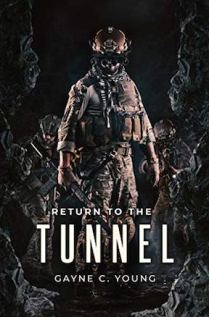 In Gayne C. Young’s previous novel (
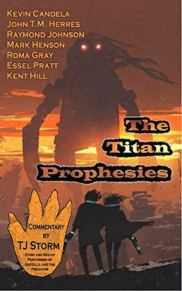 The Titan Prophesies is dedicated to “all those who helped craft amazing tales of giant monsters that thrilled us with wonder, filled us with awe and swept us away to realities where giants walk among us.”
 Shindo Yamaguchi from Japan’s Ministry of Defense knew trouble was brewing. It wasn’t because COVID-19 was spreading or because the 2020 Olympics had been postponed or because manga piracy was on the rise. Yamaguchi knew there was a new kaiju threat on the horizon.
 Readers don’t have to wait long for the killer kangaroo to show up in Alan Baxter’s latest novelette. The Australian buck begins its blitzkrieg hop right away on page two: “The roo’s mouth closed over its victim’s neck,” writes Baxter. “The flesh peeled up and away with a wet tear.”
 There are many things I hate (Starburst candy for one, cow’s milk for another). But specific to this site, I especially hate authors who write monster novels and don’t fully commit to the genre.
 Russ Cloud was a wildlife expert and the star of a reality program called Survivor Guy. But over the years a lot of copycats had chipped away at his show’s popularity—shows like Man vs. Nature, The Naked Survivalist and The Mormon Family Robinson.
 According to editor Christofer Nigro’s introduction, the inspiration for this 2019 short story collection goes all the way back to 1965. That was the year Creepy #7 appeared on newsstands.
 Aftershock starts on the day Los Angeles is smacked by the biggest earthquake in recorded history. The initial tremor began “like a deeply released, contented sigh from a lover in warm slumber,” and quickly escalates to a 9.4 on the Richter magnitude scale.
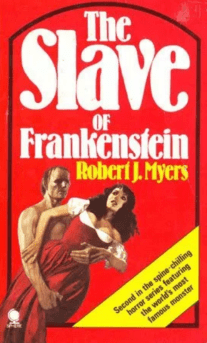 The Slave of Frankenstein takes place two years before the start of the U.S. Civil War. It’s 1859 and the focus of the entire nation is concentrated on Harpers Ferry and the forthcoming hanging of abolitionist John Brown. “Our universe is suspended somewhere between Heaven and Hell,” says a concerned patriot.
 Monster Book Club