The Lesser Evil Can Be Seen in Comparison With the Greater Evil as Good

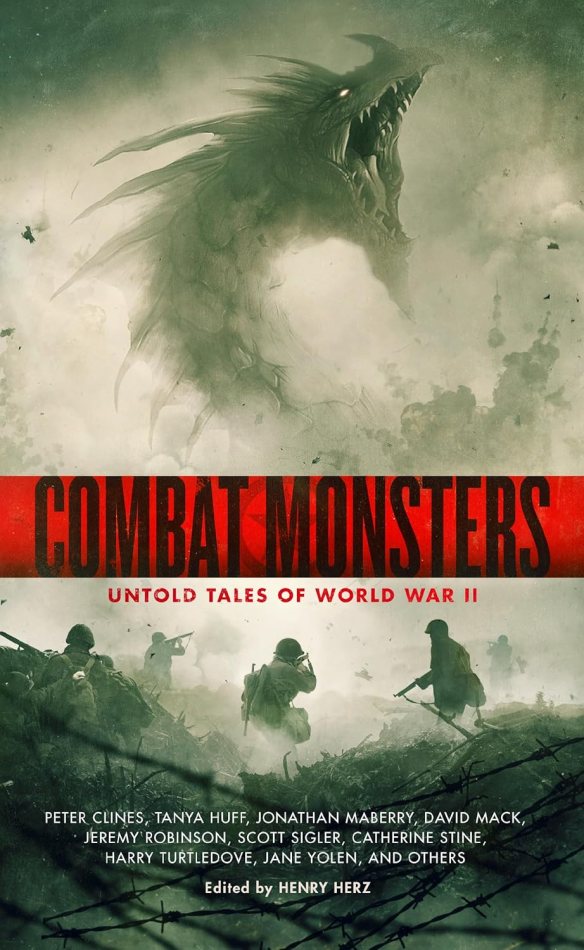
All the writers included in the new anthology Combat Monsters: Untold Tales of World War II agree: War and monsters is a lot like love and marriage—you can’t have one without the other. 

Give props to editor Henry Herz. Not only did he curate this terrific collection of weird war tales, but his story “Das Mammut” represents the most overt example of how men and monsters coexisted during wartime. 

In 1943, Germany unleashed a super weapon upon Russia. The Land Dreadnought was an impenetrable walking battleship that couldn’t be stopped by conventional artillery. Inexplicably, it looked like a gigantic Mesopotamian ziggurat. 

But Russia wasn’t without a super weapon of its own. Recently, the Motherland had discovered a three-headed, fire-breathing dragon sleeping in an abandoned mineshaft. The beast was now a valuable asset in the Red Army. 

Although Zmei Gorynych was an ancient creature, he had the attention span of a teenager. He needed the guidance of a pilot—someone to keep him focused during battle. That someone was Kapitan Andrei Petrov.

As Gorynych and Petrov prepared their strategy to destroy the Dreadnought, they formed a bond of respect and friendship. To be honest, their unlikely camaraderie probably wouldn’t have happened in any other situation. The story’s tragic ending underscored the bittersweet consequences of war. 

Another example of unlikely unions forged on the battlefield can be found in Jonathan Maberry’s story “A Terrible Aspect.” Two supernatural creatures stumble upon each other during separate but similar missions. They’re both trying to eradicate a coterie of Ariosophists making trouble in Italy. 

Even though the two preternatural agents were on different sides of the war, they quickly agreed to work together to defeat their shared enemy. Maberry includes a dollop of glamour in his story to make readers pine for a little romance between the Italian benandanti and the American mercenary.

Other excellent stories include “The Fourth Man” by Jeff Edwards about a soldier who sells his soul to an unholy god in order to defeat an ancient leviathan and “The Night Crew” by Peter Clines about a boatload of seafaring vampires. And just for me, there’s a David Mack story about Americans dropping an A-bomb on Japan in order to slay a Ghidorah-like giant monster.

The most uplifting thing in Combat Monsters comes from author Bishop O’Connell. “Nachthexen” is about a group of female Ukrainian pilots fighting Nazi troops in concert with the Russian Air Force. The story features a witchy brew of Ukrayina patriotism and female empowerment. Without a doubt, it’s my favorite thing in this collection. 

[ Combat Monsters: Untold Tales of World War II / Edited by Henry Herz / First Printing: February 2025 / ISBN: 9798874748432 ]

Collect Them All

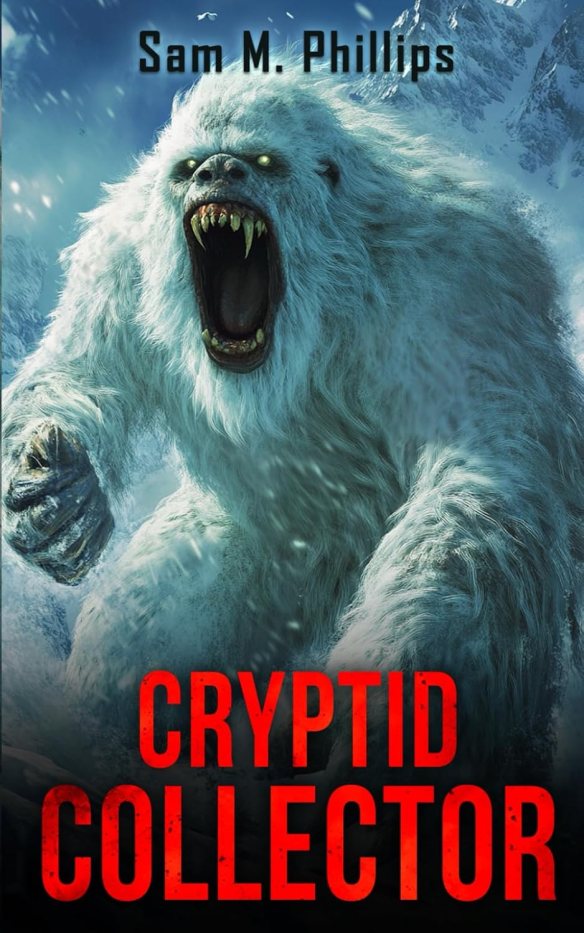
When readers first meet Tom Tennyson, he’s just a 14-year-old kid. He and his father have plans to climb the tallest mountain in the world and, if possible, kill the elusive abominable snowman. 

Like Holden Caulfield, Peter Parker and Hamlet, the mopey Prince of Denmark, Tom was an angsty boy—he hated his abusive father (for good reason) and he certainly didn’t want to be anywhere near the Himalayas. Said author Sam M. Phillips: “The mountains stood like sentinels between him and a manhood which felt elusive, something his father would not bestow upon him, not until he helped bring in the yeti and mount its head on the wall of their family home.”

Soon enough, Tom and his father (and their friendly Sherpa guides) came across the yeti. It was 10-feet tall and four times the bulk of a regular man. Its leathery face seemed almost human but with an overriding ape-like countenance. Up close, the beast’s eyes were keen and intelligent, yet piercing and feral. 

The encounter didn’t go well. Even though Himalayan legends tell us that the yeti is shy and nonconfrontational, this one was neither. This particular snowman was an aggressive and hungry hunter. Tom survived the attack and made it down the mountainside alive—but not before shooting the monster in the face with his father’s vintage Lee-Enfield rifle. 

Jump ahead 22 years and Tom was a 36-year-old billionaire (as measured in Australian currency). He was also a self-professed “cryptid collector.” In other words, he had spent a good chunk of his adult life collecting DNA samples of various cryptids, including the barghest hound and the aniwye, a skunk-like creature the size of a bear. And now, after traveling the world and the seven seas, he was back in the Himalayas for a second go-round with his yeti nemesis. 

The reunion between man and monster occurred almost immediately—even before the climbing party left camp. As it turned out, the yeti had a long memory and was patiently waiting for Tom to return to Mount Everest. Said the author: “The yeti bore down on him like an avalanche of crushing whiteness.”

This is when Cryptid Collector really gets nasty with lingering father and son baggage. Not only was Tom facing the same savage snow beast from before, but he was also fighting against his father’s toxic DNA. This type of internal/external struggle is  popular with writers, and I must say, Phillips uses it effectively to bring his novel to a roaring conclusion.  

[ Cryptid Collector / By Sam M. Phillips / First Printing: January 2025 / ISBN: 9781923165465 ]

Half Shark, Half Sasquatch, ALL HERO

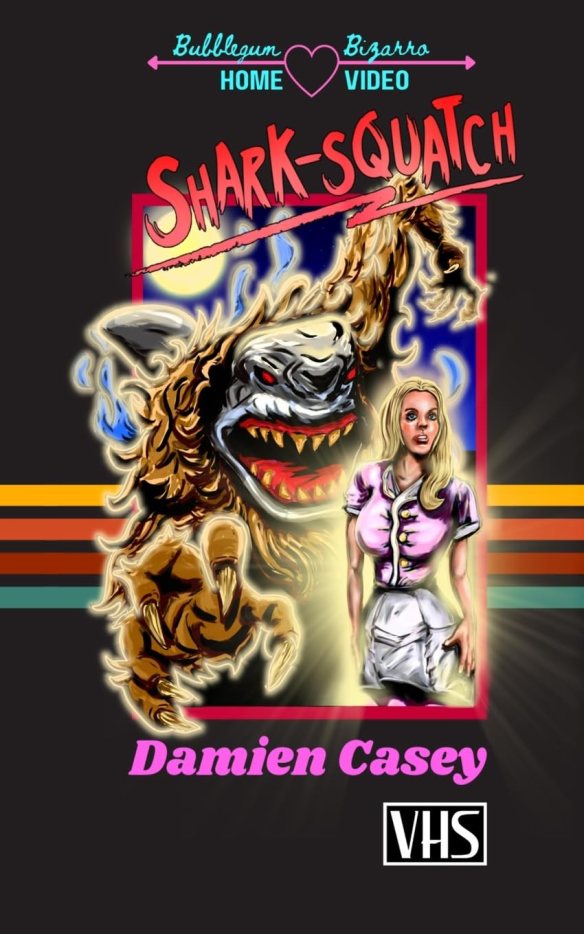
It all started when Dr. Jane Tiptree found a decapitated sasquatch corpse in a dumpster behind a haunted house. Later, she attached the head of a great white shark to the body. With a few more tweaks, Shark-Squatch became a freedom fighter in the on-going war against misogyny and fascism. 

Dr. Tiptree created Shark-Squatch to fight against the over exaggerated male-dominated society that took root in the United States in the year 2029. For example: the color pink was declared illegal and adult bookstores were now stocked with sports magazines. 

Furthermore, military officers who weren’t straight white dudes were deployed to an island purchased by President Donald J. Trump. Shortly afterward, the U.S. government would declare war on the island and then nuke it off the map. 

In 2031, President Trump appointed podcaster Joe Rogan as the Chief Law Enforcement Officer for the entire country. The police were rebranded as “Agents of Rogan” (AR for short) and they quickly morphed into a Schutzstaffel-like organization. Experts agreed that this was the moment Trump’s brain worm took total control of his body. 

The biggest cultural war happened when Kid Rock was appointed the country’s Chief Music Officer. His clampdown of music created a severe schism between men and women. He championed bands like Iron Maiden, Black Flag and Pantera and banned performers like Taylor Swift, Alanis Morissette and Meghan Trainor. 

It was Trainor, surprisingly, who sparked a nation-wide revolution when she became the avatar of an underground anti-fascist organization. The Pink Pony Club was dedicated to destroying President Trump’s legacy of inhumanity. Because it was a terrorist group, anyone in the club who was captured by the Agents of Rogan would be executed at a participating McDonald’s. 

The Pink Pony Club was happy to have Shark-Squatch on its side. He was a brute—eight feet tall and built like a brick house. Said author Damien Casey: “His abs were harder than concrete filled with steel and wrapped in a balloon made of bulletproof glass.”

Accompanied by Matilda “Tilly” Coralie—his pink bikini-clad BFF—Shark-Squatch invades the central headquarters of AR. The pair’s mission: find out who’s in charge and abolish centuries of government cruelty and oppression.

Before they completed their mission, however, Shark-Squatch and Tilly needed to defeat a few AR monsters. The wildest of them was the Fresno Night-Croc, the only creature that rivaled Shark-Squatch in sheer badass cryptid-animal hybridization. I must admit, Casey’s monsters have always been awesome in previous novels and the Night-Croc is no exception. Standing 12 feet tall, he had two massive red wings and a crocodile snout between his legs. According to Tilly, he looked like an upside-down dick flopping out of a pair of crocodile skin pants.

With his mission done and all the monsters (mostly) defeated, Shark-Squatch became an official Pink Pony Girl. He was half shark, half sasquatch—and all hero.  

[ Shark-Squatch / By Damien Casey / First Printing: January 2025 / ISBN: 9798348184360 ]

The Sheeple Invasion

The best villains are always the guys who think they’re the heroes. For example: General Zod, Thanos, Erik Killmonger and Light Yagami were all misguided creeps who thought they were doing the right thing. 

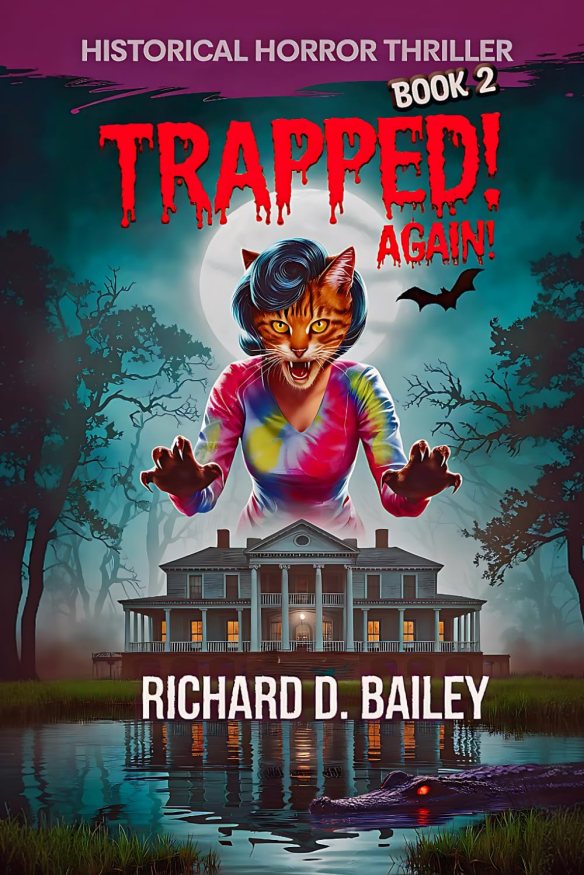
In Trapped!, the first novel in Richard D. Bailey’s ongoing historical horror series (read my review here), Dr. Vladislav Volkov wanted to prevent WWII by creating an army of wolf-human hybrids. And now, in the second book, he wants to save humanity from itself by turning humans into subservient sheep—literally. 

Volkov had good intentions (I guess), but he was a madman warped by the horrors of war. Rumors of grotesque animal experiments followed him like a dark shadow—abhorrent acts that would disgust even the infamous Josef Mengele. 

Over the years he created boar, bear and armadillo hybrids along with werevolks, vampire cats and one sexy kangaroo lady. His flock of sheep people were just the latest attempt to reimagine the world we live in. Note: the author never attempts to explain how Volkov does this. The mad doctor merely has a “recipe book of mixes and serums” tucked away in a safety box somewhere. 

Trapped! Again! takes place 25 years after the first novel ends. It was now the swingin’ mid-sixties—Lyndon Johnson was president of the United States, Tom & Jerry were on TV, Bob Dylan picked up an electric guitar and the Beatles were set to perform at New York’s Shea Stadium. 

Along with his white-cloaked minions (affectionately called the Klueless Klutz Klan), a former Cuban intelligence officer, a French chef and (briefly) Jim Jones, Sun Myung Moon, David Berg and Charles Manson, Dr. Volkov was in Georgia planning his sheeple invasion at Grimclaw Manor, a large two-story, antebellum plantation house.

Naturally, his mad scheme couldn’t go unheeded. A global ministry of spies and government agents (and one journalist) were dispatched to infiltrate Grimclaw Manor. The Primal Pack, a superhero-like group comprised of former Volkov animal hybrids, were also on the case.  

With so many minions, monsters, superheroes and spies running around Volkov’s mansion, Trapped! Again! could easily have spun out of control. As he did with the first novel, Bailey decides to let each of his characters tell the story through their own experiences. It’s not exactly Rashomon (the 1950 movie by Akira Kurosawa), but it helps the reader contextualize the fractious narrative. 

And, of course, the whole thing’s a goddamn hoot. Volkov was a cagey smartass, the quippy Primal Pack were a lot like the Teenage Mutant Ninja Turtles and the consortium of global gatecrashers each had their own lovable eccentricities and foibles. The novel eventually ends with a frenzied Silver Age slugfest that checked all my fanboy boxes. I’m really looking forward to the third book in the series Trapped! Finale! coming soon. 

[ Trapped! Again! / By Richard D. Bailey / First Printing: January 2025 / ISBN: 9798306162454 ]

The Graveyard Shift

Years ago while still in college I spent one summer working as a nightwatchman for a popular kitchen stoneware company. Not much happened during my shift so I spent the majority of time listening to the radio and reading Harold Robbins novels. 

Even though I once saw an enormous rat chewing on a bone in the factory’s basement, nothing really scary ever happened at night. It was just me and a handful of hardworking ceramicists dutifully working the graveyard shift. 

Bruce Cooper, a prison guard in Sean P. Gibson’s new novel Prehistoric Nightmare: The Graveyard Shift, had a completely different experience than I did. He went to work one night and found himself face to face with a gaggle of aggressive (and hungry) dinosaurs.

But were they dinosaurs from 66 million years ago? Bruce wasn’t sure. More than likely they were not of this world. “They were spawns of the devil,” he told himself. 

The creatures were actually bio-tech monsters pumped full of DNA variants including, but not limited to, dinosaurs. Some were tall, some were short, some were red and some were green, but they all had teeth like knives and fingers like swords. 

One particularly nasty beast had two Tyrannosaurus rex-like heads sitting atop muscly necks like bowling trophies. Said the author: “Its claws were as sharp as a wolf’s cunning and teeth as deadly as a crocodile’s embrace.” So frightful was this monster that it had to be either Lucifer’s right-hand demon or the Dark Lord himself. 

Cooper needed help getting out of that prison ASAP. He couldn’t do it all by himself. His coworkers were dead and all of the prisoners had been slaughtered. He needed the police. He needed the army—he needed help from anyone he could find. Even if it was his ex-wife.

He and Myla were married for 16 years before they eventually divorced. Even though they were guards at the same prison, they were no longer on speaking terms, professionally or personally. Reuniting during a dinosaur apocalypse wasn’t something either of them anticipated. 

There was a bit of awkwardness between the two ex-spouses (as expected), but not enough to ruin the momentum of this fast-paced dino thriller. Kudos to the author for keeping his third act tight. 

The two former lovers actually made great partners. Through teamwork (and a lot of luck) they made it to the prison’s emergency access gate. They knew it was their only shot at survival. What they found at the gate, unfortunately, was a total shocker. 

I enjoyed Prehistoric Nightmare: The Graveyard Shift, but I have one negative comment. The novel concludes three weeks later in the hospital where Cooper reads a newspaper account of the dinosaur prison invasion. It’s a big chunk of exposition that explains the whole situation from top to bottom. Fair enough. But the news article is totally dappy. Any reporter with a J-School diploma hanging on the wall (like me) will wince at the weak attempt at journalese. 

[ Prehistoric Nightmare: The Graveyard Shift / By Sean P. Gibson / First Printing: January 2025 / ISBN: 9798303822214 ]

Splitterpunk

Have you ever seen a peacock mantis shrimp? Colorful and big, they are super aggressive with raptorial appendages that strike prey 50-times quicker than the blink of an eye. Their claws are able to break glass and snip off fingers. In other words, they are equally pretty and deadly.

Now try to imagine a gigantic nine-foot-long bioengineered super stomatopod. Without a doubt, it would have the potential to be an apex killing machine. But with luck, it might also be a government asset. The creature’s weaponized abilities could enhance any Navy armament—able to sink ships, take out subs and absorb any torpedo blast with a shrug. 

Such a beast already existed according to Stu Groskell’s new novel Splitter. The result of U.S. Navy bio-skills tech, the mutant shrimp was “enhanced” to increase endurance and subsea maneuverably (among other things). For added cognitive capabilities, Naval scientists decided to add a human element to the process. It was the crustacean version of transhumanism. 

With human consciousness, the sea monster (code name: Skeeter) had the mental faculty to plan, to strategize and to learn. But Skeeter turned out to be a dud, an “experimental impasse.” 

Instead of being a tactical win for the Navy, the giant mantis-shrimp turned out to be an uncontrollable liability. When it escaped into the Caribbean Sea, the U.S. Government was desperate to eliminate the abomination. “There was no place for such a thing in this world,” said Admiral Val Clewton.

Enter Jack Tarr, former Navy SEAL and current college professor. Because he was now a crustacean expert he was the logical choice to lead an expedition to find (and capture) Skeeter. At first, he was hesitant to jump back into service, but he couldn’t resist the lure of a new species of marine life. With some reservations, he signed up for a seven-day tour of duty. 

From this point forward, the author starts using a jumble of USN lingo in his prose. Fans of seafaring adventures will undoubtedly enjoy the elaborate details, but others might be overwhelmed by the tactical exposition, mundane operational procedures and opaque Navy slang. If you’re like me, you’ll be tempted to skip big chucks of text to get to the monster action. 

Otherwise, Groskell’s prose is excellent. He makes you really hate the villains, Admiral Clewton and his mad scientist bitch Dr. Lucas Tammes. He also addresses the relationship shared between monster and man. “Monsters made you aware of your tininess status,” he wrote at one point, “the utter irrelevance of your existence.” 

And, of course, the monster was monstrous. When finally revealed, Skeeter was primal and maddeningly inscrutable—and weirdly creepy like all biological and technical hybrids. Moving from the Bahamas to the Florida Keys and finally to the Mississippi River, it proved to be an unstoppable deviance of God’s law.

[ Splitter / By Stu Groskell / First Printing: January 2025 / ISBN: 9781923165441 ]

Monster Book Club: Best of 2024

Hundreds of books featuring monsters are published every year and there’s no way to read them all. If you’re a regular visitor to this site, you’ve undoubtedly noticed that a lot of high-profile, well-received efforts from 2024 never cracked my reading list—books such as Bored Gay Werewolf by Tony Santorella, Bless Your Heart by Lindy Ryan, The Z Word by Lindsay King-Miller and So Thirsty by Rachel Harrison. 

But so what? Like I’ve said before, I’m not trying to assemble some kind of A+ shopping list of reputable fiction. Rather, I’m doing my best to establish a monster novel aesthetic borrowed loosely from a 40-year-old Japanese fine art style called Heta-Uma.

At first blush, the books I read might appear to be awful (heta), but upon closer inspection they actually turn out to be terrific (uma). To me, the unstoppable urge to write a zany monster novel is valued more than any literary craft taught to MFA students. If someone has an idea to write a story featuring a giant pink blob, a mutant Spinosaurus and a sexy mummy, I encourage them to do so. I’d love to read it. In the meantime, here’s a list of my favorite books of 2024.

1) Knocks and Howls edited by Jim Beard / Attack on Sasquatch Valley by Jason White. Who says all bigfoot stories are the same? Not me. These two books prove the genre has plenty of nuance. Congratulations to everyone involved.  

2) To Hell You Ride by Carissa Hardcastle. Is this a science fiction novel or a mid-century giant monster throwback? Tomayto Tomahto. It doesn’t really matter. It’s an awesome creature feature either way.  

3) A Mayhem of Monsters by Mark Onspaugh. A variety of monsters fill this bountiful anthology—including redteeth, black dogs, burnt men and weeping women. Added bonus: most of the stories end with an unexpected EC Comics-like twist. 

4) KJK Publishing Presents the Horror Collection: Monster Edition edited by Ann Keeran and Kevin J. Kennedy. KJK Publishing has been releasing top-notch horror anthologies for years. This, I believe, is its first volume dedicated solely to monsters. I hope there’s a second volume coming soon.

5) Beyond Here Be Monsters by Gregory Frost. Consumer alert: not all the stories in this collection feature monsters. But that’s cool. It’s always a treat to get a newly curated batch of stories from Mr. Frost. And don’t worry—the monster stuff is pretty dang terrific.

I look forward to more “awful but amazing” monster novels in the future. Below is an ongoing list of books that are already on my radar.  

2025 Monster Book Club Reading List

Aflockapocalypse! by Tory Favro. Bestia Secretum: Further Explorations into Classic Cryptozoological Fiction edited by Chad Arment. Beasts by Ingvild Bjerkeland. Blood on Her Tongue by Johanna Van Veen. Blood Slaves by Markus Redmond. Bloodsucker County by Jeff Strand. But Not Too Bold by Hache Pueyo. Coffin Moon by Keith Rosson. Cone by Michael Cole. Combat Monsters: Untold Tales of World War II edited by Henry Herz. Cosmic Dyke Patrol by Lor Gislason. Count Quackula, the Duck Who Sucked by Dustin Gross. Creature by Amy Weldon. Cryptid Collector by Sam M. Phillips. Direct Descendant by Tanya Huff. Dog Fight by Lucas Pederson. Down Came the Spiders by Ally Russell. Dropshipped by Stephanie Sanders-Jacob. Fossil Sci-Fi by Allen A. Debus. Frankenstein Lives by Paul Ruditis. Frankenstein’s Monster by J.S. Barnes. Gator by J.A. Johnson. Girls, Robots and Monsters by Clea and Tallis Salar. Gore vs. the Cryptid Kaiju by Zach Cole and Cody Bratsch. Harlow’s Haute Horrors by Loretta Kendall. Hell Below Zero by K.G. McAbee. Hive Rod McLaughlin. Holy Water Hurts by Gabryel Grimm-Goretez. Howler: Terror in the Ozarks by Edward J. McFadden III. Howl: An Anthology of Werewolves from Women-In-Horror edited by Stephanie M. Wytovich and Lindy Ryan. Hungerstone by Kat Dunn. Loch Ness Awakens by K.T. Tomb. Lost Souls and Restless Spirits by Adrian Lopez. Lupus in Fabula by Briar Ripley Page. Lured by the Luska by Henry Scott. Mademoiselle Frankenstein by Robin Solit. Mega Freak: Bloody Paradise by Mike Maclean Melinda West and the Gremlin Queen by K.C. Grifant. Mistaken Mummy by K.P. Maloy. Monster Bones edited by Stephanie Ellis & Noel Osualdini. Monsters of War by G.L. Newman. Monsters, Zombies and Mad Science by Brad Sibbersen. Monstrous by Ty Alexander. My Mummy vs. Your Ghost by Paul Tobin. My Zombie vs. Your Closet Monster by Paul Tobin. Nereus:1: Attack From the Depths by J.A. Johnson and K.G. Mcabee. Night of the Mosquitoes by Brian G. Berry. Noro by William F. Gray. Of Monsters and Mainframes by Barbara Truelove. One Yellow Eye by Leigh Radford. Our Winter Monster by Dennis Mahoney. Over Growth by Mira Grant. Prehistoric Nightmare: The Graveyard Shift by Sean P. Gibson. Prehistoric Nightmare: Zero Gravity by Sean P. Gibson. Primordial Soup: The Second Batch by Dustin Dreyling. Reef Mind by Matt Blairstone. Ristenoff by Jeremy Billingsley. Rokko by Christofer NIgro. Searching for Death by Rick Wood. She Was Monstress by various. Splitter: A Deep Sea Thriller by Stu Croskell. Strange Stones by Edward Lee and Mary SanGiovanni. Tales of Cryptid Chaos edited by R.e. Sargent and Steven Pajak. Tantrum by Rachel Eve Moulton. Terra Jurassic: The Time Rift by Elliot Thornbridge. The Buffalo Hunter Hunter by Stephen Graham Jones. The Contest by David Golemon. The Midnight Shift by Cheon Seon-Ran. The Monster Clean Up Crew by Austin Colton. The Night Crew by Brad Ricks. The Portlock Sasquatch Massacre by K.T. Tomb. The Summer I Ate the Rich by Maika Moulite and Maritza Moulite. The Unkillable Frank Lightning by Josh Rountree. The Vampires of York Tower by Kirsten McKenzie. The Xixen by Bruce Bennett. Trample the Weak by Erik Testerman. Trapped! Again! by Richard D. Bailey. Trapped! Finale! by Richard D. Bailey. Trog by Zachary Ashford. Undead and Unwed by Sam Tschida. Vampire Rites by D.A. Holmes. Vampires at Sea by Lindsay Merbaum. Vampire Slave by Tony Heywood. Webbed by Christian Wallis. Weddings and Witchcraft by A.L. Brody. What Dances in the Dark by Shawn Brooks. Where Monsters Hide: Tales of the Uncanny edited by Scott Dyson. Zomromcom by Olivia Dade. 

Coont Draculi

After 600 years of sleep, Coont Draculi emerged from his casket hungry and horny. No longer in his homeland of Romania, the vampire found himself ensconced in a mansion built at the foot of British Columbia’s coastal mountains. It was a strange new world he found himself in. 

“Igor,” he immediately said to his faithful slave, “bringeth the blood of a virgin maiden. I needeth thine nectar. Bathe shalt I in their blood as they surrender to mine desires.”

Unfortunately for the newly arisen monster from the 15th century, privy chambers had changed over the years. “Thou cannot bathe in maiden’s blood now, Master,” replied the slave. “The manse we live in only has a shower.”

Assembling a harem of succulent maidens was also going to be a problem for the Coont. It wasn’t like the good ol’ days in Transylvania when there were queens and princesses aplenty who were accessible to his charms.

The Coont settled on a single woman named Josephine, known locally as the blowjob queen of Vancouver. She was a druggie with no redeeming qualities whatsoever, but the horny bloodsucker was soon hooked on her opioid and psychoactive gifts. “Sinking his teeth into her neck, the vampire groaned with pleasure as he felt the crack cocaine, heroin and everything else Josephine had pushed through her system that day began to flow through his veins.”

Obviously, The Disciples of Coont Draculi isn’t your standard vampire story. Not only has author Paul Slatter written a spoof of Bram Stoker’s iconic monster novel, but he’s also written a blunt commentary on the worst traits of humanity. Overall, it’s funny and miserable at the same time. 

The Coont was supercilious and grand and looked like some kind of ridiculous street mime. At first, Josephine thought he was just an idiot from a local community theatrics club. Only later did she realize that he was a relic of the forgotten past. 

As entertaining as the Coont could be at times, the real hero of Slatter’s novel was Igor, the former medieval warrior with scars all over his body. He’d been granted immortality 600 years ago in exchange for servitude to the undying vampire. There was one catch, however; Igor would only live as long as the vampire lived. It was imperative that he kept his master safe. 

Over the years, Igor turned a blind eye to his master’s unholy perversions and had reinvented himself as a cultured gentleman. He was a violinist who played music composed for him by Antonio Vivaldi. On his walls hung original paintings by Claude Monet, Paul Cézanne and others. And even though he was duty-bound to protect Coont Draculi, he was a relentless demon hunter who tried to rid the world of evil. 

But Igor was a phony. He didn’t deserve the gift of immortality. Deep down he knew that he should’ve killed Coont Draculi the first chance he got. “How long do you need to live?” asked a character late in the novel. “What gives you the right to eternal life when this bloodthirsty vampire has cut short so many?” 

[ The Disciples of Coont Draculi / By Paul Slatter / First Printing: October 2024 / ISBN: 9798861653817 ]

The Never-Ending Story

Satan’s Anus was a tricky route through some very tall and very rugged mountains in the Pacific Northwest. Treacherous to navigate, the passageway was nonetheless used by cartels to move illegal drugs from one distribution outpost to another. 

It was also a place where huge and dangerous cryptids lived. These eight-foot-tall monsters were notorious for pillaging isolated villages, killing pets, abducting children and raping men and women. “Few who ventured into Satan’s Anus ever returned,” said author J. Rocky Colavito, “and those who did were struck mad by the experience.” 

One night, a small plane carrying a big payload of heroin sputtered while passing through the passageway. The plane and its passengers crashed and burned. The illegal cargo, on the other hand, tumbled safely to the bottom of the gaping crevasse. 

The incident caught the attention of the local drug cartel and the Drug Enforcement Administration. Each organization dispatched paramilitary personnel to the area to assess the situation. It wasn’t a rescue mission, though. It was a recovery mission. Or rather, according to the lead DEA agent on the case, “It was a goosefuck of a mission.” 

The cartel goons and government agents arrived at the crash site simultaneously. Waiting for them was a raging sasquatch taller than two men and stronger than ten. He had ingested several doses of high-end smack and was alert, cognizant and hornier than hell. The recovery mission had suddenly turned into a suicide mission. 

In addition, six freewheelin’ coeds were having an orgy in a nearby cabin. These over-sexed kids would unwillingly play a big part in the third and final act of Colavito’s sleazy and violent novel. 

There was, in fact, a lot of sex and violence in SmackSquatch, but I wouldn’t call the sex erotic. There was nothing titillating about it. For example, here’s what happened the first time readers caught a glimpse of the sasquatch in action: “The beast picked up the dead body and raped it with his engorged penis, easily the size of a mature daikon radish. The corpse hung on his penis like a pig on a skewer. He then slid the husk back and forth, squeezing gore out of the ruptured carcass like toothpaste from a tube. He savaged the body until it fell apart.”

Things only got worst from there. A few pages later, the woodland monster approached one of the obligatory female characters. “The creature’s eyes were red with lust and she could see his penis rising. He rammed it into her mouth, shattering her front teeth. It tore open her epiglottis, and the spasms shattered her nasal cavity. The flood of semen cascaded into her lungs, drowning her.”

It’s hard to feel sorry for any of the characters, however. All of them (except two) were disposable. The DEA agents, the college kids and the cartel mercenaries all died in some horrible way. The slaughter even continued into the denouement. It was never-ending. 

[ SmackSquatch / By J. Rocky Colavito / First Printing: October 2024 / ISBN: 9798340845023 ]

Live Through This

Some monsters are born and some are made. And some, like Mouth, are simply bizarre glitches of nature. 

Mouth was certainly weird, but it wasn’t evil, predatory or ambulatory. It was just a hole in the ground with teeth like a leatherback turtle. When Wayne Rogers discovered the phenomenon in his seven-acre backyard, it felt a bit magical, like something out of a fairy tale. 

Rogers quickly turned his woodland fairy tale into a bloody nightmare. As a former horror movie director, he recognized an opportunity when he saw one. He immediately began abducting hitchhikers, runaways and criminals to throw into Mouth’s gaping maw. By the end of his “career,” Rogers produced a staggering 30 years worth of snuff films. The townspeople silently called him the Dillsboro Death Dealer.

Rogers was gone now, but Mouth was still in the forest and chewing up scenery. Its current caretakers were a pair of lonely and damaged misfits: 50-year-old Rusty and 19-year-old Abigail. There was no romance between them (thank god!) but the couple was united in their commitment to the hungry hole in the ground.

Even though Mouth looked like an old-school monster movie monster, Rusty didn’t consider it a monster at all. It was a living organism just like him. And besides, he didn’t consider the term “monster” to be negative. He saw beauty in the diversity of nature and that beauty was manifest in Mouth. “I think it may be my best friend,” said Rusty.

At this point, Joshua Hull’s debut novel makes a big pivot. Instead of being a full-on horror monster novel, Mouth morphs into a story of redemption and rebirth. Rusty, Abigail and their man-eating hole unite to form a strong family bond that’s surprisingly sweet. “Life had a funny way of fucking everything up,” said Hull, “but it also had a funny way of bringing misfits together.”

In addition to its life-affirming message, there’s a lot of jibber-jabber about movies and moviemaking in this short novel. In fact, the novel itself is sort of like a cross between two iconic films: Tremors and The Blair Witch Project

Even beyond that, it’s a love letter to the power of cinema. Rusty and Abigail found solace in the monster movies they watched as kids—most notably Jaws and The Blob—and movies gave them the hope to find light in the darkness. 

Said Abigail: “Movies are the best. They’re the greatest gift we’ve been given. Can you imagine where humanity would be without them? We would be lost, man. LOST. Movies make people feel alive. Without them we’d all be fucking miserable.” 

[ Mouth / By Joshua Hull / First Printing: March 2024 / ISBN: 9781959790020 ]