 During his time on this island earth, Terry Carr edited an astonishing number of tip-top science fiction anthologies. Not for nothing, he also co-edited one of the first books I ever read. World’s Best Science Fiction 1968 included a batch of great stories including Harlan Ellison’s career tentpole “I Have No Mouth, and I Must Scream.”
Despite the efforts of award-winning authors such as Brian Aldiss (“Full Sun”), Robert Silverberg (“The Silent Colony”), Clifford Simak (“The Street That Wasn’t There”), Theodore Sturgeon (“It”) and Eric Frank Russell (“Dear Devil”), there’s nothing that rises to the level of Ellison’s genre-uplifting story in this collection from 1975.
But that criticism isn’t totally fair. In no way does Creatures from Beyond purport to be the “best” of anything. If I had to guess, I’d say it was aimed at a juvenile readership, and was reflective of what the science fiction community thought kids would enjoy at the time—in other words, the content wasn’t as good as Robert Heinlein but it was waaaay better than Perry Rhodan and Tom Corbett, Space Cadet.
More importantly (to me), Carr’s anthology is 100 percent committed to strange, wiggly and slimy creatures. Truly, it’s like the prose equivalent of TOPPS Ugly Monster Stickers (look it up). You don’t have to be a kid to enjoy these tales of giant worms, swamp things, werewolves, blue Martians, plague creatures from Venus and otherworldly cats.
Although the two best efforts are unconvincingly facile, they are thoroughly entertaining nonetheless. Theodore Sturgeon’s giant monster smells like carrion and “moves with the slow inevitability that is the crux of horror.” For 27 pages the thing-made-of-mold drags its hateful putrescence across our earth before being reclaimed by nature.
Significantly more upbeat, Eric Frank Russell’s “ropy alien with enormous beelike eyes” helps facilitate a friendly relationship between Mars and Earth. “By cosmic standards we are a weak and foolish people,” explains the shipwrecked Martian to his new human comrades. “We are desperately in need of support from the clever and strong.”
Weirdly, the only bad story in the book is by the editor himself. “Some Are Born Cats” is simply too annoying and precious for anyone over the age of 13. But don’t let that distract you too much. In every other way, Terry Carr did a fine job of curating a wonderful collection of science fiction monsters from Infinity and beyond.
[Creatures from Beyond / Edited by Terry Carr / First Printing: January 1975 / ISBN: 9780840764591]
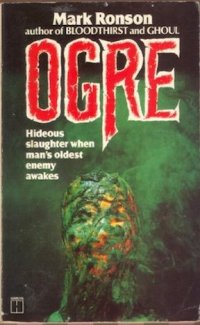 In the beginning, the monster in Mark Alexander’s novel is far from overwhelming. Initially it’s described vaguely as a sheet of silver reflecting in the sun. A little like Reynolds Wrap Aluminum Foil, I suppose.
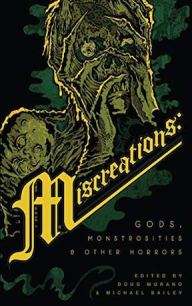 I agree with author Alma Katsu. In her chatty foreword to this book, she says that Mary Shelley created the greatest and most iconic monster of all time. Forget about giant gorillas and colossal kaiju, Frankenstein’s Prometheus remains king of the monsters.
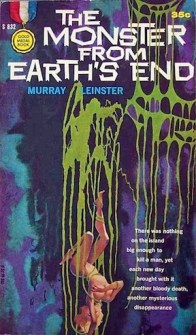 Gow Island was a pile of drab rocks in the middle of the ocean—3,000 miles from New Zealand, 2,000 miles from Chile, 600 miles from the Antarctic ice cap and a million miles from home.
 Lois & Clark: The New Adventures of Superman was a TV series from the 90s that emphasized the flirty relationship between Lois Lane and Clark Kent. During its four-season history, the show was a fun and good-natured romantic comedy.
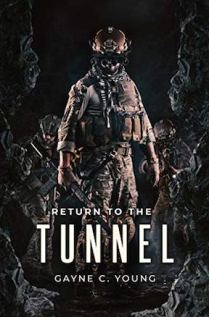 In Gayne C. Young’s previous novel (
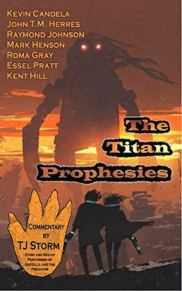 The Titan Prophesies is dedicated to “all those who helped craft amazing tales of giant monsters that thrilled us with wonder, filled us with awe and swept us away to realities where giants walk among us.”
 Shindo Yamaguchi from Japan’s Ministry of Defense knew trouble was brewing. It wasn’t because COVID-19 was spreading or because the 2020 Olympics had been postponed or because manga piracy was on the rise. Yamaguchi knew there was a new kaiju threat on the horizon.
 Readers don’t have to wait long for the killer kangaroo to show up in Alan Baxter’s latest novelette. The Australian buck begins its blitzkrieg hop right away on page two: “The roo’s mouth closed over its victim’s neck,” writes Baxter. “The flesh peeled up and away with a wet tear.”
 There’s no question about it. Wolverine is a tough nut to crack. In this book alone, for example, he’s pumped full of lead, burned alive, fed to sharks, attacked by ninja and blown to pieces. Later, he jumps out of an airplane without a parachute. Twice. “It will only slow me down,” he says.
 Monster Book Club