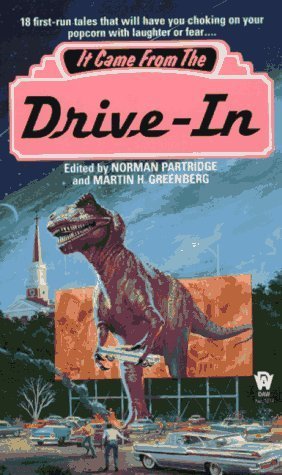
Mid-century drive-in theaters were infamous for showing a certain type of low-budget movie. The movie titles advertised on roadside marquees inevitably promised a riot of space invaders, giant insects, mutants, teenage monsters, biker gangs, grifters, hot rods, greasy kid stuff, tight angora sweaters and rock’n’roll.
With nostalgia to guide them, editors Norman Partridge and Martin H. Greenberg have assembled an anthology that perfectly represents (mostly) the golden age of B-movies—“The Thing from Lovers’ Lane,” “The Blood on Satan’s Harley,” “59 Frankenstein” and “The Slobbering Tongue that Ate the Frightfully Huge Woman” are just a few of the wild and campy stories included in this collection.
Perhaps the two stories that best encapsulate the drive-in experience are “Plan 10 from Inner Space” by Karl Edward Wagner and “Jungle J.D.” by Steve Rasnic Tem. Both efforts, in their own way, present all the elements of teenage cinema from the 50s in one kinetic jumble. The Wagner story is pretty straightforward, while “Jungle J.D.” is a crazy word salad of nonsense. Both are terrific.
As teenagers, my friends and I would go to our friendly neighborhood outdoor theater and gorge on action flicks from Hong Kong. For us, Bruce Lee, Sammo Hung, Angelo Mao and Cheng Pei Pei were the kings and queens of the drive-in. Unfortunately there isn’t much kung fu action in these 18 stories. A young Bruce Lee (with peroxide hair!) shows up briefly near the end of the book, but otherwise the contributions of Asian films on the American id goes undocumented.
Without a doubt, my favorite story of the bunch is by Nina Kiriki Hoffman. “I Was a Teenage Boycrazy Blob” is about a lovesick monster’s sensual awakening during her journey to the local Fosters Freeze to rendezvous with the boy of her dreams. “I could almost taste his whole substance even though he hadn’t touched me yet,” says Silly Putty Patty LeFevre. “Brylcream and zit medicine and shaving lotion, skin and bone and blood, ketchup on his breath, sex on his mind, soap on his skin.” A total nirvana of a snack! she gurgles.
One final note: More than one author name checks a particular iconic tune by Link Wray and His Ray Men. With its relentless distortion and ominous power chords, “Rumble” easily sets the mood for this socko collection of stories featuring monsters, teenagers and rock’n’roll.
[It Came from the Drive-In / Edited by Norman Partridge and Martin H. Greenberg / First Printing: February 1996 / ISBN: 9780886776800]
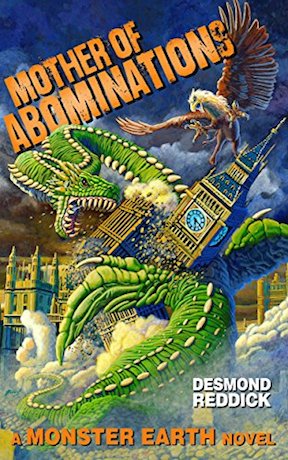 Bree Kenny was a 10-year-old little girl when she saw her parents crushed by “the great griffon.” Since then, her life had become one huge allegory for using violence to solve her problems.
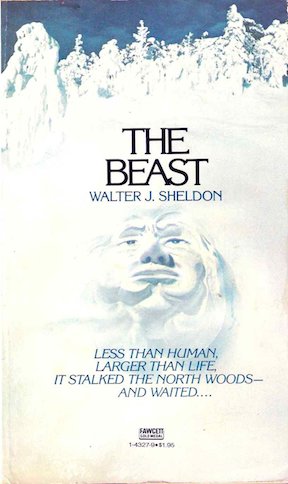 The Beast is a salacious piece of work. First published in 1980, Walter J. Sheldon’s bigfoot novel is filled with all sorts of touchy topics like bestiality, rape, cannibalism, religion and grubby small town politics.
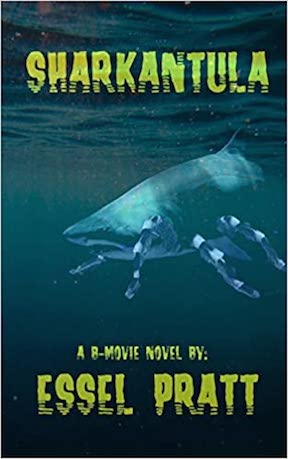 “Throwing the gun” is an age-old trope of genre fiction. I don’t know exactly when it first popped up (probably in a Western or Detective movie), but I clearly remember reading Action Comics as a kid and seeing criminals toss their empty guns at Superman after running out of bullets.
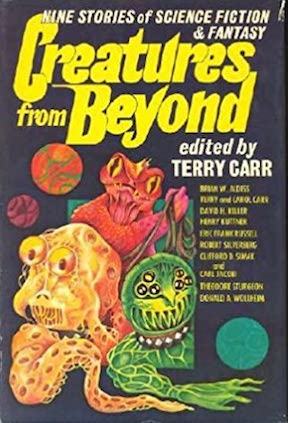 During his time on this island earth, Terry Carr edited an astonishing number of tip-top science fiction anthologies. Not for nothing, he also co-edited one of the first books I ever read. World’s Best Science Fiction 1968 included a batch of great stories including Harlan Ellison’s career tentpole “I Have No Mouth, and I Must Scream.”
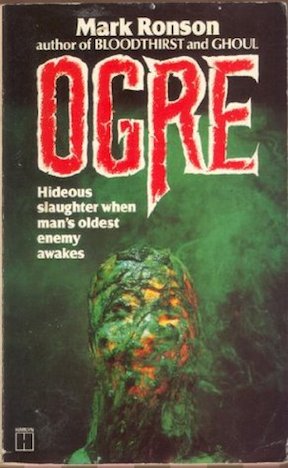 In the beginning, the monster in Mark Alexander’s novel is far from overwhelming. Initially it’s described vaguely as a sheet of silver reflecting in the sun. A little like Reynolds Wrap Aluminum Foil, I suppose.
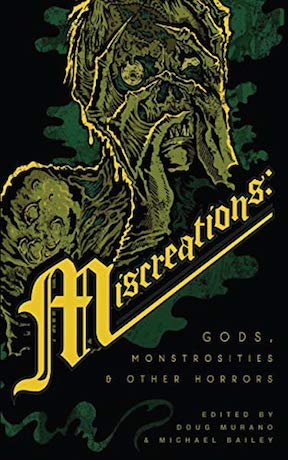 I agree with author Alma Katsu. In her chatty foreword to this book, she says that Mary Shelley created the greatest and most iconic monster of all time. Forget about giant gorillas and colossal kaiju, Frankenstein’s Prometheus remains king of the monsters.
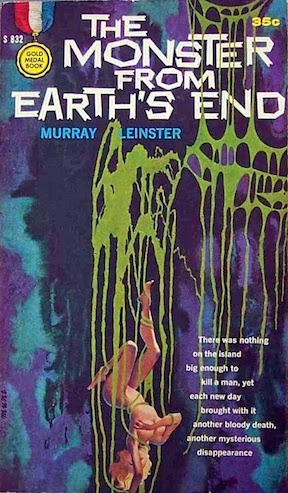 Gow Island was a pile of drab rocks in the middle of the ocean—3,000 miles from New Zealand, 2,000 miles from Chile, 600 miles from the Antarctic ice cap and a million miles from home.
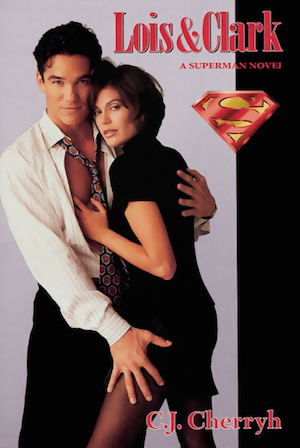 Lois & Clark: The New Adventures of Superman was a TV series from the 90s that emphasized the flirty relationship between Lois Lane and Clark Kent. During its four-season history, the show was a fun and good-natured romantic comedy.
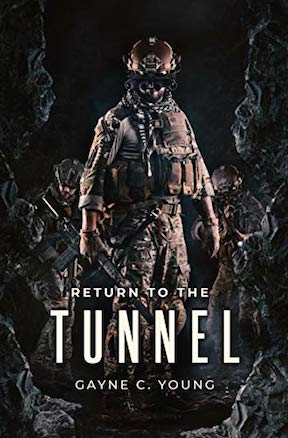 In Gayne C. Young’s previous novel (
