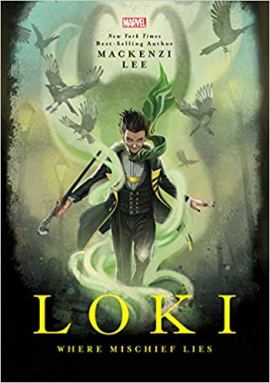
 There’s no timestamp on Mackenzi Lee’s latest novel. Readers aren’t told how old Loki and Thor are. All we know is that All-father Odin has yet to name an heir to the Asgardian throne.
Later, when Loki visits London, the details are somewhat vague as well. When exactly does Lee’s novel take place? Does it transpire during the early days of the Industrial Revolution? Or is it set in a bleak nineteenth century Dickensian milieu?
Even Loki is confused by the squishy timeline. On Asgard he’s a young prince and an artful dodger. But on Midgard he’s already the Lord of Darkness and Mischief and Chaos and Everything Evil.
Loki doesn’t know it at the time, but humans on Earth are keenly aware of the mighty Aesir. Stories of Odin and Frigga and the Twilight of the Gods are a big part of popular culture.
As it turns out, these myths from the past are also inextricably tied to Asgard’s future. Like it or not, Loki never gets to be the hero. It is his brother Thor who eventually ascends to the throne. “My story has already been written,” he cries in frustration. “It’s been told and retold. Humans know everything about me.”
Which begs the question: If Loki can’t be the hero, what else is left? Lots of things, apparently. He can be the witch, the trickster, the schemer, the self-serving God of Chaos. He can prove the mythology books right, that he was rotten from the start. Says the author: “He would serve no man but himself, no heart but his own. That would be his choice.”
Loki’s partner in crime is Amora, known to comic book readers as the Enchantress. In possession of five highly coveted Norn Stones, the pair hatch a plot to storm Asgard with an army of human zombies. For some reason, this seems like a totally reasonable thing to do.
As a couple, Amora and Loki are two sides of the same coin. They’re both dissatisfied with Asgard’s rigid caste system. Amora is a powerful sorceress who resents living in the shadow of her mentor Karnilla, the Queen of Norns. “I do not want to be controlled,” she says. “I am powerful, so let me be powerful!”
Likewise, Loki considers himself cleverer, sharper and quicker than everyone else in Odin’s court. He knows, however, that he’ll never win his father’s favor. Secretly he wishes for a hammer just like the one his brother wields. “I want to break something,” he says.
Good or bad, hero or villain, Loki and Amora are ultimately undone by social expectations. Like Esther Greenwood (look it up), they can’t break out of the bell jar. “There are some things that cannot be taught,” says Odin, “and one is how to change our hearts. Our true selves always show themselves in the end.”
[Loki: Where Mischief Lies / By Mackenzi Lee / First Printing: September 2019 / ISBN: 9781368022262]
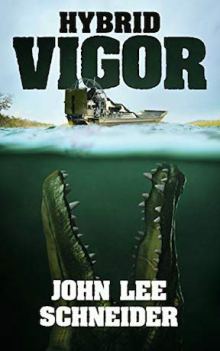 According to author John Lee Schneider, alligators were like big and lazy frogs. “Mud-rooters,” he called them. They might look fierce, but over the years they’ve grown fat with environmental protection.
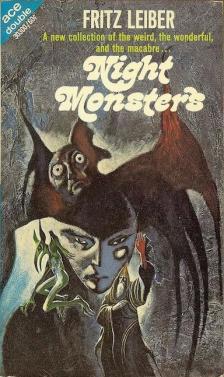 Night Monsters reflects author Fritz Leiber’s career-spanning affection for horror, urban fantasy, timeless antiquity, arcanum, anima and Dark Ladies (no sword and sorcery adventures, alas). It’s a minor collection of stories, but still worthy of a place on your nightstand for a little bedtime reading.
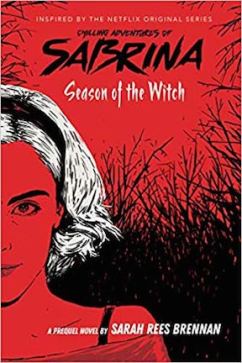 In Season of the Witch, Sabrina Spellman was only 15 years old. She hadn’t experienced her dark baptism, she hadn’t signed her name in the Dark Lord’s book of souls, and she wasn’t enrolled at the Academy of Unseen Arts. She didn’t possess a grimoire—she didn’t even have a black cat named Salem yet.
 The Wash was a vast area of mud, quicksand and dangerous tides. Although beautiful from a distance, especially during the summer when the sun sparkled in the morning mist, it was unquestionably Britain’s most inhospitable location.
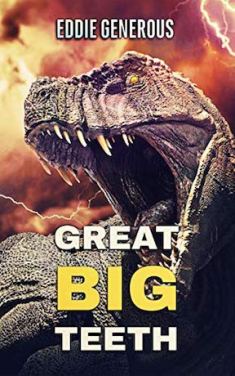 In 1977, a pregnant hippie on a nine-day bender fell down a hole and discovered her version of Pellucidar—a hollowed out, underground chamber filled with dinosaurs. It was an Edgar Rice Burroughs, Jules Verne and Mysterious Island nightmare. Said the author: “Jane Hartman was stuck in an anomaly that spanned several million years, possibly one hundred million years. Hell, maybe longer.”
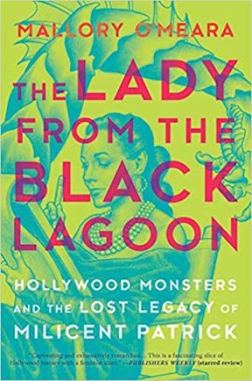 “Women have always been the most important part of monster movies,” says author Mallory O’Meara, “because women are the ones horror happens to. Women have to endure it, fight it and survive it.”
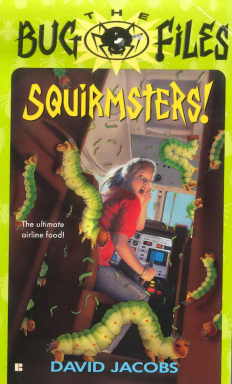 Do “nature run amok” novels qualify as monster novels? Is a coordinated attack of army ants as monstrous as a mob of abominable snowmen? I say “yes.” Rats, worms, spiders, ants, a plague of flies, a swarm of bees, a flock of seagulls—when Mother Nature gets mad, she has a long list of creepy-crawlies on speed dial to do her bidding.
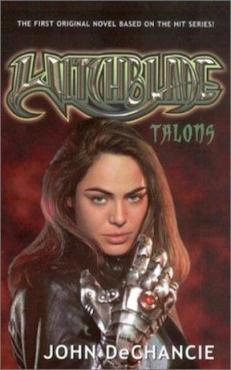 Witchblade was certainly a big part of the “bad girl” movement in comic books during the 90s. And author John DeChancie doesn’t back away from the sexy witch’s infamous eye-popping transformation in his prose adaptation from 2002.
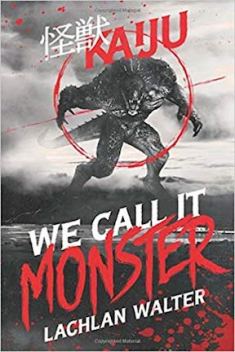 Kaiju novels are a lot of fun. In particular, I enjoy the crazy and extravagant descriptive language used by authors to construct their towering colossi. The books are rarely scary, but the earthshaking monsters are always a hoot.
 Monster Book Club