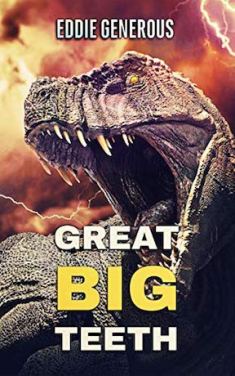
 In 1977, a pregnant hippie on a nine-day bender fell down a hole and discovered her version of Pellucidar—a hollowed out, underground chamber filled with dinosaurs. It was an Edgar Rice Burroughs, Jules Verne and Mysterious Island nightmare. Said the author: “Jane Hartman was stuck in an anomaly that spanned several million years, possibly one hundred million years. Hell, maybe longer.”
She survived her slippery slide to Middle Earth and eventually gave birth to a son named Doobie. And just like an inbred version of Adam and Eve, Jane and her son conjoined to create a new Garden of Eden. A couple of generations passed and Jane became the revered matriarch of a tribe of cave dwellers in their own private savage land.
Dinosaurs in the Garden of Eden: For most people (including Young-Earth Creationists) that would be enough. For author Eddie Generous, however, that was just a two-page setup. The real action began when an earthquake dropped the mountainside community of Happy Village into the infernal abyss (half a century after Jane went down the rabbit hole btw). That’s when the novel explodes in a time warp of improbable anachronistic weirdness, sexual misadventure and great big teeth.
First there’s Stevie Drew, a high school junior, who was “the wrong side of the tracks incarnate.” Despite the ever-present dino danger, he couldn’t escape his teenage libido. “He needed to focus on his situation,” wrote the author, “and not worry about how nice Emily’s ass felt against his crotch.”
And secondly there’s David Bowie Bowtie, a Kamandi-like hero who killed chicken-snakes (Velociraptors) and wrassled tank-pigs (Nodosaurs). Even though his gene pool was as shallow as a toilet bowl, he was a noble savage who helped the newcomers navigate the treacherous prehistoric chasm. I’m sure Jack Kirby would enjoy this wonky version of the Last Boy on Earth.
But the best thing about this novel was sweet Jane Hartman herself. Even though she’d been living in a cave for 50 years, she couldn’t escape the influence of the swingin’ 70s. All of her kids had ginchy names like Sonny Bono, Sunshine Nicks and Shroomshine, and her taste in music never progressed beyond Peter Frampton, David Bowie and the Bee Gees. No punk, rap, speed metal or BTS for her.
Jane had been out of circulation for a while and her fuzzy logic was unendingly funny. At some point she discovered an underground Batcave connected to the surface world. Filled with snacks, booze, sex toys, ammo and DVDs (and maybe a giant penny and an over-sized Joker playing card), the bunker gave Jane a glimpse into how the world had changed in her absence. It became obvious to her—after finding a life-sized sex doll that looked like Linda Hamilton, circa 1984 (“Not yet tough, but with a lot of potential,” according to the author)—that people now fucked animatronic robots. Being a groovy chick with no sexual hang-ups whatsoever, Jane starts sleeping with the doll right away.
And later, after spending some time in the “Great Viewing Room” she figured out a way to keep her tribe safe from all the toothy dinosaurs, “thunderdome housecats” and meddling interlopers. “Watch and learn,” she told her kids as she popped a disc into the DVD player. They huddled together in the dark to watch a movie called Home Alone. Taking inspiration from a young Macaulay Culkin, they started making plans for the future.
[Great Big Teeth / By Eddie Generous / First Printing: February 2019 / ISBN: 9781925840568]
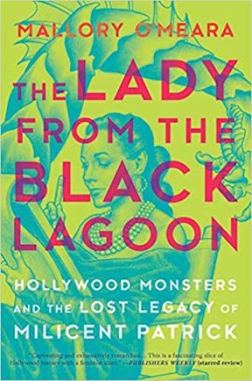 “Women have always been the most important part of monster movies,” says author Mallory O’Meara, “because women are the ones horror happens to. Women have to endure it, fight it and survive it.”
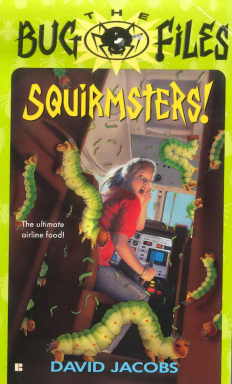 Do “nature run amok” novels qualify as monster novels? Is a coordinated attack of army ants as monstrous as a mob of abominable snowmen? I say “yes.” Rats, worms, spiders, ants, a plague of flies, a swarm of bees, a flock of seagulls—when Mother Nature gets mad, she has a long list of creepy-crawlies on speed dial to do her bidding.
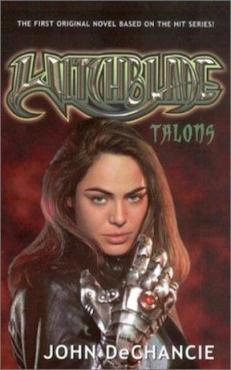 Witchblade was certainly a big part of the “bad girl” movement in comic books during the 90s. And author John DeChancie doesn’t back away from the sexy witch’s infamous eye-popping transformation in his prose adaptation from 2002.
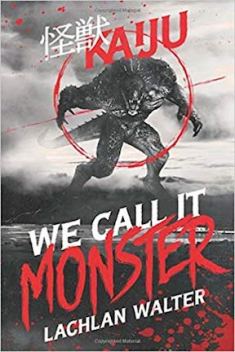 Kaiju novels are a lot of fun. In particular, I enjoy the crazy and extravagant descriptive language used by authors to construct their towering colossi. The books are rarely scary, but the earthshaking monsters are always a hoot.
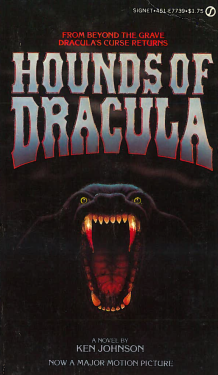 Michael Drake lived a typical and uneventful suburban life. He had a job, a wife, two young kids, a couple of dogs and a sexy neighbor he liked to flirt with. On weekends, he enjoyed camping and fishing.
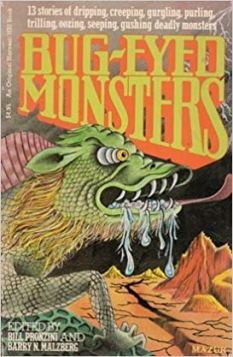 Bug-eyed monsters were popular in the early days of science fiction with their bulging eyes, groping tentacles and dripping ichor. Edgar Rice Burroughs and H.P. Lovecraft (among other writers) built entire careers on the endless confrontation between man and monster.
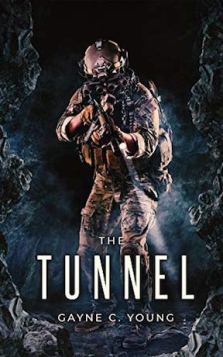 There’s a lot of bad stuff going on at the U.S.-Mexico border. Human smuggling, human trafficking, inhumane detention facilities and indefensible family separation policies are all horrible.
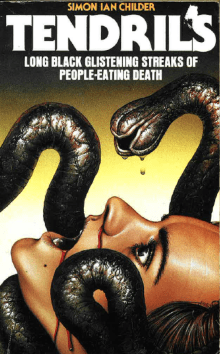 There’s nothing particularly funny about the worms in John Brosnan’s novel. They’re nasty and icky things that look like “a thick thread of dark jelly loosely packed within a transparent membrane.”
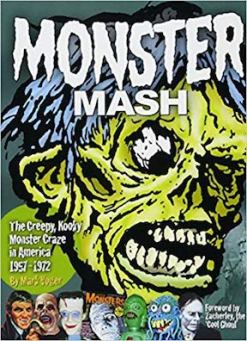 When did nerd culture officially begin? Maybe it started in 1977 when Star Wars (A New Hope) debuted in theaters. Or maybe it was nurtured slowly by the cumulative efforts of Doctor Who, Peter Parker, James Kirk and Kevin Smith. Author Mark Voger suggests that Comic-Con culture began way back in 1957 with the publication of Famous Monsters of Filmland #1.
 Monster Book Club