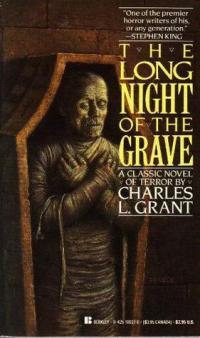
 Mummies are creepy and dusty and probably smell like rotten flesh, but they aren’t very scary. Think about it, whom would you rather meet in a dark alley? Nosferatu or Imhotep?
But more than any other monster, mummies provide grist for authors to explore universal themes of life and death. Thousands of years old, mummies roam the earth, a perverse embodiment of immortal lust.
And so it is with the mummy in The Long Night of the Grave. As a priest of Ra during the Egyptian reign of Mentuhotep, Sakhtu lived outside of the law. He was persecuted during his lifetime but he knew the way to power and wealth was through life itself. “The longer you live, the more you have of both,” explains the priest’s modern day disciple. “The most powerful man is the man who outlives his enemies.”
The big question, of course, is who will do the living and who will do the dying? The ancient Egyptians found a way to extend life beyond death. If you knew the secrets, possessed the artifacts and paid attention to ceremony, you could live forever. Who cared if you were wrapped in gauze and slept in a sarcophagus?
Sakhtu is brought to the U.S. by a dilettante named Jeffrey Isle. Nobody in his family had lived beyond the age of 50 and it was his desire to use ancient dark magic to break the “curse of the Isles.” Things go sideways pretty quickly. The mummy, unchained and footloose, goes on a murderous rampage, and Isle is undone by his unchecked ambition. Spoiler alert: the kerfuffle at the end results in a Land of the Pharaohs-like climax.
There’s more to this novel than mummy mayhem, however. The author is trying to make a point about the folly of immortality. The Long Night of the Grave takes place during the late 19th century, a time when emerging technology (like electricity, automobiles and telephones) is on the horizon. Mankind is racing toward the future, and there’s no place in the world for a dusty old mummy from 2100 BC.
The mummy is a seven-foot-tall brute—“dark and black and torn from the mist by a madman’s hand.” He’s an impressive Blackshadow all right, but he’s nothing but an anachronistic curiosity. Poor ol’ Sakhtu. He used Egyptian thaumaturgy to live forever. But he couldn’t find a way to stop the hands of time from moving forward. He discovered too late that the gift of immortality was actually a curse.
[The Long Night of the Grave / By Charles L. Grant / First Printing: January 1988 / ISBN: 9780425106273]
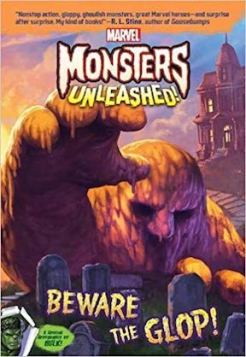 Ben Lee and his sister Cindy believed in monsters. They’d never seen one of course, but that didn’t matter. If there were talking raccoons and seven-foot-tall ambulatory trees in outer space, then why couldn’t there be monsters on Earth?
 When it comes to horror comics, nobody does it better than Junji Ito. His efforts—including Uzumaki, Tomie and Frankenstein—are famous for being absurd, obscene and grotesque. If you’re new to the creator’s oeuvre, I recommend starting with Uzumaki. I guarantee you won’t be able to resist its insanely hypnotic spiral iconography.
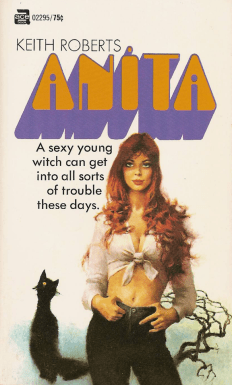 Who’s the most popular witch in the wayward sisterhood? Is it Morgan le Fay? Circe? Baba Yaga? How about Hermione Granger, Willow Rosenberg, Wanda Maximoff or Sabrina Spellman? Laugh if you want, but my favorite witch will always be Wendy, the good little sprite.
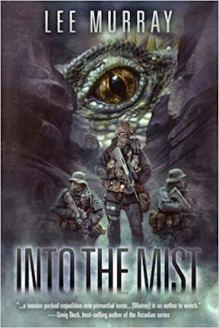 In Maori legend, there are stories of monsters living in rivers and swamps throughout New Zealand. Every child knows about the taniwha—vengeful creatures that slaughter warriors, kidnap maidens and eat babies in one gulp.
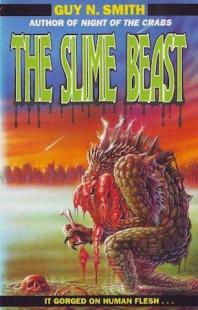 When Professor John Lowson stumbles upon an alien creature sleeping in the swamp, he immediately begins thinking about his lofty reputation. He is, after all, the self-proclaimed “greatest archaeologist in Britain.” Never mind the danger, he says. He wants to bring the beast back to civilization and reap his reward. “Do you think I’m going to let the most profound scientific discovery of all time slip through my fingers?” he asks his colleagues.
 While watching the movie Godzilla: King of the Monsters, one question kept popping into my head: Where was Kong? Surely, he must have heard the rumble of Monster Zero or the bio-sonar signal from Fenway Park. Every time Ghidorah flapped his wings and every time Godzilla retreated to the bottom of the ocean, the giant ape from Skull Island was conspicuous in his absence.
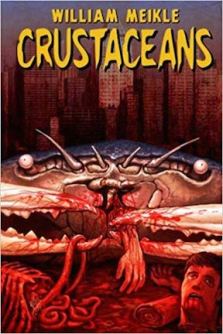 The first sentence of any novel is important. Not only does it grab the reader’s attention, but it also affords the author an opportunity to craft something eloquent and memorable.
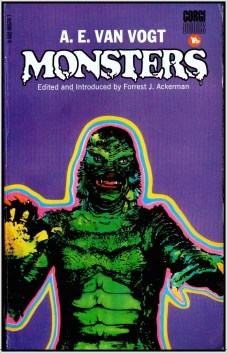 Within the very first pages of this anthology, author A.E. van Vogt describes the story’s monster like this: “The creature was tiny, but it was a monstrous, many-legged, long-bodied, long-snouted, hideous miniature, a very caricature of abnormal life, a mad creation of an insane imagination.”
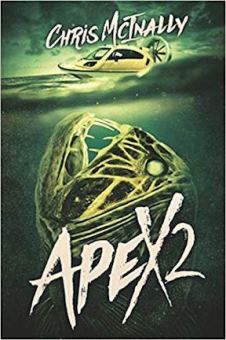
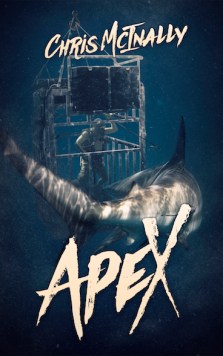 On the very first page of Chris McInally’s novel, a thousand pound, 35-foot mako shark begins chomping on unlucky bastards living near Minerva Lake. But it takes the author a long time to figure out what to call the “watery demon from the deepest layers of hell.”
