 There are many things I hate (Starburst candy for one, cow’s milk for another). But specific to this site, I especially hate authors who write monster novels and don’t fully commit to the genre.
How many times have you read a novel where the monster lurks in the shadows until the final chapter? How many times has an author used vague and unsatisfying descriptive language? In other words: How many times has a monster novel not been a monster novel at all?
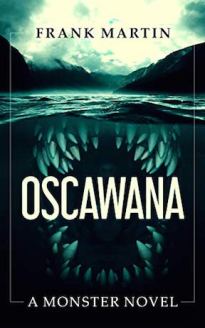
I’m happy to report that Oscawana by Frank Martin wholeheartedly embraces the monster novel playbook. The creature (affectionately dubbed “Oscar”) is big enough to blot out the sun when he arises from the titular lake, and there’s plenty of explosive kaiju carnage during his relentless slog from Upstate New York to Manhattan.
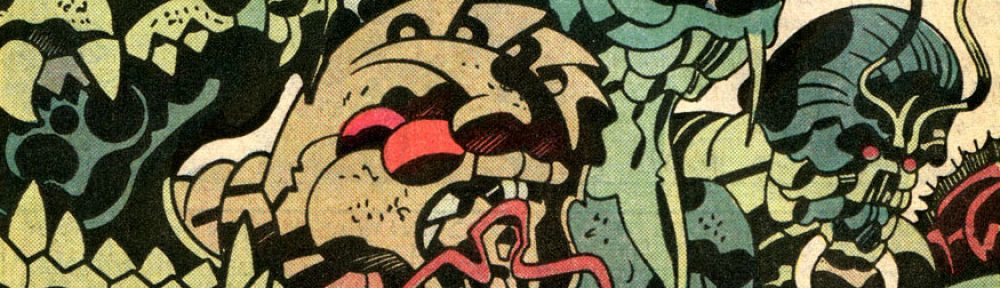
When Oscar first shows up, he’s unquestionably a bizarre sight. But he’s far from intimidating. He’s short and fat (about the size of a pit bull) and his face looks somewhat like a Picasso painting. Despite his fierce grotesqueness, says the author, April Hawkins finds the creature to be innocently sweet.
April is a 16-year-old city girl who’s spending the summer lakeside with her mother’s brother. With his dorky grin and nerdy beachwear, Uncle Henry looks like he’s a Monkey D. Luffy wannabe. During April’s first night by the shore of Lake Oscawana, Uncle Creepy sneaks into her bedroom looking for a little One Piece.
And there it is. Author Martin introduces the most enduring genre trope: Man, not beast, is the biggest monster of all. I think we can all agree that pedophilia trumps giant sea blob mayhem every day of the week.
But there was always a chance that Oscar wasn’t real. Maybe April’s imagination was stuck in overdrive. I mean, what made more sense? That she discovered a freaky lake monster, or that her mind was fractured and broken after being abused by her uncle?
The answer comes in one explosive moment. Oscar is real, and April is unintentionally controlling him to do her bidding. She’s using the beast as a murder weapon to wreck vengeance on a couple of horny boys, a grumpy neighbor and a child molester. She even sends him to Manhattan to smash her parents. “Her mission had consumed Oscar and become the only force driving him forward,” writes Martin. “Nothing else mattered or registered in his mind.”
The kaiju action that follows is dramatic and totally satisfying. The author may have been making a point about mankind being the ultimate super monster, but that didn’t stop him from unleashing Oscar upon New York. Let monsters be monsters, that’s what I say.
[Oscawana / By Frank Martin / First Printing: January 2020 / ISBN: 9781922323224]
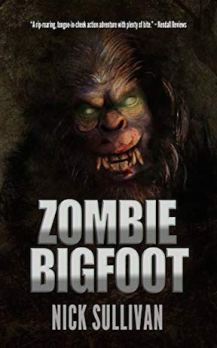 Russ Cloud was a wildlife expert and the star of a reality program called Survivor Guy. But over the years a lot of copycats had chipped away at his show’s popularity—shows like Man vs. Nature, The Naked Survivalist and The Mormon Family Robinson.
 According to editor Christofer Nigro’s introduction, the inspiration for this 2019 short story collection goes all the way back to 1965. That was the year Creepy #7 appeared on newsstands.
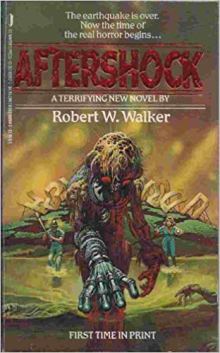 Aftershock starts on the day Los Angeles is smacked by the biggest earthquake in recorded history. The initial tremor began “like a deeply released, contented sigh from a lover in warm slumber,” and quickly escalates to a 9.4 on the Richter magnitude scale.
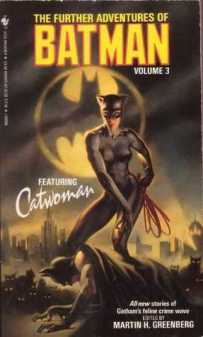 At night, Gotham City belongs to Batman. But it doesn’t belong to him alone. Somewhere in the shadows lurks a stray cat yowling in fury and endless desire.
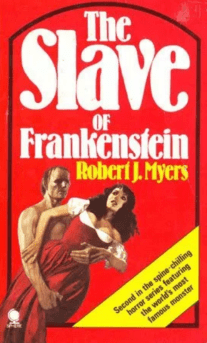 The Slave of Frankenstein takes place two years before the start of the U.S. Civil War. It’s 1859 and the focus of the entire nation is concentrated on Harpers Ferry and the forthcoming hanging of abolitionist John Brown. “Our universe is suspended somewhere between Heaven and Hell,” says a concerned patriot.
 Back in 1961, President John F. Kennedy pulled the plug on a proposal to invade Cuba with a cast of giant crabs. It was Eisenhower’s crazy idea and JFK hated it. The newly elected president didn’t want anything to do with his predecessor’s cockamamie science fiction plan.
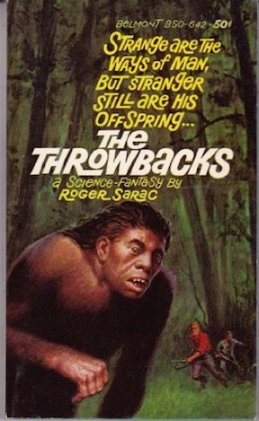 Roger Sarac never explicitly gives a name to the shaggy humanoid beast at the heart of his novel. “It’s like a bear, and yet it ain’t,” he writes. “It’s sort of manlike, yet it ain’t. It’s just a thing without a proper name.”
 In my opinion, She-Hulk is the best superhero name Stan Lee ever thought up. The hyphenated personal pronoun succeeds at being funny and dumb and smart and provocative all at the same time. She-Hulk could easily be a monster from a 1950s movie or the topic of a women’s studies class. Take your pick.
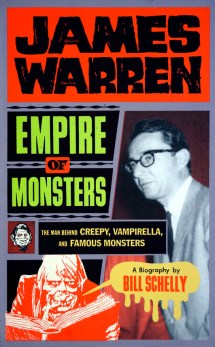 Growing up, my friends and I were fiercely loyal to our favorite comics. One guy loved the old Marvel monster books. Another friend collected Swamp Thing. I was a big fan of House of Mystery. As I remember, we sort of liked Star-Spangled War Stories too.
 Monster Book Club