Apex Carnifex

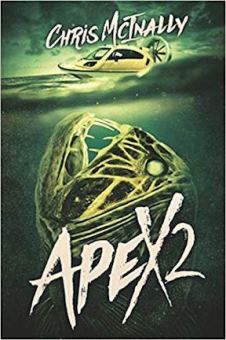
Apex2When it comes to horror comics, nobody does it better than Junji Ito. His efforts—including Uzumaki, Tomie and Frankenstein—are famous for being absurd, obscene and grotesque. If you’re new to the creator’s oeuvre, I recommend starting with Uzumaki. I guarantee you won’t be able to resist its insanely hypnotic spiral iconography.

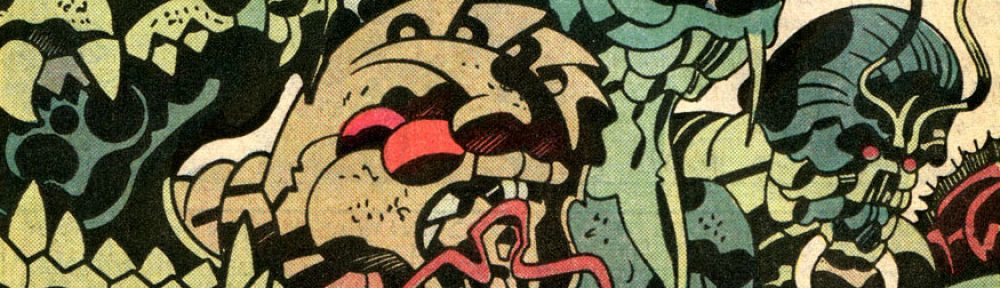
Back in the early aughts, the mangaka published Gyo, a 400-page comic about a Japanese coastal town overrun by mutants. The story itself was half-baked, but the imagery remains intensely memorable—especially the drawings of various sea creatures walking on land. The shark, in particular, was super creepy. For the art alone, Gyo is worth checking out.

There’s a chilling scene in Chris McInally’s latest book that harkens back to the walking mutant sharks of Gyo. Having already established itself as the apex predator of the Florida Everglades, the Machaerodontis Carnifex (“Sword-Toothed Butcher”) shambles onto shore in a fit of manifest destiny. The creature—sort of a piranha-anaconda-dinosaur-like thing—perches itself atop a knoll like a lion surveying its domain, its bulky body held aloft by petrified, clam-shaped pectoral fins.

I don’t know about you, but the image of a fish walking on land is highly unsettling. “Half-sliding and half thundering along the beach, the carnifex made a fearsome sight,” writes McInally. “Grunting, hissing and shrieking like a banshee, the ruby-eyed creature barreled after its fleeing quarry with a vengeance.”

McInally’s first book in the series (Apex) was about a killer shark that made its home in a placid lake. The shark was fierce, but definitely water bound. As long as you stayed away from the lake, you had nothing to worry about. Not so with this new creature. Evolution had given it legs, lungs and an appetite for surface dwellers.

To the rescue comes Dr. Hailey Benson, the infamous shark slayer from McInally’s previous book. Initially the battle-scarred marine biologist is wary of the situation. “I’m not interested in hunting monsters,” she gripes. “I’ve been there and done that.”

But soon enough, her curiosity gets the best of her. Once in Florida, Dr. Benson assesses the situation and drafts a plan of attack. In one fell swoop, she’s going to kill the carnifex, save the Everglades and restore her tarnished scientific reputation.

Her plan works (I guess) but it unfolds in the craziest way. The novel’s improbable endgame features a Goldilocks moment (!!) that’s either a stroke of genius by the author or a wrongheaded blunder. Honestly, I can’t decide which.

Before the final showdown with the carnifex, however, Dr. Benson must defeat her deranged archnemesis—Demi, the radical animal rights advocate. The fight between the two alpha women is a doozy and is (arguably) the best thing in the book. Hopefully the author is working on Apex 3 right now. I’m really looking forward to the continuing adventures of Dr. Hailey Benson—monster hunter, superhero, shark slayer, carnifex butcher and friend to bears.

[Apex 2 / By Chris McInally / First Printing: June 2018 / ISBN: 9781925840018]
Anita the Teenage Witch

ANITAWho’s the most popular witch in the wayward sisterhood? Is it Morgan le Fay? Circe? Baba Yaga? How about Hermione Granger, Willow Rosenberg, Wanda Maximoff or Sabrina Spellman? Laugh if you want, but my favorite witch will always be Wendy, the good little sprite.
Although she’ll never be as beloved as Maleficent or Raven (or Wendy!), Anita Thompson certainly has her bewitching charms. She’s a million-and-three-year-old sex kitten who favors peek-a-boo outfits and heavy petting. Says author Keith Roberts: “Anita makes the boys cry and then helps them unclasp her dress.”

To quote an old song from the 60s, Anita is a child of nature and a friend to man. According to her mentor, ol’ Granny Thompson: “She’s got power uvver the beasts o’ the field an’ the win’s o’ the air. She kin call the lightnin’ down inter the cup o’ her ‘and … and she’s got senses piled atop o’ the senses o’ mortals.” (Granny’s got a weird way of talking btw.)

“I’m not human,” adds Anita, “because I know what bats think and how the foxes talk … and I know how it feels when dragonflies mate. I can fly and I can change into a hare or a badger or a fish. I know everything because I can hear everything talking, owls and bats and insects, even the little creatures on the back of the moon.”

Anita’s an amazing young lady all right, but she’s got a lot to learn. For example, she’s never explored the world beyond the English countryside of Foxhanger. More importantly, she’s never cast a malicious spell in her life. If she doesn’t do something evil soon she’s worried that she’ll never get to Hell. She’s afraid that she’ll end up in “that other place.”

And that’s where this mosaic novel begins. It’s an interlocking, sequential short story collection and a coming of age novel in one tart volume. It’s sort of like The Seduction of Misty Mundae with a magick twist. Or maybe it’s like a comic book by Neil Gaiman and Frank Thorne. Take your pick.

Author Keith Roberts doesn’t disappoint readers who are looking for a little titillation. Anita’s freewheelin’ sexuality is a big part of all 15 stories. But Roberts isn’t lascivious at all. He’s a smart writer with a droll sense of humor that solicits the male gaze in a courteous manner.

For example, in a story called “The Simple for Life,” Anita stands magnificently before a full-length mirror in only her panties and a hair-ribbon. “She was uncertain about the hair-ribbon,” writes Roberts with a randy wink. In “The Charm,” Anita encourages a man to admire her naked body: “Don’t forget to look at the dimples on my bottom,” she says, “they’re one of my best features.” And later, when Anita creates a simulacrum of herself, she takes a step back to admire her handiwork. Both she and the reader can’t help noticing how sexy the effigy is.

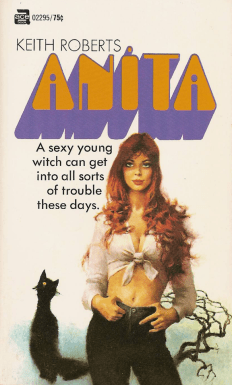
Beyond the carnal content (and the provocative book cover by George Ziel), Anita represents a young girl’s journey from libidinous wood nymph to protector of the green. Anita travels through time (“The Charm”), plays matchmaker to a couple of ghosts (“The Middle Earth”), appears on a TV game show (“Idiot’s Lantern”), gives life to a scarecrow (“Timothy”), and saves the world from a mermaid invasion (“The Mayday”). There’s no limit to her powers. “Yer a witch,” confirms Granny Thompson. “Yer can do anythink.”

[Anita / By Keith Roberts / First Printing: 1970]

The God of New Zealand

IntoTheMistIn Maori legend, there are stories of monsters living in rivers and swamps throughout New Zealand. Every child knows about the taniwha—vengeful creatures that slaughter warriors, kidnap maidens and eat babies in one gulp.
Nobody actually believes there are monsters dwelling in the vast forests of New Zealand, of course. That’s silly. The taniwha may inspire sleepless nights, but they’re simply creatures from Maori mythology.

But the forests of New Zealand are dense, shrouded in mist and largely unexplored. Even satellite surveillance is limited. In truth, no one truly knows what’s going on in the Aotearoa bush. For all we know, there could be millions of horny hobbits, smurfs and ewoks running around butt naked. There could even be giant gruesome monsters.

That’s exactly what a NZ Defense Force unit discovers while on a secret mission to the Urewera National Park. Sergeant Taine McKenna and his men are helping a team of scientists trying to determine the economic potential of the area. Specifically, they want to know if there are any natural resources to plunder.

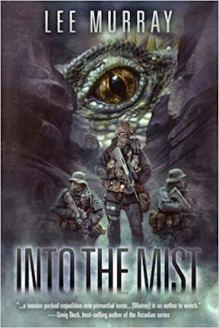
The last thing anyone expects to see is a giant prehistoric predator nipping at their heels. But there it is. Three meters high, 15 meters long, it resembles a crumpled mud-colored tarpaulin thrown over a small caravan. It was a scaly fucking tank of a dinosaur. “That ain’t no taniwha,” says one of the locals. “That’s fucking real. There’s nothing mythological about it.”

And thus begins a one-week battle between nature and man. The taniwha, affectionately dubbed Sampson, chases its prey across the unforgiving landscape, and the ragtag group of explorers does it’s best not to be eaten. No surprise, the odds are stacked in the taniwha’s favor. “We’re like Wile E. Coyote with his latest ACME invention,” says one dispirited soldier. “We might as well be facing Goliath with a fucking slingshot.”

There are many things to recommend about Into the Mist. There’s plenty of suspense and gore. And the author uses the word “fucking” a lot. Plus, how many novels about giant monsters are set in New Zealand? If you’re tired of dinosaurs rampaging across Tokyo or New York or San Francisco, you should definitely pick up this book. The author (who lives in Tauranga) peppers her text with a generous amount of local color. At the very least you’ll pick up some Maori slang along the way. I’m confident that it’ll make you a better dinner conversationalist.

My favorite part of the book, however, is when the local thaumaturgist (matakite) engages the taniwha in conversation. Imagine a similar situation in which Ann Darrow sits down for a chat with King Kong. Or what if Pinocchio could somehow talk to Monstro? That would be cool.

“Why are you doing this?” asks the matakite. “What do you want?”

“I’m here to remind you that this is my forest,” says the unrepentant beast. After 200 million years, the creature had grown arrogant. It was no longer content to live in the jungle and keep to itself. It was time for Sampson to become god of the forest. “Tell mankind that I am here,” says the taniwha, “and that I am hungry.”

[Into the Mist / By Lee Murray / First Printing: April 2018 / ISBN: 9781925711769]

Slimy AF

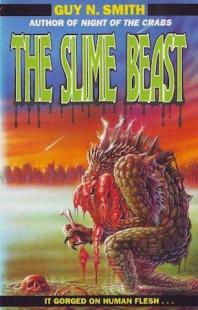
SlimeBeastWhen Professor John Lowson stumbles upon an alien creature sleeping in the swamp, he immediately begins thinking about his lofty reputation. He is, after all, the self-proclaimed “greatest archaeologist in Britain.” Never mind the danger, he says. He wants to bring the beast back to civilization and reap his reward. “Do you think I’m going to let the most profound scientific discovery of all time slip through my fingers?” he asks his colleagues.

Liz Beck and Gavin Royle didn’t exactly share their mentor’s enthusiasm. They’d prefer to stick a fork in the slimy beast and be done with it. Better safe than sorry, they reason. The lovey couple just wants to get back to London and start making babies. “The monstrosity,” writes the author, “cast a cloud over their supreme happiness.”

The professor, on the other hand, is totally blinded by his mad ambition. He would do anything to subdue the creature and bring it back to civilization. If Liz and Gavin didn’t fall in line and help him, there were ways and means to silence them for good—concrete shoes, cyanide, TNT, high voltage, that sort of thing. Lawson might be a well-respected member of England’s scientific community, but he was also a selfish scheming bastard.

The Slime Beast eventually awakens from its watery lair and immediately goes on a killing and eating spree. It eviscerates its victims and eats their gooey parts. For dessert, it rips the heads from their bodies and sucks the brains out of their skulls (as you do). Weirdly, the beast develops a taste for ladies with big boobs. “The Slime Beast turns its head and sees the woman standing at the top of the stairs. Her bulbous breasts are clearly visible through the semi-transparent nightdress. It thirsts for their flavor—the slurping tenderness there for the taking.”

After a few missteps, Lowson and his crew realize that they are totally unprepared to tangle with the creature from the black lagoon. Even the army can’t figure out a way to contain it. By the end of the novel, the Slime Beast was nigh unstoppable. No longer was it a shambling monster relying on brute strength and fear. It had somehow become swift and cunning like the alien aboard the USCSS Nostromo. Things end badly with a kinky rape scene, a wild chase through the swamp and a perverse showdown between Lowson and the object of his obsession.

Like everything I’ve read from Guy N. Smith, The Slime Beast is weird and crazy in a good way. His novels always feature a muddle of influences and they inevitably spring fully formed from his hyperactive id.

The sex scenes, in particular, are totally bonkers. During intercourse, for example, Liz begs her boyfriend to “Give it to me proper, like every woman wants her man.” What exactly does that mean anyway? And who talks like that in bed?? Later, when the two lovebirds are relaxing in post-coital bliss, Liz grabs her partner’s floppy cock in her hand. Writes Smith: “His limpness excited her as much as his hardness had done.” Even with all the spilled offal, skull slurping and tit noshing, this is probably the most cringe-worthy moment in the entire novel.

[The Slime Beast / By Guy N. Smith / First Printing: November 1989 / ISBN: 9780586204962]

Long Live the King

GodzillaKingWhile watching the movie Godzilla: King of the Monsters, one question kept popping into my head: Where was Kong? Surely, he must have heard the rumble of Monster Zero or the bio-sonar signal from Fenway Park. Every time Ghidorah flapped his wings and every time Godzilla retreated to the bottom of the ocean, the giant ape from Skull Island was conspicuous in his absence.
To his credit, author Greg Keyes attempts to answer my question in the movie’s accompanying novelization. According to him, Kong did, in fact, hear the call of Ghidorah. It made him restless and it made him a little angry, but he chose to ignore it nonetheless. Let all the monsters destroy themselves, he figured. He was a solitary fellow and he wanted to be left alone. Moviegoers and G-fans know that’ll change, however. To be continued in Godzilla vs. Kong, coming to theaters in 2021.

Without a doubt there’s a giant gorilla-sized hole in the latest Godzilla movie. But what can you do? Everybody knows that the thunderous battles featuring Mothra (“the queen of the monsters”), Rodan (“Satan himself could not be as terrible“) and Monster Zero (“the one who is many“) are just an amuse-bouche for the inevitable Godzilla/King Kong “MonsterVerse” main course.

Like every author who’s ever written a film novelization, Keyes can’t be criticized for a movie’s screenwriting shortcomings. But there are always opportunities for writers to add context, explore motivation, insert transitions and sneak bonus material into their manuscripts. Keyes dutifully does all of this. He even gets inside Godzilla’s head.

His depiction of Dr. Emma Russell is probably the best thing about the book. She’s wholly unlikeable in the movie (despite her endgame redemption). But in prose, she’s a complicated character saddled with a God-like burden. Her goal is to kick start Earth 2.0, but she screws up big time and becomes a mass-murderer on a global scale. “She didn’t hit the reset button,” writes Keyes, “she hit the detonator instead.” Like all great villains, such as Dr. Doom and Magneto, Dr. Russell thinks she’s the hero of her own story.

Nobody can control nature, not even a smarty-pants paleontologist with a God complex. Trilobites, synapsids, the dinosaurs, brontotherium, the woolly mammoth, Hedorah, Destroyah, Baragon and Fin Fang Foom—all of them have come and gone. After all this time, the only one remaining is Godzilla. Long live the king.

[Godzilla: King of the Monsters / By Greg Keyes / First Printing: May 2019 / ISBN: 9781789090925]

Rampaging Crustaceans

CrustaceansThe first sentence of any novel is important. Not only does it grab the reader’s attention, but it also affords the author an opportunity to craft something eloquent and memorable.
Many first sentences are so extraordinarily notable they are absorbed into the culture and exist beyond the page. “All happy families are alike,” wrote Leo Tolstoy back in 1867, “and each unhappy family is unhappy in its own way.” With a flick of his quill pen, Tolstoy was able to encompass the entire human experience in one snappy sentence.

Tolstoy wasn’t the only writer with a knack for writing first sentences. Off the top of my head, I can recall plenty of great openers. “It was a pleasure to burn,” for example. Or “If I am out of my mind, it’s all right with me.”

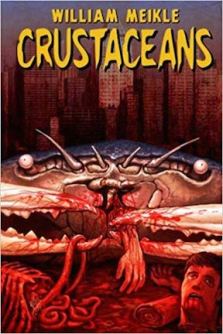
Author William Meikle begins his novel Crustaceans with a memorable sentence too: “The whale farted,” he writes. It may not be the politest way to start a book, nor does it exist on the same level as Ray Bradbury or Saul Bellow, but it does kick things off in a lively fashion. And it sure is memorable. Job well done, that’s what I say.

The reason the whale farted, btw, is because it ingested a bunch of over-sized crabs. The critters are using the whale as a taxi to travel up the eastern coast from Cuba, to Florida, to Virginia, and ultimately to New York. Their destination: the abandoned tunnels beneath the streets of Manhattan.

It’s up to the U.S. military, a lone marine biologist, and a boozing down-on-his-luck fisherman to stop the upcoming Crabageddon. “If those things reach Manhattan,” warns Colonel Stack-Stark, “there will be panic and slaughter on the streets of New York.”

That’s okay with me, of course. I bought this book because I wanted to see giant crabs rampaging down Broadway and Wall Street. I don’t want the military to yuck my yum. And I definitely don’t want to read an Anna Karenina-like doorstopper about crabs and infidelity and social mores. I want 10-foot-wide crustaceans decapitating and eviscerating New Yorkers. And thankfully that’s pretty much what I got. I also got a little bit of romance and redemption too.

At some point in the novel, the marine biologist tells the clueless Homeland Security agents that giant crabs have been causing trouble since the 70s. Her history lesson will no doubt put a smile on the faces of informed readers. Guy N. Smith, after all, wrote his first monster crab novel back in 1976.

Many other authors (most notably J.F. Gonzalez) have contributed their two-cents to the crabby sub-genre over the years. Like it or not, the giant crustaceans are here to stay. The only way to get rid of them for sure, says the biologist with a shrug, is to nuke the entire island of Manhattan from orbit.

[Crustaceans / By William Meikle / First Printing: April 2012 / ISBN: 9781626410947]

Monster Attraction

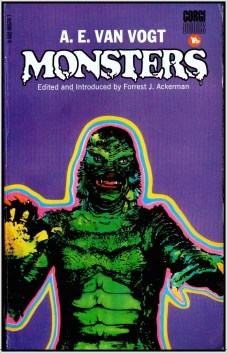
monstersWithin the very first pages of this anthology, author A.E. van Vogt describes the story’s monster like this: “The creature was tiny, but it was a monstrous, many-legged, long-bodied, long-snouted, hideous miniature, a very caricature of abnormal life, a mad creation of an insane imagination.”
With this extravagant description, van Vogt establishes his concept of “alien attraction,” defined loosely as mankind’s ever-lovin’ fascination with “monsters, things, creatures and aliens.” And certainly, the eight stories in this collection feature a riot of fantastical science fiction beasts. Spoiler alert: mankind is often revealed as the ultimate monster in a few of the stories.

Like all science fiction writers from the early twentieth century, van Vogt was interested in simple things like robots and space travel. And because of this, some of these golden age stories haven’t aged very well. “Robot Command,” in particular, is a bit creaky. Back in van Vogt’s heyday, the future was fuzzy and romantic. But today, with artificial superintelligence and whole brain emulation right around the corner, debating robot civil rights seems a tad quaint.

But it’s easy to forgive van Vogt for such things, mostly because he was a delightfully quirky writer. He obviously loved monsters (avianoid, oceanic, Martian or otherwise), and you can’t help but marvel at his “plot ingenuity, skill in mystification and his flair for poignancy.”

The first story (“Not Only Dead Men”) is about monsters and men working together to fight a common threat. As it turns out, the otherworldly creatures stranded on Earth understand the concept of humanity better than their human counterparts. Similar stories such as “War of Nerves,” “Enchanted Village” and “Concealment” make it clear that there’s always a compassionate solution to any dire situation.

The collection ends with a bang. “Vault of the Beast” is easily the best story of the bunch. “The creature crept,” wrote van Vogt. “It whimpered from fear and pain. Shapeless, formless thing yet changing shape and form with each jerky movement. It crept along the corridor of the space freighter, fighting the terrible urge of its elements to take the shape of its surroundings. A gray blob of disintegrating stuff, it crept and cascaded, it rolled, flowed, and dissolved every moment an agony of struggle against the abnormal need to become a stable shape. Any shape!”

Just as Frankenstein’s monster was created by man and rejected by mankind, the wretch of this story eventually develops a case of existential ennui. “Am I just a machine?” it laments. “Do I have a brain of my own?”

Despite its grotesque appearance and murderous mission, van Vogt’s “metimorph” monster is simply trying to find a little dignity in the madness of life. “The struggle to be human was a continuous ache,” acknowledged the author. Mary Shelley couldn’t have said it any better.

[Monsters / By A.E. van Vogt / First Printing: February 1965 / ISBN: 9780552085700]

A Big Fish in a Small Pond

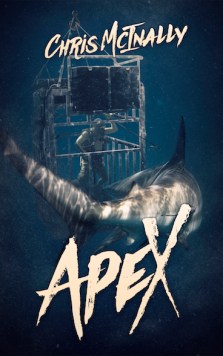
aapexOn the very first page of Chris McInally’s novel, a thousand pound, 35-foot mako shark begins chomping on unlucky bastards living near Minerva Lake. But it takes the author a long time to figure out what to call the “watery demon from the deepest layers of hell.”

Torpedo-shaped predator, top-of-the-line predator, marauding predator and wandering predator are just a few of the euphemisms the author uses. He even calls the shark a brute, a bitch and a bloodthirsty fucker. Finally, in chapter eight, McInally hits gold. He describes the mako as an apex predator—and voilà! a star is born.

But why is an apex predator prowling a shallow lake instead of swimming with sharks in the ocean? McInally’s got the answer. “The extent and impact of environmental degradation upon Minerva Lake was astounding,” he writes. “The lake’s natural balance had irreversibly changed. Over the course of 200 years, it had transitioned from a freshwater environment to a quasi-marine habitat.”

The level of anthropogenic degeneracy was now snowballing at an exponential rate due to increased agricultural demands. A whole new food web had developed in the lake, and the shortfin mako shark found itself at the top of the food chain. It was a big fish in a small pond.

There was only one problem, however. The hungry shark couldn’t sustain itself on crayfish, bluefish and pufferfish. It needed a higher caloric intake. To survive, it started attacking cows and fat humans.

For the next 134 pages, everybody who ventures into Minerva Lake becomes a tasty treat on the mako’s dining menu. Fishermen, farmers, tourists, skinny dippers, college research assistants and police officers all meet a horrible and ultra-violent death. It’s like the plot of some Z-grade horror movie, says Dr. Hailey Benson at one point.

As it turns out, Dr. Benson has a plan to capture the shark and release it into the ocean. “It’s about doing what’s right,” she explains. “Human manipulation of the environment brought about this horrific aberration. That means it’s up to us to solve the problem. Someone has to take ownership of this mess.”

It shouldn’t surprise anyone that Dr. Benson’s humane agenda backfires in the messiest way imaginable. She only succeeds in agitating the shark to an insane level. When she finally comes face to face with the mako’s toothy grin, she changes her tune immediately. “Killing it would be a mercy,” she cries. “It’s mad with hunger and blood lust.”

Final verdict: Apex is a thin book—maybe too thin—but it has a cinematic quality to it. I wouldn’t be surprised to discover that it was originally a screenplay. Also: there are a couple of quirky characters worth mentioning. The scrawny deputy sheriff is a badass like Barney Fife. And Demi, the militant animal rights advocate, is a brooding presence throughout the book. The inscrutable shark, however, is the star of the show. Despite the unrelenting carnage, Dr. Benson had to admit: “The mako was beautiful in a terrifying sort of way.”

[Apex / By Chris McInally / First Printing: October 2016 / ISBN: 9781925493917]

Family Affair

GargantuaThe title of this book might be misleading to anyone slightly familiar with French literature. Be forewarned, it has nothing whatsoever to do with a 16th century writer named François Rabelais. There’s no Pantagruel, no grotesque realism, no social satire—nothing literary at all. It’s just a story about a giant monster terrorizing a small island in the South Pacific.

But that’s not exactly true either. There are actually four giant lizards in this book: a baby, a big brother, a mommy, and a daddy. It’s a mad monster party with a Gorgo twist.

The first of the gargantuan brood appears pretty quickly (page nine) off the coast of Malau. “The thing was green and scaly, with a small horn protruding from just above the eyes, like some kind of lizard or gecko or salamander or something,” says a witness close to the action.

As each monster thunders across the landscape, the locals struggle to find a way to describe them. Are they dinosaurs, vultures or beasts from a Ray Harryhausen movie? A newspaper reporter describes the creatures as “Ghidrah lookalikes” even though none of them have three heads or wings or anything else. Me thinks King Ghidorah deserves a little more respect.

Oh well, what can you expect? Not everyone grew up watching silly Japanese monster films. If they had seen just one Godzilla movie, they might have solved the mystery of Gargantua sooner. Eventually the Malauans discover what the reader already suspected: Years ago illegal toxins were dumped secretly in the waters surrounding the island. “These creatures aren’t biological anomalies,” says Jack Elway, a visiting marine biologist. “They’ve been mutated by a concentrated diet of artificial chemicals.”

Based on a TV movie from 1998, Gargantua isn’t strictly a giant monster story. The book (more than the movie) has a lot to say about fractured families and the bonds that bind us. As it turns out, Elway and his son have a lot in common with the family of displaced sea creatures. To quote the Eurythmics: “Everybody’s looking for something.”

The events of the novel take place over the course of a single week. “But what a week!” says Elway. Not only does he discover a new genus of reptile, but he also discovers a new path in life. And if he’s lucky, the cute island doctor might someday go out to dinner with him. “I think after all of this,” he muses, “we all, human and reptile, deserve some happy endings.”

[Gargantua / By Keith R.A. DeCandido writing as K. Robert Andreassi / First Printing: 1998 / ISBN: 9780812570984]

Kaiju Canon

opreddragon-2It’s 1964 and Earth is heading toward a large-scale daikaiju extinction event in author Ryan George Collins’s enjoyable first novel. Dinosaurs, reptiles (not dinosaurs), sea monsters and insects have all united to “enact some Old Testament wrath” on mankind.

These “large strange beasts” have been around since the beginning of time and they most likely will be here at the end of it. And guess what? They don’t particularly like the fact that they no longer rule the world. Now operating under a loose confederacy, they’re eager to wipe humanity off the map. As it turns out, resistance to change isn’t a trait exclusive to men. Monsters don’t like it either.

When these giant creatures shamble toward Japan or Chile (!), the first responders are a highly specialized covert action team. Operation Red Dragon is an international paramilitary unit that was forged during WWII and tasked with keeping kaiju activity under wraps.

On the agency’s payroll are two genetically engineered super soldiers: Gen. Ishiro Tsujimori, who is able to conduct, generate and unleash electrical energy, and Special Agent X, the world’s only human cyborg. Also available for duty is C.I.G.O.R. (not cigar), a 26-feet-tall cybernetically integrated giant ornithology robot thingy, and a human yokai named Chakra. They’re the monsters protecting mankind from the monsters who want to destroy it.

So far, so good. Operation Red Dragon is the first volume of a planned Daikaiju Wars series, and it dutifully introduces a riot of monsters and superheroes and establishes the alliances that will propel upcoming sequels, Even though it’s a thin book, there’s plenty of retro tokusatsu action to keep readers (like me) happy.

Be forewarned, however. There’s a smattering of religious jibber jabber sprinkled throughout this book. Certainly many writers have used Biblical allegory to magnify their monster narratives over the years. But author Collins needs to be careful. His writing isn’t exactly subtle. “Maybe some humility before God is what mankind needs,” he says bluntly at one point. For goodness sakes, he even anoints a prophet by the end of the book. Hopefully Collins will steer clear of turning his Daikaiju War into a Daikaiju Holy War.

[Operation Red Dragon / By Ryan George Collins / First Printing: April 2018 / ISBN: 9781925711790]