Nietzsche Anathema

Monsters don’t care if you believe in them or not, said a local rummy. “You gotta put your faith in something, even if you can’t see it. Believe me, the Nietzsche Anathema is fucking real.”

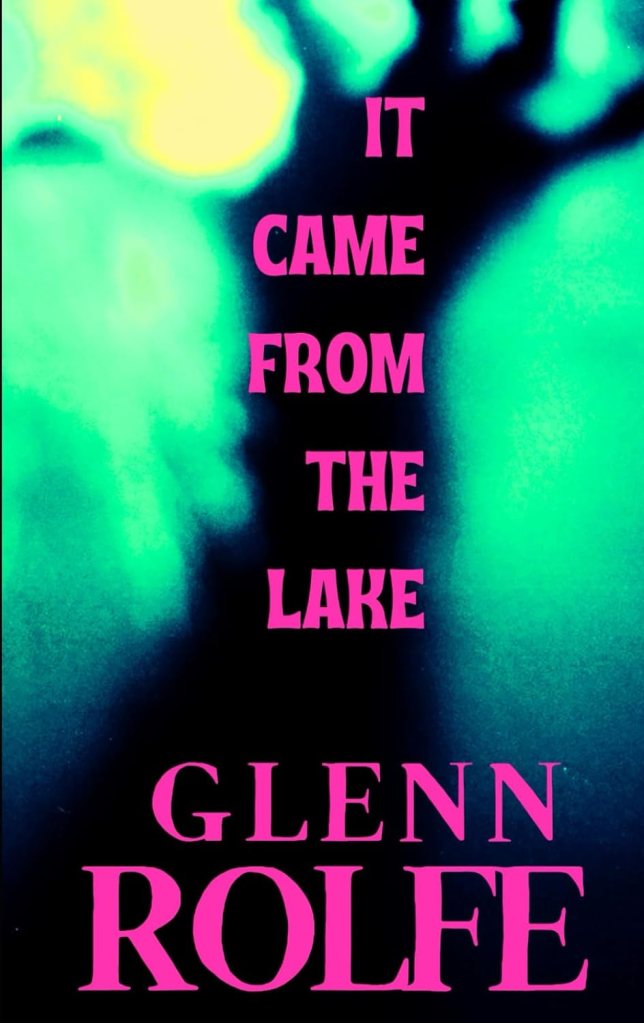
Nietzsche Anathema was a fancy name for a monster supposedly living in the local man-made lake. According to a dusty old book about Maine folklore, the creature was tall like Bigfoot. Plus: it’s hands were webbed and its eyes were as black and cold as a shark.

Frankly, it all sounded like a bizarre horror-science fiction mashup. No one literally believed in the far-fetched tales of monsters and deformed fish with missing eyes and a taste for the flesh of children. 

The scariest thing in the forest was actually Francis Owens, a Vietnam War veteran with post-traumatic stress disorder. He was the caretaker for Owens Lake and he roamed the area with ill-intent. Francis was a madman—not the creature from the Augusta lagoon—but he knowingly manipulated the Nietzsche Anathema legend for his own benefit. 

Author Glenn Rolfe begins his novelette with the murder of Francis Owens’ brother. The death eventually attracts the attention of a detective named Bruce Maddox and includes a confluence of characters including Quincy, a truant who enjoyed hanging out in the woods, and a runaway orphan from New Hampshire named Leilani. 

After all these years in seclusion, the Nietzsche Anathema finally comes out of hiding. It couldn’t resist all the sudden commotion in the forrest. Here’s how the author describes first contact with the monster: “Even hunched over, it looked to be at least seven feet tall. Its slender torso was slightly twisted and covered in thick, black scales. The long legs ended in flippers. Its hands were webbed and its head was dark with wet clumps of hair hanging like seaweed braids from its scalp. The face featured a half-formed human nose that gave way to an awful teardrop-shaped orifice.”

It was the “teardrop-shaped orifice” that made the creature uniquely creepy and deadly. It would latch onto your mouth and fill your body with lake sludge and unknown toxins. One victim “felt as though someone were violently attempting to crack the front of his skull open with Thor’s mighty hammer.”

It Came From the Lake ends like all great creature feature stories, id est the author makes sure to leave the door open for a sequel. To quote the monster’s namesake Friedrich Nietzsche: “Whoever fights monsters should see to it that in the process he does not become a monster.”

[ It Came From the Lake / By Glenn Rolfe / First Printing: January 2024 / ISBN: 9798876518064 ]

Enigmatic Encounters

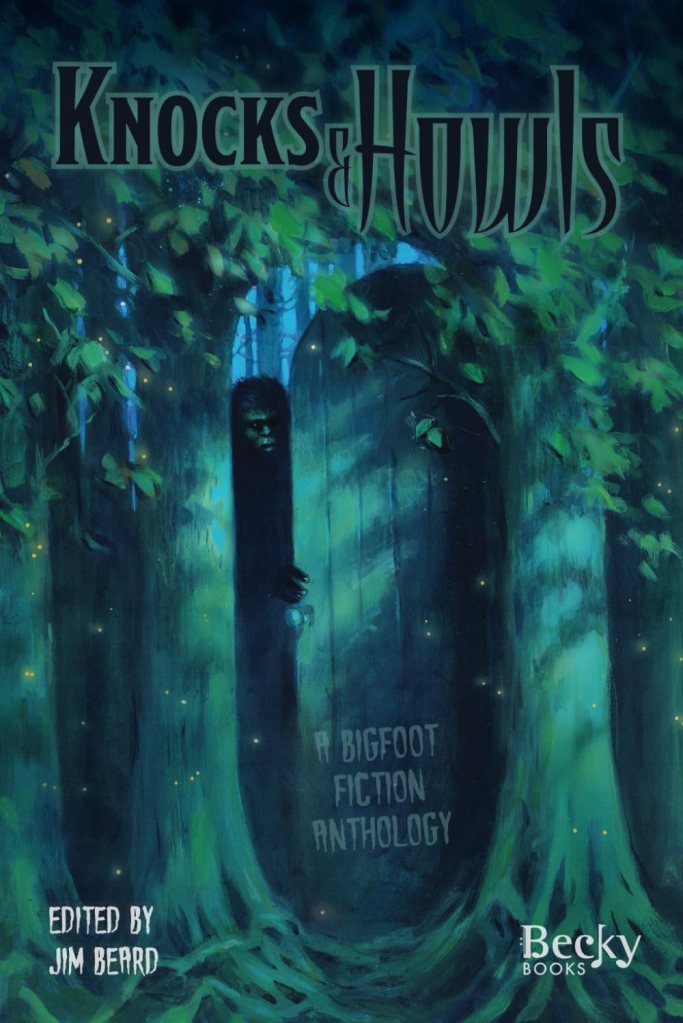
Editor Jim Beard wants readers to know something about his new short story collection titled Knocks and Howls. “This book isn’t about Bigfoot,” he writes in the introduction. “It’s about the idea of Bigfoot.”

Oh sure, you’ll find one or two rampaging apemen in this volume, but Beard is true to his word: his anthology takes Bigfoot to the nth degree. Each writer tackles the legend of Bigfoot as it intersects with the real world. 

The first story expresses this theme with a bit of poetry. “Regions of Fancy” by Josh Reynolds features a conversation between Daniel Boone and John Audubon back in 1810. The two folk heroes chat amicably until Boone makes a startling admission. He tells Audubon that he had a fatal confrontation with Bigfoot in the woods of Kentucky. And more startling, he still carried the beast’s skull in his rucksack. 

Taking a look at the skull, Audubon notices right away that it did not lack for ferocity. “It was a thing of utter strangeness that set the world off its axis,” he later wrote in his journal. “I could feel the weight of an inhuman tread in my mind. What thing was this, that the Creator had set loose upon the land?”

Similarly, two stoner kids take a trip through the woods to find God in Christopher Ryan’s story “Legacy.” What they find instead is Bigfoot tripping on mushrooms and experiencing his own intimate religious enlightenment. 

“Legacy” is unabashedly a stoner buddy adventure similar to Cheech and Chong’s Up in Smoke and Harold and Kumar Go to White Castle. It’s funny, I admit, but it’s not the wackiest thing in this collection. That honor goes to “Suicide Squatch” by Eric M. Esquivel. 

Esquivel’s story is about a suicidal sad sack named Richard Franzblau. His intention is to kill himself amid the majestic splendor of Washington’s Gifford Pinchot National Forest. 

Richard’s plans go pear-shaped, however, when he comes face-to-face with a hostile nine-foot-tall Bigfoot. He’s not afraid to die, but he doesn’t want to be torn limb from limb by a cryptid monster. Immediately, his survival instincts kick in. 

Richard somehow survives his tussle with Bigfoot but he’s thrown in jail for unauthorized first-contact with a non-human intelligence. Because of his unique experience, he’s then recruited by an organization called C.L.I.C.K. (short for Cryptid Location, Intervention, Capturing and Killing) and immediately dispatched to Colorado, to negotiate peace talks between warring Sasquatch tribes. 

Another comedic tale is “Like and Subscribe” by Mary Fan. Three video podcasters travel to the Pine Barrens of New Jersey to confirm the existence of Bigfoot. After a series of stunts and petty bickering, the rivals reach an amicable truce. Fan’s characters are sweet and adorable and I encourage her to revisit her story and expand it into a novel-length adventure. 

The final story in Knocks and Howls is by editor Beard himself. It is literally “The Last Bigfoot Story.” Acting as good neighbors, an alien race comes to Earth to solve all of mankind’s ills—cancer, dementia, Covid-19 and all the rest.

Unfortunately, these aliens are excessively logical and cannot abide by anything enigmatic. There’s no place for religions, myths and folktales … and that spells doom for the legend of Bigfoot. 

[ Knocks and Howls / Edited by Jim Beard / First Printing: February 2024 / ISBN: 9798878739085 ]

Hot Stuff

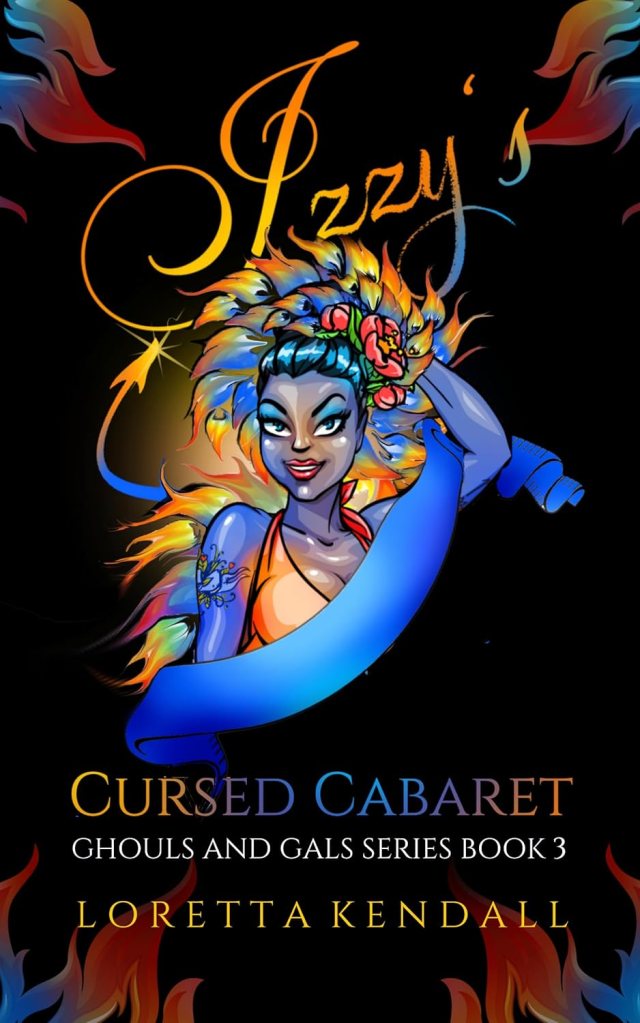
In each of her three Horror Earth novels, author Loretta Kendall allows her heroines to introduce themselves to the reader. First there was Gigi Stein, the former bride of Frank N. Stein. Next was Cleo, the daughter of an ancient pharaoh. And now we have Izzabel “Izzy” Brimstone, a burlesque dancer at the Cursed Cabaret. 

In the past, as a supporting character, Izzy was mainly used for comic relief. Now in her own book, we see a different side to her. She was a naughty devil girl from Terror Town who loved glitter and sparkle, said the author. “She didn’t exactly fit in with the gore hounds and slasher movie types. She was a freak amongst her own kind.”

She was also hotter than hell and twice as spicy. As a succubus, however, she was a dangerous sexual partner. “She’s a temptress,” admitted the owner of the cabaret, “but I wouldn’t want to be on the receiving end of one of her blowjobs. She might suck your soul out through your cock.”

For Izzy, humor and sex were used as a shield to protect herself. Privately, she was a vulnerable young sprite. Growing up, she had a rough childhood and an emotional unavailable father. Even though she was viewed as simply a happy-go-lucky party girl, she was actually a very lonely blue devil. All she wanted was a warm hug from her daddy—and a sexy boyfriend wouldn’t be so bad either. 

Her wish for a hot boo was granted the day Remington “Remi” Kane began working at the Cursed Cabaret as a bartender. The two had an immediate attraction to each other, but they were bound by complications beyond their control. Izzy couldn’t escape her soul-sucking habit and Remi was a nuclear enhanced hybrid creature. The two of them together were a ticking time bomb. 

As it turned out, the pair’s relationship problems were the direct result of Tobias Brimstone, Izzy’s estranged father. As the owner of Terror Town’s largest pharmaceutical company, Tobias experimented on Remi like a lab rat. For two years he amplified Remi’s radiation illness and combined it with monster DNA. The results turned the bartender into a translucent skeleton man. His condition was almost horror movie quality, said the author. 

Initially, Tobias seemed like the cruelest demon on Horror Earth. He was a rich autocrat with a black heart and, frankly, Izzy was lucky to be rid of him. But I have to admit, he turned out to be the most nuanced villain in Loretta Kendall’s ongoing Ghouls and Gals series. In comparison, Frank N. Stein was a brute and Papa Imhotep was just a manipulative jerk.

Tobias, on the other hand, still loved his daughter deeply and regretted his wayward science experiments. He was one of the most fearsome dark demons around but he was actually a big softie. Fans of Teen Titans Go! will immediately recognize a similar father/daughter dynamic between Raven and her father Trigon. 

In a funny show-not-tell moment late in the novel, Tobias crashes his daughter’s New Year’s Eve party. He comes through the door blowing smoke and fire, but his performance is undercut by a bountiful buffet of yummy cookies. At that moment, both Izzy and Remi knew that they would live happily ever after.  

[ Izzy’s Cursed Cabaret / By Loretta Kendall / First Printing: February 2024 / ISBN: 9798880386949 ]

A World Ruled by Monsters

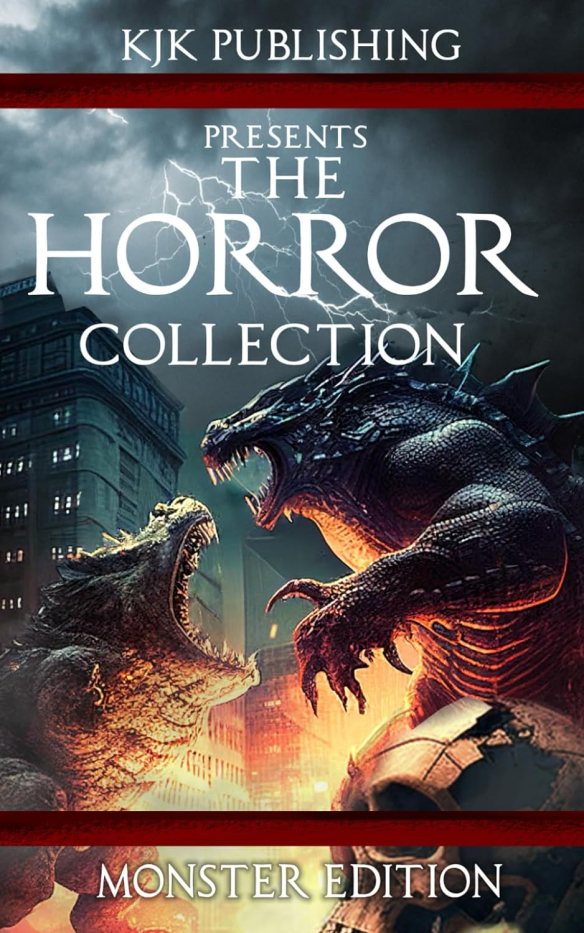
Consumer alert: There’s a dynamic image of two daikaiju beasts on the cover of this new horror anthology. Be forewarned, however. There are no corresponding stories of Godzilla-like monsters included in the volume. That’s too bad. 

But in all other ways, The Horror Collection: Monster Edition includes a terrific sampling of all sorts of monstrous creatures—spiders, more spiders, water nymphs, shapechangers, more shapechangers, asynjur, aliens from outer space, mummies, bogeymen, giant gila monsters and sneaky demons. 

Dr. Jekyll and Mr. Hyde even show up in a story by Mark Young called “Beneath the Lunar Light.” A man named Blakeman who is suffering from a monthly shapeshifting curse travels to London to consult with Henry Jekyll about his affliction. The collegial conversation ends abruptly when Edward Hyde shows up and reveals his dastardly plan to Blakeman. “My intention is to create a world ruled by monsters,” he says. “Using the blood of you and I, we will be agents of chaos and disorder!”

Will Hyde succeed in his mad plan? Maybe. Maybe not. But either way, I’m all for it. Another story that speculates on “a world ruled by monsters” is “Gone Witness” by Chris Panatier. The only difference is this: the author’s “extinction logic” is more cruel and apocalyptic than anything Mr. Hyde could ever hope to execute. 

The closest thing to a kaiju story in this collection is “Salvia Sunset” by Brennan LaFaro. His giant gila monster (dubbed “Big Mama” by the locals) is as big as an 18-foot-long Conestoga wagon with fangs longer than a revolver barrel and “talons so sharp they could cut grains of sand in two.” The story takes place in Buzzard’s Edge, Arizona, and the author does a first-rate job of capturing the Sonoran Desert and the Arizona heat. As a former Zonie, I can confirm that summers in the Southwest are brutal, with or without gigantic venomous lizards. 

Heather Miller revisits an old 18th century English fairytale in her story called “In the Arms of the Annis.” The titular bogeywoman is creepy as hell, and her influence on a particular child is chilling. Here’s how the horror begins: “We made a kind of peace between us,” says the young village girl kept hostage by the monster. “I looked away when she brought in children captured from the hills and made meals of them. I shared the sheep with her when she brought them instead, cooking my meat over the fire, less and less over the years until I could eat mine almost as raw and bloody as she ate hers.” 

And finally, I enjoyed Veronica Smith’s story “Kill it With Fire” because of its offbeat humor. A woman wakes up to discover the insides of her home covered in massive webs. It’s “like a psychotic white winter wonderland in Hell,” writes Smith. A turf war immediately ensures between the woman and the spider-bat that’s responsible for the webbing. It’s like a goofball Silver Age Spider-Man comic book—trippy in all the right ways. 

[ KJK Publishing Presents the Horror Collection: Monster Edition / Edited by Ann Keeran and Kevin J. Kennedy / First Printing: January 2024 / ISBN: 9798877018709 ]

Invasion of Astro-Monster

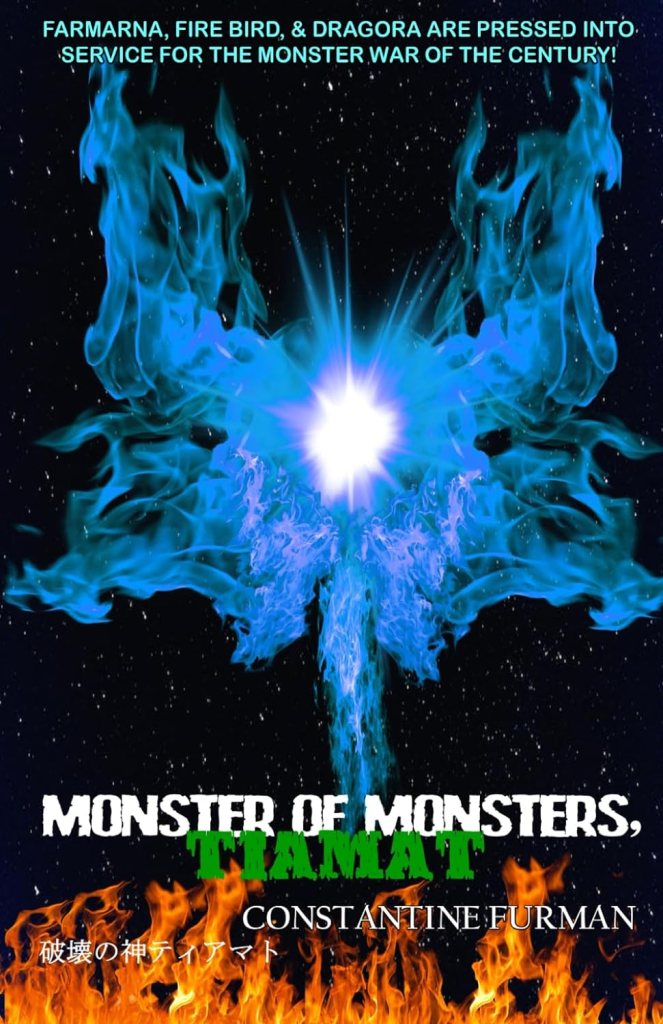
Emperor Tiamat, the space dragon in Constantine Furman’s latest novel, had nothing to do with Mesopotamian or Biblical mythology. Nor was he a Dungeons & Dragons or Final Fantasy rip-off. 

Instead, Tiamat was a five-headed monster with crazy laser powers from outer space. Nobody knew exactly where he came from but some people believed he escaped from an alternative universe where time flows backward. Other people said he was created by an unknown race at the center of the universe as the ultimate weapon of conquest. Another theory speculated that Tiamat hailed from the evil planet Gokemidoro at the very edge of space. 

Regardless of his origin story, the fact remained that Tiamat was coming to Upent (née Earth) to destroy the entire planet. “He’s the vanguard of a great evil from the outer depths of the cosmos,” warned a pretty and mysterious prophet named Maas Neekol Suiim.

What were the options for the people of Upent? A squadron of fighter jets? Nukes? Prayers? What could possibly defeat the “God of Destruction”? There’s only one hope, said Mara, the High Dragoran Priestess of the Almonds from Dragora Island. Upent needed to enlist the help of three titanic kaiju monsters. 

It’s too bad Dragora, a large grub, Farmarna, a giant sea creature, and Fire Bird, a Rodan-like Pteranodon, were a fractious bunch with no affection for humans. “They built weapons to hurt us,” said Farmarna with a sneer. “Why should we help them now?”

Monster of Monsters, Tiamat was a sweet homage to mid-century Toho kaiju movies. G-fans will love the various creatures and the city-destroying battles (the buildings went down like Jenga towers, said the author). Over all, Furman does an excellent job of capturing in print the awkward and comical clashes featured in those early films. in addition, there’s humor and enough cheeky moments to please any grumpy book critic. 

I really only have one negative comment. The author apparently doesn’t know the difference between an astrologer and an astronomer. At first I thought it was the kind of funny typo you often see in indie books without editorial support. But I was wrong. The author continually used the two words as synonyms throughout the entire novel. 

On the other hand, possibly my favorite moments in the book revolved around the princess-prophet Maas Neekol Suiim. She came to Upent with an urgent message from the stars. “Space is as vast as it is limitless,” she said. “It is time that mankind unites with members of other worlds.” Like Michael Rennie in The Day the Earth Stood Still, she was a harbinger of hope. 

[ Monster of Monsters, Tiamat / By Constantine Furman / First Printing: January 2024 / ISBN: 9798871660584 ]

What Lurks Within and Without

According to the latest Horror Zine anthology, you can find monsters in swimming pools, shopping malls, hospital morgues, cornfields and blackberry brambles. But monsters, as we all know, aren’t just limited to the physical world, they can also live inside your head. Truly they exist within and without. 

For example, in a story called “What Lurks Within” by Tyler John Kasishke, a man named Lewis (!!) lives in a parallel world of fantastical woodland creatures. Featuring requisite nods to Alice’s Adventures in Wonderland and Jefferson Airplane, Kasishke’s white rabbit is a monster that doesn’t respect the line separating dreams and reality. 

Similarly, Chris Allen’s psychological horror tale titled “Red Spider” is about a college student’s Poe-like obsession with a giant crimson spider. Is the spider real, or is it just a figment of his imagination? Here’s a clue: the author freely admits having a phobia of arachnids. ‘Nuff said. 

Like all psychological horror, monster fiction puts readers in an extreme space of untenable chaos. It’s cathartic and fun. After all, there’s not much you can do when you’re being attacked by a gang of mannequins, a family of trolls or an orchestra of crickets. You might as well sit back and enjoy the ride. 

No surprise, my favorite stories in the collection are less ambiguous and more overt. “Mouths” by Shawn Phelps is about a woman who becomes infamous for her ghastly art projects and “Nom Nom” by Elizabeth Massie is about a man who creates a stinky monster born from his “jism of loathing.” Elsewhere there are enough scarecrows, golems, demons, parasites and angry gods to satisfy any monster dilettante. The Jersey Devil even shows up to smash a small group of inept paranormal investigators. 

My two favorite stories come from co-editor Dean H. Wild and Bentley Little. There’s a sewer serpent living in the bowels of a three-story flophouse in “Where the Water Flows.” The “Pipe Slider” is suitably revolting (“wet and flabby,” says the author), but the antics of four dotty reprobates are a hoot. “We were a confluence, the four of us,” says the landlord, “a churning storm that hailed the thing in my basement with the acuity of a dog whistle.”

Easily the most queasy thing in this Horror Zine compilation is a story called “That Summer.” Like me, you’ll wince when a small boy gets a slimy fishy mouth kiss from a mysterious bog creature. It’s gross, but not untoward. “Yore mama loves you,” drawls a nearby acquaintance with a smile.  

[ The Horror Zine’s Book of Monster Stories / Edited by Jeani Rector and Dean H. Wild / First Printing: January 2024 / ISBN: 9781953905864 ]

Full of Vim and Hybrid Vigor

“Monsters are real,” says the back-cover blurb for John Lee Schneider’s latest novel Apex Apocalypse. That’s an indisputable fact, isn’t it? The world is filled with all sorts of monstrous creatures such as killer whales, reticulated pythons, great white sharks, Humboldt squids, Komodo dragons and Nile crocodiles.  

Many of these monsters roam wild and free in the Florida Everglades. With exotic invasive species arriving daily, the wetlands is arguably the most dangerous place on Earth. The swamp is a primeval ecosystem that borders Florida cities like a prehistoric preserve, says author Schneider. “There are a lot of things that can kill you in the bog.”

Mutated vipers and anacondas lurk around every riverbend, but crocodiles are far and away the biggest problem. According to an Everglades National Park ranger, crocodiles aren’t just an invasive species. Many of them are hybrids. And because of a phenomenon called heterosis (commonly known as “hybrid vigor”), they are growing larger and faster. “These hybridized offspring carry a variety of traits from American crocs, salties and Niles. And there are definitely new generations of crocodiles with a mix of all three.”

Abigail O’Neil knows first-hand how deadly the wetlands can be. The daughter of a real-life boogeyman, she grew up on a gator farm in an isolated lagoon in the darkest corner of the swamp. “Wherever you go,” she says, “the monsters are always there to get you.”

Now Abigail finds herself in the middle of nefarious intents. In order to survive, she must return to events detailed in a previous novel from 2019 called Hybrid Vigor (read my review here) and relive the horrors of her past. 

Hot on her trail is a mysterious gin-soaked, barroom queen from California. This lady sees an opportunity in the swamp, but she needs to get rid of Abigail first. In tow with an army of burly henchmen, she’s a formidable foe with a heart full of napalm.  

Separately there’s also some kind of pesky zombie-like beast hanging around and causing trouble. The author describes it as a one-armed, one-legged swamp ape (or semi-amphibious Bigfoot) carrying a massive Stormbreaker axe. Just like every other monster in the bog, it is inexplicably drawn to Abigail.  

Apex Apocalypse starts slowly—the entire first chapter is a big info dump and there’s a lot of jibber jabber about Man being the ultimate apex predator—but the novel eventually gains momentum and reaches a satisfying confluence of swamp monsters and mayhem. The novel ends with an outrageous (and nutty) Squid Game-like death match.  

Ultimately, the author leaves a few important plot points unresolved. Will there be a sequel? I dunno, but my bet is that even Schneider doesn’t know how the ongoing situation unwinds. The swamp is jealous of its secrets and keeps them hidden from the eyes of God and man, he admits. “It was the last place in the developed world that dark secrets could truly be kept forever.”

[ Apex Apocalypse / By John Lee Schneider / First Printing: January 2024 / ISBN: 9781923165014 ]

Gods and Monsters

Seventeen-year-old Krescent Dune fought monsters for a living. Like all gladiators before her, she entered the battle arena each time knowing it would be an unforgiving playground of cruelty and death. 

Young Kress earned her reputation as the undisputed champion of the pit by compiling 78 straight kills. Scythe crabs, mutated aquabats, one-horned derinos, byotors, raptors, varmee and wurm lizards—they were all vanquished during her six-year winning streak. “I’m a fighter,” she said at one point. “I kill despite myself and I will not go down so easily.”  

Because of her prowess in the pit, Kress was recruited to join an expedition into a labyrinth of tunnels and caves below the surface of her homeland Kar Atish. Along with several redshirts, her mission was to explore the final frontier. Like the crew of the USS Enterprise, she agreed to boldly go where no man or woman had gone before. 

Kress knew the expedition was basically a death sentence. Undoubtedly, there would be indescribably horrible creatures below waiting to pounce on her. In fact, entering the tunnels for the first time was like stepping inside the mouth of a beast, its teeth sharp and pointed beneath her feet. 

And, as expected, Kress and her crewmates encountered a multitude of creepy-crawly things almost immediately—mostly giant insects and multi-tentacled ocean beasts. Even though she was a famous monsters killer, she couldn’t protect all of her redshirts. In my opinion, the best bits of Somewhere in the Deep were these epic belowground battles. 

After weeks of spelunking, the doomed patrol finally reached the end of their journey to discover they were merely pawns in a mad game of political power and greed. No reader will be surprised by this plot twist. The entire endeavor was an open secret from the very beginning. 

There were a couple of unexpected moments along the way, however. At one point, Kress and her gang encountered an entire community of Shadefolk living in the hollow mountains below the surface. Born in darkness, these people existed side-by-side with the monsters in an uneasy subterranean détente. More importantly, the Children of Shade were the protectors of a supercharged holy substance that, if mishandled, would remake (or destroy) the entire world. 

Before leaving the underworld and returning home, Kress gets the biggest shock of her life. She’s swallowed by a giant cloud monster (!!) and experiences a transcendental moment. Transformed and imbued with godlike mental perception, she accepts her true mission in life. No spoilers from me, but here’s a hint: Her career as a monster slayer was now over.

[ Somewhere in the Deep / By Tanvi Berwah / First Printing: January 2024 / ISBN: 9781728247659 ] 

The Justice League of Monsters

There was a huge monster craze in the United States from the late 50s and continuing into the early 70s. It all began when local TV stations started airing monster movies at midnight and lead directly to the publication of Famous Monsters of Filmland. After that, you could see the trend quickly escalate to The Outer Limits, “The Monster Mash,” Rat Fink, The Munsters and Dark Shadows

Monster mania probably ended in 1973 when a young Linda Blair used a crucifix as a dildo in the original Exorcist movie. But while it lasted, the groovy age of monsters was a happy time when all monsters hung out in the same timeline. According to journalist and pop-culture historian Mark Voger, it was a time when all monsters were best friends who shared thrilling adventures like the superheroes in the Justice League of America. 

And now, 50 years later, editor James Palmer presents his version of the Justice League of Monsters—a fearsome fighting force for freedom, made of the ghastliest ghouls and goblins of man’s imagination come to life. Membership includes (in slightly altered versions) the Wolf Man, the Creature from the Black Lagoon, Frankenstein’s monster and Count Dracula. 

Together with Moira Harker, a world-renowned monster hunter, this extraordinary league of gentlemen fight all sorts of creatures and spirits—including the Last Reich, a group of zealots who continue to aggressively promote Nazi politics. More generally, the League of Monsters simply call themselves occult researchers. 

The anthology begins with a prologue-like story by Palmer called “Gods and Monsters.” It efficiently introduces readers to the world of Monster superheroes. The League’s headquarters is a rambling Victorian mansion on the edge of the New Jersey Pine Barrens. They are mostly autonomous but have a working relationship with a shadowy government organization. It’s the early 50s and Harry S. Truman is the President of the United States. “The world,” says wolf man Ned Nyland, “is a weird and deadly place.” 

The five remaining stories are silly and preposterous in a good way. If you enjoy Universal monster icons and over-the-top antics you’ll probably like what you get here. Personally, my two favorite stories are by Russell Nohelty and Adrian Delgado. 

“Not Another Haunted House Story” follows Hank Clerval (Frankenstein’s monster) and Gill, the missing-link fish-man, to Portland in a Brave and the Bold-like adventure. It’s not the best story in the book, but it’s an excellent character study of the modern day Prometheus. Even though he’s saved the world countless times along with his colleagues, Hank can’t shake his monstrous origins. These days he’s compassionate and erudite, but he still has trouble with first impressions. “I only look like a monster,” he says. 

“Fear the Queen of Fangs” is about the rise of Sobekneferu, the first female pharaoh of Egypt and the crocodile god’s chosen herald. Flanked by a squad of gun-bearing crocodile-headed men, her goal is to kill President Truman and resurrect the dead city of Crocodopolis. Her outlandish plans are smashed by Dracula (wielding a submachine gun!) and features a thrilling superhero-like fight between a wolf man and a rhino man. It’s the final story in League of Monsters and it’s a crazy way to end the book. 

[ League of Monsters / Edited by James Palmer / First Printing: July 2023 / ISBN: 9798852078407 ]

Monster Book Club: Best of 2023

I’ll let you in on a little secret: Monster Book Club isn’t a horror fiction review site. Even though monsters are a sub-genre of horror, I try to keep my blog tightly focused. I’m not interested in reading demonic, paranormal or psychological novels about ghosts, witches or crazy men with big knives.

For me it’s all about the monsters. Any novel I review has to feature a colossal lizard, a swamp thing, a kraken and/or something else fantastical and otherworldly. In fact, the books I read don’t have to be scary at all. I’m totally open to reading romance, comedy and detective stories as long as there’s a giant ape involved.  

You may not realize it, but there’s been a bump of interest in monster fiction lately. Some of these new books are good, but many of them are bad. To help sort things out, here’s a list of my top-five favorite novels of the past year. I’m not particularly interested in producing a comprehensive consumer guide, but I wholeheartedly recommend the following titles as the best monster books of 2023.

1) From the Depths edited by Mark Bilsborough / Amazing Monsters Tales, Issue 4: Into the Briny Deep edited by DeAnna Knippling and Jamie Ferguson. Taken together, these anthologies are my two favorite monster books published in 2023. The relationship between sea and land has never been more profound. 

2) Project Vampire Killer by Jonathan Raab. According to author Raab, vampires are monsters and filmmakers are sorcerers. When the two meet, the spiritual axis of conflict will remake the world forever.  

3) The Last Night to Kill Nazis by David Agranoff. For war crimes committed during WWII, the Nazis were found guilty by Heaven and Hell. Not so for a 400-year-old vampire named Count Reiter. When he tore into a group of Nazi refugees, there were no gods or devils to punish him. 

4) Pulp: Monsters by Brad D. Sibbersen. Someone famously once said: “If you battle monsters, you don’t always become a monster. But you aren’t entirely human anymore, either.” That’s a perfect way to describe Sibbersen’s terrific collection. You’ve been warned. 

5) Deep Dark by Judith Sonnet. Who knew that giant gastropods could be so compelling? And who knew that Sonnet, the doyenne of splatterpunk, could engage readers so effectively by tamping down the extreme horror? 

The start of a new year always brings the promise of more exciting monster fiction to come. Now that 2023 has been bottled and capped, here’s an ongoing list of books that I’ll be perusing in the next 12 months.

2024 Monster Book Club Reading List

A Cut Below by Scott Drebit. All the Hearts You Eat by Hailey Piper. A Mayhem of Monsters by Mark Onspaugh. A Misfortune of Lake Monsters by Nicole M. Wolverton. Apex Apocalypse by John Lee Schneider. A Werewolf’s Guide to Seducing a Vampire by Sarah Hawley Backwaters by Lee Rozelle. Bering Sea Terror by Matthew Nefferdorf. Beyond Here Be Monsters by Gregory Frost. Bless Your Heart by Lindy Ryan. Boar War by R. Gualtieri. Bored Gay Werewolf by Tony Santorella. Bottoms and Bloodsuckers by D.A. Holmes. Bride by Ali Hazelwood. Cabaret of the Dead by Staci Layne Wilson. Dead Detective Society edited by James Aquilone. Devils Kill Devils by Johnny Compton. Doctor Strange: Dimension War by James Lovegrove. Eynhallow by Tim McGregor. Frankenstein Enterprises by Max D. Stanton. Frankenstein’s Monster by J.S. Barnes. French Tales of Vampires, Vol. 1 edited by Jean-Marc and Randy Lofficier. Full Metal Octopus by Carlton Mellick III. Giant Freakin’ Robots edited by James Young. Gigawoman x Iguanos by Harper Able Kite. Godzilla x Kong: The New Empire by Greg Keyes. Good Dogs by Brian Asman. Hell Pig by Anthony Engebretson. Her Frankenstein by Norikazu Kawashima. How to Help a Hungry Werewolf by Charlotte Stein. Immortal Pleasures by V. Castro. It Came from the Lake by Glenn Rolfe. It Watches in the Dark by Jeff Strand. Izzy’s Cursed Cabaret by Loretta Kendall. Kaiju Cataclysm by Sam M. Phillips. Kaiju: Deadfall by J.E. Gurley. Lucy Undying by Kiersten White. Love Vs. the Scarecrow by Cassandra Gannon. Monster by G.W. Thomas. Monster of Monsters, Tiamat by Constantine Furman. Monsters Among Us by J.H. Moncrieff. My Funny Frankenstein by Ward Parker. My Vampire Vs. Your Werewolf by Paul Tobin. Night of the Bubbies by Damien Casey. Prey of War by Brian Gatto. Redhead Town by Deborah Sheldon. Ruby’s Bite Me Bakery by Loretta Kendall. Russells in Time: Land Squids vs. Dinosaurs by Keven Shamel. Savage Prey by Gustavo Bondoni. Screams from the Ocean Floor edited by Heather Ann Larson. Silent Mine by C.M. Saunders. Solarpunk Creatures by Various. Somewhere in the Deep by Tanvi Berwah. So Thirsty by Rachel Harrison. Task Force E: The Reservation by Jason Rubis. Terrible Lizards edited by Kyle J. Durrant. The Horror Collection: Monster Edition edited by Kevin J. Kennedy. The Horror Zine’s Book of Monster Stories edited by Jeani Rector and Dean H. Wild. The Locust Bride by Ellis Goodson. The Old Gods Awaken by Donald Tyson. The Shriek-A-Rama Spook Show Experience by Judith Sonnet. The Z Word by Lindsay King-Miller. This Is Totally Normal by Tim Meyer. Tricksters by N.L. McLaughlin. Valentine’s Day with a Vampire by Tabitha Lovelace. Vigilante Sasquatch by Frank Cole. War of the Sea Monsters by Neil Riebe. We Mostly Come Out at Night edited by Bob Costello. Werewolf Art Thou by Ward Parker. We’re Not Ourselves Today by Jill Girardi and Lydia Prime.