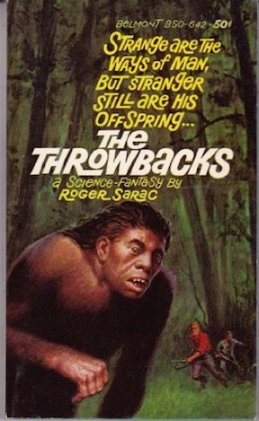
 Roger Sarac never explicitly gives a name to the shaggy humanoid beast at the heart of his novel. “It’s like a bear, and yet it ain’t,” he writes. “It’s sort of manlike, yet it ain’t. It’s just a thing without a proper name.”
Stories of apelike and bearlike creatures living in the Pacific Northwest have been popular for a long time. Readers may automatically assume the author is writing about Bigfoot or Sasquatch or something else born of “Indian and aboriginal stock.”
Sarac’s beast is something similar yet something altogether different. She exists as a link to both the past and the future—a baby beget by modern parents cursed with cellular structure culled from mankind’s forgotten stages of evolution.
To put it another way, it’s like a woman who wakes up in the morning to discover the world has slipped backward a million years. Or, perhaps, it’s like she’s been shot ahead into the future thousands of generations.
Forward or backward, says the author, it doesn’t matter. The timeslip is traumatic. “What is intended for thousands of people to experience gradually, comes all at once to one individual.”
The half-animal-half-human wretch is a repository of ancient human experience. She’s more advanced than most wild animals, but witless nonetheless. That’s her tragedy, says Sarac. Her intelligence and scale of awareness didn’t belong to any specific time period.
As a result, the she-beast is (mostly) sympathetic. She hunts and kills innocent people, but you understand her savage nature. Like all monsters, she’s trapped in a world she didn’t make.
The prehistoric throwback in Sarac’s novel is a genetic anomaly that provides a peek at the secret of life. She has no name, but she represents a serious threat to the future of mankind. According to the author, there’s a subhuman monster lurking in all of us—it’s just one gestation period away from being born.
[The Throwbacks / By Roger Sarac / First Printing: 1965]
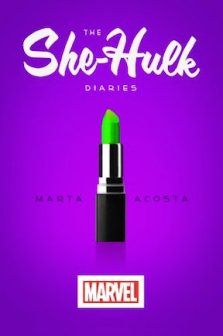 In my opinion, She-Hulk is the best superhero name Stan Lee ever thought up. The hyphenated personal pronoun succeeds at being funny and dumb and smart and provocative all at the same time. She-Hulk could easily be a monster from a 1950s movie or the topic of a women’s studies class. Take your pick.
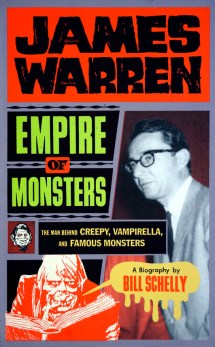 Growing up, my friends and I were fiercely loyal to our favorite comics. One guy loved the old Marvel monster books. Another friend collected Swamp Thing. I was a big fan of House of Mystery. As I remember, we sort of liked Star-Spangled War Stories too.
 When he was a little kid, Brian Kettering witnessed his father being murdered by the friendly neighborhood pizza delivery guy. Or maybe it was a fiend from the abyss? To be honest, he wasn’t 100 percent sure what he saw. He was only six years old at the time and his memory was a little bit unreliable.
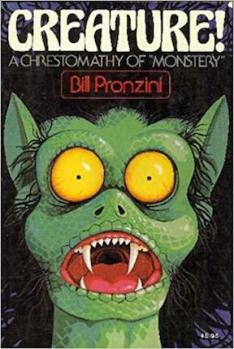 The creatures featured in this “chrestomathy of monstery” are huge (with the strength of a thousand puny humans), tiny (small enough to fit into a bottle of tequila), hairy, scaly, slimy, lonely, horny, vengeful, perverse, benevolent and cosmic.
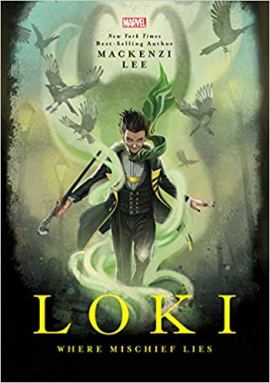 There’s no timestamp on Mackenzi Lee’s latest novel. Readers aren’t told how old Loki and Thor are. All we know is that All-father Odin has yet to name an heir to the Asgardian throne.
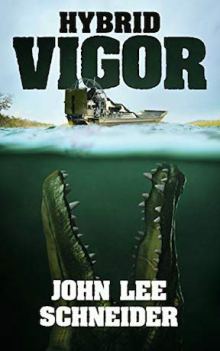 According to author John Lee Schneider, alligators were like big and lazy frogs. “Mud-rooters,” he called them. They might look fierce, but over the years they’ve grown fat with environmental protection.
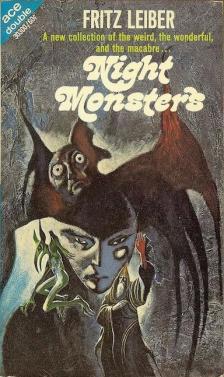 Night Monsters reflects author Fritz Leiber’s career-spanning affection for horror, urban fantasy, timeless antiquity, arcanum, anima and Dark Ladies (no sword and sorcery adventures, alas). It’s a minor collection of stories, but still worthy of a place on your nightstand for a little bedtime reading.
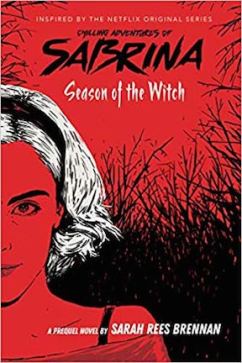 In Season of the Witch, Sabrina Spellman was only 15 years old. She hadn’t experienced her dark baptism, she hadn’t signed her name in the Dark Lord’s book of souls, and she wasn’t enrolled at the Academy of Unseen Arts. She didn’t possess a grimoire—she didn’t even have a black cat named Salem yet.
 The Wash was a vast area of mud, quicksand and dangerous tides. Although beautiful from a distance, especially during the summer when the sun sparkled in the morning mist, it was unquestionably Britain’s most inhospitable location.
 Monster Book Club