 “Women have always been the most important part of monster movies,” says author Mallory O’Meara, “because women are the ones horror happens to. Women have to endure it, fight it and survive it.”
But there’s not a wide range of female representation on screen. In the horror biz, women are either scream queens, warty, unfuckable witches or oversexed busty vampires.
Says O’Meara: “Monster stories are powerful. They explore prejudice, rejection, anger and every imaginable negative aspect of living in society. However, only half of society is reflected in the ranks of the people who create these monsters. Almost every single iconic monster in film is male and was designed by a man: the Wolfman, Frankenstein, Dracula and King Kong”—the list goes on and on.
There is one notable exception, however. Back in 1953, a special effects and makeup designer named Milicent Patrick was tapped to create a Devonian-inspired hybrid creature for an upcoming movie from Universal Pictures. To this day, Patrick’s iconic design for the Creature from the Black Lagoon remains one of the best-known and well-loved cinematic monsters of all time.
But Patrick didn’t appear out of thin air like a genie from a bottle. She’d been working in Hollywood for 15 years by then and her resume was pretty impressive. Before designing the Creature (or “Creech” as he was affectionately called on set), she attended the same prestigious art school as Mary Blair and Chuck Jones. As an animator at Disney she worked on both Fantasia and Dumbo. And at Universal she created the Xenomorph from It Came from Outer Space. She was smart and ambitious and easily made her mark in a male-dominated industry. “She didn’t have superpowers or a magic wand,” states O’Meara. “She was simply intelligent and savvy and good at what she did.”
Unfortunately, Patrick’s Hollywood legacy was unraveled by pettiness, jealousy and a big jolt of Hollywood sexism. To promote the upcoming release of Creature from the Black Lagoon, she was booked on a multi-city publicity tour. By all accounts, the cross-country trek was a smash success. Patrick was a beautiful woman who was quick witted and comfortable in front of the camera. She also had a 41-inch bustline and jiggled like a plate of jelly when she walked into a room. One magazine described her as “a statuesque beauty abundantly endowed by nature to take advantage of Hollywood’s wide-screen techniques.” Yikes! Reporters were curious about the movie and exorbitantly interested in Patrick herself.
All this attention (lascivious and otherwise) irked her boss back in California. As the head of the makeup department at Universal Studios, Bud Westmore was accustomed to taking credit for anything under his purview. Even though he had nothing to do with the Creature’s design, he felt like he deserved the media acclaim Patrick was getting. Being upstaged by one of his underlings—a woman no less!—was a big blow to his ego. As a result, Patrick (the beauty behind the beast) was cut loose to appease Westmore. She remained a part of the Hollywood community for the rest of her life, but she never worked again in her preferred profession. She died in anonymity in 1988.
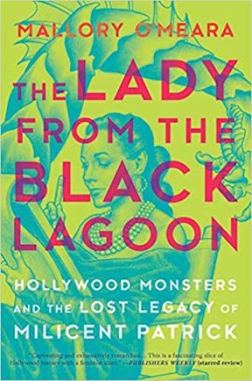
But hold on a sec. Author Mallory O’Meara has written a highly personal history of the queen of monsters. The Lady from the Black Lagoon: Hollywood Monsters and the Lost Legacy of Milicent Patrick shines a light on Patrick’s career, clarifies her contributions to the Creature from the Black Lagoon (and other monster movies) and firmly establishes her place in film history. The book is chatty and nuanced and never wavers from O’Meara’s strong point of view.
Milicent Patrick’s rise, fall and disappearance behind-the-scenes in Hollywood is a fascinating story. To this day, she’s the only woman to have designed an iconic movie monster for a major studio—and you have to admit: the Creature is the coolest of them all. “She should have been hailed as a hero,” says O’Meara in conclusion. “She’s not just the queen of monsters, she’s the goddamn Joan of Arc.”
[The Lady from the Black Lagoon: Hollywood Monsters and the Lost Legacy of Milicent Patrick / By Mallory O’Meara / First Printing: March 2019 / ISBN: 9781335937803]
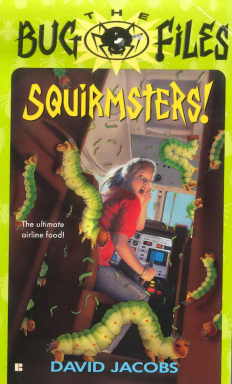 Do “nature run amok” novels qualify as monster novels? Is a coordinated attack of army ants as monstrous as a mob of abominable snowmen? I say “yes.” Rats, worms, spiders, ants, a plague of flies, a swarm of bees, a flock of seagulls—when Mother Nature gets mad, she has a long list of creepy-crawlies on speed dial to do her bidding.
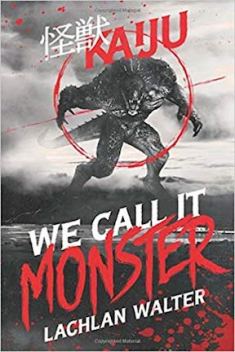 Kaiju novels are a lot of fun. In particular, I enjoy the crazy and extravagant descriptive language used by authors to construct their towering colossi. The books are rarely scary, but the earthshaking monsters are always a hoot.
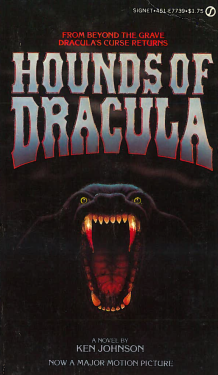 Michael Drake lived a typical and uneventful suburban life. He had a job, a wife, two young kids, a couple of dogs and a sexy neighbor he liked to flirt with. On weekends, he enjoyed camping and fishing.
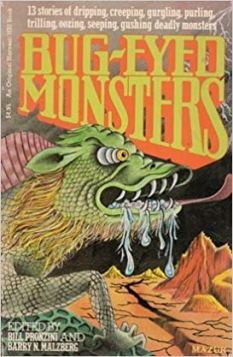 Bug-eyed monsters were popular in the early days of science fiction with their bulging eyes, groping tentacles and dripping ichor. Edgar Rice Burroughs and H.P. Lovecraft (among other writers) built entire careers on the endless confrontation between man and monster.
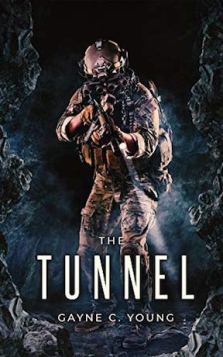 There’s a lot of bad stuff going on at the U.S.-Mexico border. Human smuggling, human trafficking, inhumane detention facilities and indefensible family separation policies are all horrible.
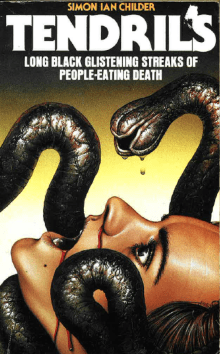 There’s nothing particularly funny about the worms in John Brosnan’s novel. They’re nasty and icky things that look like “a thick thread of dark jelly loosely packed within a transparent membrane.”
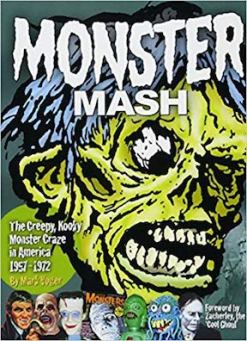 When did nerd culture officially begin? Maybe it started in 1977 when Star Wars (A New Hope) debuted in theaters. Or maybe it was nurtured slowly by the cumulative efforts of Doctor Who, Peter Parker, James Kirk and Kevin Smith. Author Mark Voger suggests that Comic-Con culture began way back in 1957 with the publication of Famous Monsters of Filmland #1.
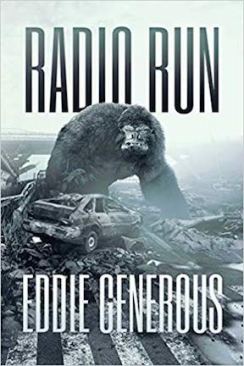 We all know what’s coming. And it’s not going to be pretty. At some point in the future, earthquakes will rock our world. The planet’s axis will shift and the magnetism of the North and South Poles will spin out of control. Oceans will flow in new directions and land mass will change dramatically. Don’t be surprised to wake up one morning and discover entire continents under water.
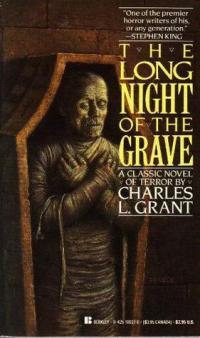 Mummies are creepy and dusty and probably smell like rotten flesh, but they aren’t very scary. Think about it, whom would you rather meet in a dark alley? Nosferatu or Imhotep?
 Monster Book Club