 Growing up, my friends and I were fiercely loyal to our favorite comics. One guy loved the old Marvel monster books. Another friend collected Swamp Thing. I was a big fan of House of Mystery. As I remember, we sort of liked Star-Spangled War Stories too.
But we all agreed: If we wanted to read the best comics on the newsstand, we always reached for Creepy and Eerie. These magazines, with artwork by Wally Wood, Frank Frazetta and Reed Crandall, were the gold standard for snobby comic readers like us.
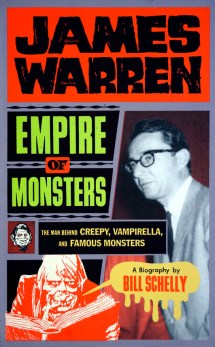
Before Creepy and Eerie came along in 1964 and 1966, however, publisher James Warren hit pay dirt with Famous Monsters of Filmland (1957), a magazine that successfully capitalized on the burgeoning monster craze in America.
Famous Monsters was a magazine for 11-year-old kids, but ironically its genesis was inspired partly by a recently launched magazine for men. Says biographer Bill Schelly: “Warren was mesmerized by Hugh Hefner’s Playboy, and he was aware of the magazine’s meteoric success. He saw how one man with a vision could make his mark in publishing.”
Warren’s vision turned out to be monsters and comics. Not a bad combo in my opinion. Famous Monsters of Filmland, edited by quipster Forrest J. Ackerman, soon paved the way for Creepy, Eerie and Vampirella. Other magazines came and went (most notably Harvey Kurtzman’s Help! and Will Eisner’s The Spirit), but Warren’s empire of monsters ultimately became his legacy.
Unapologetically, Warren ruled his monster kingdom like a petty tyrant. Frazetta said he was full of crap, Archie Goodwin’s wife mocked him for being a Hugh Hefner wannabe and Gray Morrow said he was a flamboyant guy prone to attention-getting outbursts. “Warren was a feisty man with many contradictions,” confirms Schelly. “He had enormous charm, colossal arrogance, surprising kindness and explosive anger.”
Louise Simonson (then Louise Jones) became Warren’s go-to editor back in 1976. Like everyone before her, she discovered that Warren could be a prickly bastard. But somehow she survived. “He was a real character,” she says. “He could be the most charming man on Earth, or the most utter pain in the neck. He could be viciously cutting if he chose to be. He could be angry and raging or very kind and nice and gentle.” It was all part of the nature of a very complex individual, she says. “Heaven help me, I liked him.”
After driving his staff crazy for 25 years, Warren went a little crazy himself. He put out his last books in 1982, declared bankruptcy in 1983 and took a permanent vacation. “In running a publishing company I had to be more cunning than Satan and more generous than Jesus,” Warren confessed at the time. “I was not well-fitted for either role.”
Warren’s publications never seriously challenged larger companies such as Marvel and DC in sales, but they successfully created their own special niche in the marketplace and in comics history. Creepy, Eerie, Vampirella and Famous Monsters of Filmland, still iconic after all these years, helped crystallize a fan zeitgeist that continues to influence pop culture today. Says Schelly: “Like Frank Sinatra, James Warren did it ‘his way.’ He successfully built an empire of monsters. And who doesn’t love monsters?”
[James Warren, Empire of Monsters: The Man Behind Creepy, Vampirella, and Famous Monsters / By Bill Schelly / First Printing: March 2019 / ISBN: 9781683961475]
 When he was a little kid, Brian Kettering witnessed his father being murdered by the friendly neighborhood pizza delivery guy. Or maybe it was a fiend from the abyss? To be honest, he wasn’t 100 percent sure what he saw. He was only six years old at the time and his memory was a little bit unreliable.
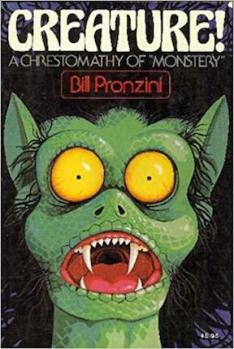 The creatures featured in this “chrestomathy of monstery” are huge (with the strength of a thousand puny humans), tiny (small enough to fit into a bottle of tequila), hairy, scaly, slimy, lonely, horny, vengeful, perverse, benevolent and cosmic.
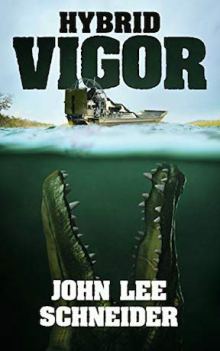 According to author John Lee Schneider, alligators were like big and lazy frogs. “Mud-rooters,” he called them. They might look fierce, but over the years they’ve grown fat with environmental protection.
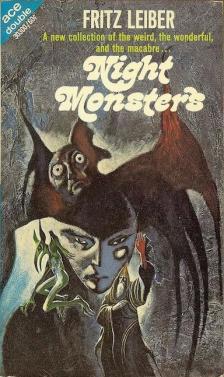 Night Monsters reflects author Fritz Leiber’s career-spanning affection for horror, urban fantasy, timeless antiquity, arcanum, anima and Dark Ladies (no sword and sorcery adventures, alas). It’s a minor collection of stories, but still worthy of a place on your nightstand for a little bedtime reading.
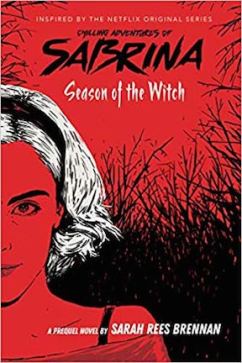 In Season of the Witch, Sabrina Spellman was only 15 years old. She hadn’t experienced her dark baptism, she hadn’t signed her name in the Dark Lord’s book of souls, and she wasn’t enrolled at the Academy of Unseen Arts. She didn’t possess a grimoire—she didn’t even have a black cat named Salem yet.
 The Wash was a vast area of mud, quicksand and dangerous tides. Although beautiful from a distance, especially during the summer when the sun sparkled in the morning mist, it was unquestionably Britain’s most inhospitable location.
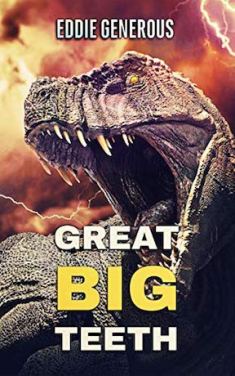 In 1977, a pregnant hippie on a nine-day bender fell down a hole and discovered her version of Pellucidar—a hollowed out, underground chamber filled with dinosaurs. It was an Edgar Rice Burroughs, Jules Verne and Mysterious Island nightmare. Said the author: “Jane Hartman was stuck in an anomaly that spanned several million years, possibly one hundred million years. Hell, maybe longer.”
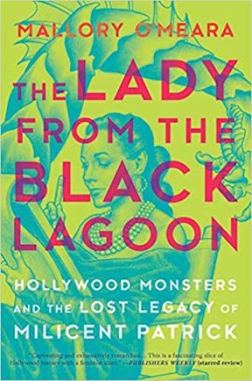 “Women have always been the most important part of monster movies,” says author Mallory O’Meara, “because women are the ones horror happens to. Women have to endure it, fight it and survive it.”
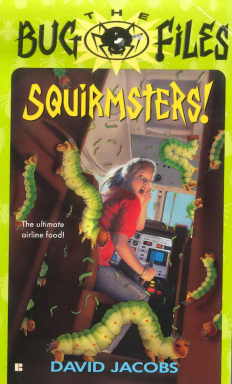 Do “nature run amok” novels qualify as monster novels? Is a coordinated attack of army ants as monstrous as a mob of abominable snowmen? I say “yes.” Rats, worms, spiders, ants, a plague of flies, a swarm of bees, a flock of seagulls—when Mother Nature gets mad, she has a long list of creepy-crawlies on speed dial to do her bidding.
