 Kaiju novels are a lot of fun. In particular, I enjoy the crazy and extravagant descriptive language used by authors to construct their towering colossi. The books are rarely scary, but the earthshaking monsters are always a hoot.
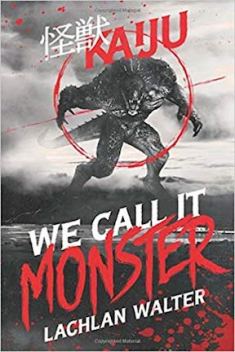
If Gamera-like “gigaanna” are a staple of the genre, why would an author write a kaiju novel and deemphasize the monsters? That’s a question I’d like to ask Lachlan Walter, the author of We Call It Monster.
Don’t get me wrong, there are giant monsters in his book, but they’re peripheral at best. Even more disappointing, Walter clearly has no flair for the material. His kaiju are relentlessly generic. For example, here’s how he describes the first creature to stomp across Sydney, Australia: “It was a massive green-and-black thing,” he writes in the first chapter. “Its body was almost barrel shaped, the same as that of a gorilla or a wrestler.”
Later, Walter catalogues a bunch of creatures spotted during a jungle expedition. “A dragonfly as big as an eagle,” he begins. “Ants as big as dogs, millipedes as big as guinea pigs, Christmas beetles as big as basketballs, stick insects the size of a dining table and a wombat as big as a small car.” Like all newspaper editors I’m a big fan of simple declarative sentences, but writing like this is dull and maddeningly perfunctory.
To be fair, the author has an agenda above and beyond most monster novels. Along with global destruction, he’s telling a story about love and loneliness and commitment and survival. For him, the kaiju are the catalyst for poetry. Good on him.
He may have a lot to say about the human condition, but he struggles throughout the book to give his creatures any sort of unique identity. At some point he just gives up. “They were monsters, plain and simple,” he says. “No amount of jargon or doublespeak would change that.”
In one chapter, a group of strangers assemble on a hill to watch a thunderous Kaiju Big Battel. The problem? The giant monsters are the size of a thumbprint because they’re twenty kilometers away. That, in a nutshell, is my biggest complaint about We Call It Monster. Even if I thought it was a serious rumination about the eternal human spirit (which I don’t), the novel itself is still a bust. The monsters are destroying the civilized world, but the author reduces them to pint-sized specks on the horizon.
[We Call It Monster / By Lachlan Walter / First Printing: February 2019 / ISBN: 9781925840520]
 Michael Drake lived a typical and uneventful suburban life. He had a job, a wife, two young kids, a couple of dogs and a sexy neighbor he liked to flirt with. On weekends, he enjoyed camping and fishing.
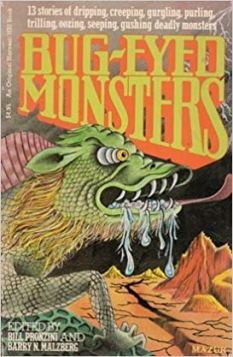 Bug-eyed monsters were popular in the early days of science fiction with their bulging eyes, groping tentacles and dripping ichor. Edgar Rice Burroughs and H.P. Lovecraft (among other writers) built entire careers on the endless confrontation between man and monster.
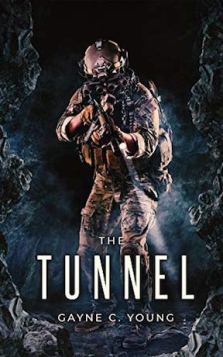 There’s a lot of bad stuff going on at the U.S.-Mexico border. Human smuggling, human trafficking, inhumane detention facilities and indefensible family separation policies are all horrible.
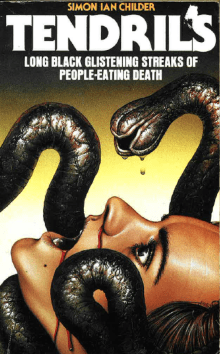 There’s nothing particularly funny about the worms in John Brosnan’s novel. They’re nasty and icky things that look like “a thick thread of dark jelly loosely packed within a transparent membrane.”
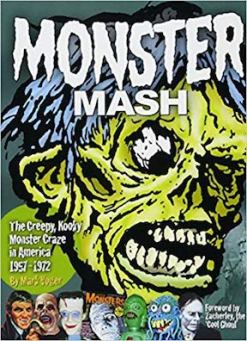 When did nerd culture officially begin? Maybe it started in 1977 when Star Wars (A New Hope) debuted in theaters. Or maybe it was nurtured slowly by the cumulative efforts of Doctor Who, Peter Parker, James Kirk and Kevin Smith. Author Mark Voger suggests that Comic-Con culture began way back in 1957 with the publication of Famous Monsters of Filmland #1.
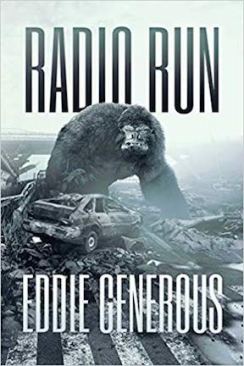 We all know what’s coming. And it’s not going to be pretty. At some point in the future, earthquakes will rock our world. The planet’s axis will shift and the magnetism of the North and South Poles will spin out of control. Oceans will flow in new directions and land mass will change dramatically. Don’t be surprised to wake up one morning and discover entire continents under water.
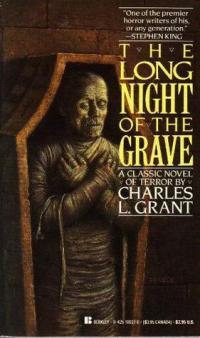 Mummies are creepy and dusty and probably smell like rotten flesh, but they aren’t very scary. Think about it, whom would you rather meet in a dark alley? Nosferatu or Imhotep?
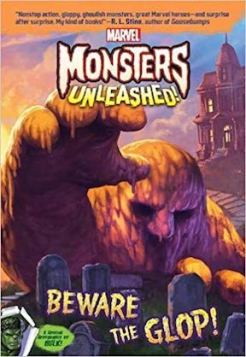 Ben Lee and his sister Cindy believed in monsters. They’d never seen one of course, but that didn’t matter. If there were talking raccoons and seven-foot-tall ambulatory trees in outer space, then why couldn’t there be monsters on Earth?
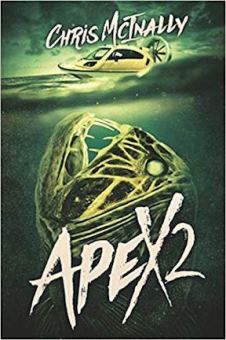 When it comes to horror comics, nobody does it better than Junji Ito. His efforts—including Uzumaki, Tomie and Frankenstein—are famous for being absurd, obscene and grotesque. If you’re new to the creator’s oeuvre, I recommend starting with Uzumaki. I guarantee you won’t be able to resist its insanely hypnotic spiral iconography.
