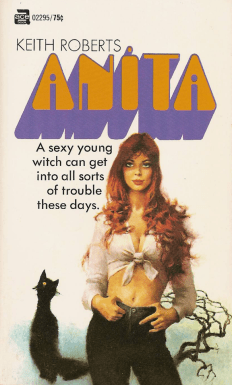
 Who’s the most popular witch in the wayward sisterhood? Is it Morgan le Fay? Circe? Baba Yaga? How about Hermione Granger, Willow Rosenberg, Wanda Maximoff or Sabrina Spellman? Laugh if you want, but my favorite witch will always be Wendy, the good little sprite.
Although she’ll never be as beloved as Maleficent or Raven (or Wendy!), Anita Thompson certainly has her bewitching charms. She’s a million-and-three-year-old sex kitten who favors peek-a-boo outfits and heavy petting. Says author Keith Roberts: “Anita makes the boys cry and then helps them unclasp her dress.”
To quote an old song from the 60s, Anita is a child of nature and a friend to man. According to her mentor, ol’ Granny Thompson: “She’s got power uvver the beasts o’ the field an’ the win’s o’ the air. She kin call the lightnin’ down inter the cup o’ her ‘and … and she’s got senses piled atop o’ the senses o’ mortals.” (Granny’s got a weird way of talking btw.)
“I’m not human,” adds Anita, “because I know what bats think and how the foxes talk … and I know how it feels when dragonflies mate. I can fly and I can change into a hare or a badger or a fish. I know everything because I can hear everything talking, owls and bats and insects, even the little creatures on the back of the moon.”
Anita’s an amazing young lady all right, but she’s got a lot to learn. For example, she’s never explored the world beyond the English countryside of Foxhanger. More importantly, she’s never cast a malicious spell in her life. If she doesn’t do something evil soon she’s worried that she’ll never get to Hell. She’s afraid that she’ll end up in “that other place.”
And that’s where this mosaic novel begins. It’s an interlocking, sequential short story collection and a coming of age novel in one tart volume. It’s sort of like The Seduction of Misty Mundae with a magick twist. Or maybe it’s like a comic book by Neil Gaiman and Frank Thorne. Take your pick.
Author Keith Roberts doesn’t disappoint readers who are looking for a little titillation. Anita’s freewheelin’ sexuality is a big part of all 15 stories. But Roberts isn’t lascivious at all. He’s a smart writer with a droll sense of humor that solicits the male gaze in a courteous manner.
For example, in a story called “The Simple for Life,” Anita stands magnificently before a full-length mirror in only her panties and a hair-ribbon. “She was uncertain about the hair-ribbon,” writes Roberts with a randy wink. In “The Charm,” Anita encourages a man to admire her naked body: “Don’t forget to look at the dimples on my bottom,” she says, “they’re one of my best features.” And later, when Anita creates a simulacrum of herself, she takes a step back to admire her handiwork. Both she and the reader can’t help noticing how sexy the effigy is.
Beyond the carnal content (and the provocative book cover by George Ziel), Anita represents a young girl’s journey from libidinous wood nymph to protector of the green. Anita travels through time (“The Charm”), plays matchmaker to a couple of ghosts (“The Middle Earth”), appears on a TV game show (“Idiot’s Lantern”), gives life to a scarecrow (“Timothy”), and saves the world from a mermaid invasion (“The Mayday”). There’s no limit to her powers. “Yer a witch,” confirms Granny Thompson. “Yer can do anythink.”
[Anita / By Keith Roberts / First Printing: 1970]
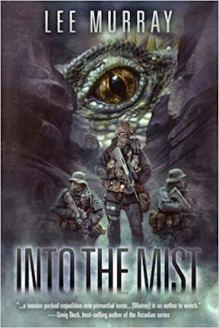 In Maori legend, there are stories of monsters living in rivers and swamps throughout New Zealand. Every child knows about the taniwha—vengeful creatures that slaughter warriors, kidnap maidens and eat babies in one gulp.
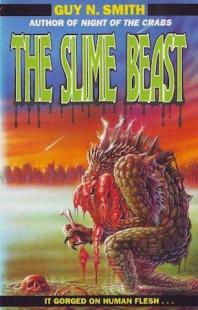 When Professor John Lowson stumbles upon an alien creature sleeping in the swamp, he immediately begins thinking about his lofty reputation. He is, after all, the self-proclaimed “greatest archaeologist in Britain.” Never mind the danger, he says. He wants to bring the beast back to civilization and reap his reward. “Do you think I’m going to let the most profound scientific discovery of all time slip through my fingers?” he asks his colleagues.
 While watching the movie Godzilla: King of the Monsters, one question kept popping into my head: Where was Kong? Surely, he must have heard the rumble of Monster Zero or the bio-sonar signal from Fenway Park. Every time Ghidorah flapped his wings and every time Godzilla retreated to the bottom of the ocean, the giant ape from Skull Island was conspicuous in his absence.
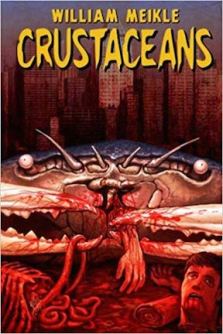 The first sentence of any novel is important. Not only does it grab the reader’s attention, but it also affords the author an opportunity to craft something eloquent and memorable.
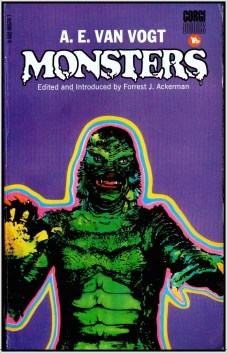 Within the very first pages of this anthology, author A.E. van Vogt describes the story’s monster like this: “The creature was tiny, but it was a monstrous, many-legged, long-bodied, long-snouted, hideous miniature, a very caricature of abnormal life, a mad creation of an insane imagination.”
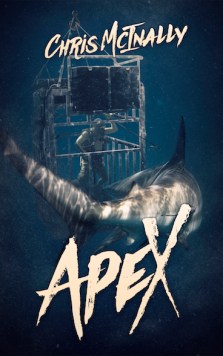 On the very first page of Chris McInally’s novel, a thousand pound, 35-foot mako shark begins chomping on unlucky bastards living near Minerva Lake. But it takes the author a long time to figure out what to call the “watery demon from the deepest layers of hell.”
 The title of this book might be misleading to anyone slightly familiar with French literature. Be forewarned, it has nothing whatsoever to do with a 16th century writer named François Rabelais. There’s no Pantagruel, no grotesque realism, no social satire—nothing literary at all. It’s just a story about a giant monster terrorizing a small island in the South Pacific.
 It’s 1964 and Earth is heading toward a large-scale daikaiju extinction event in author Ryan George Collins’s enjoyable first novel. Dinosaurs, reptiles (not dinosaurs), sea monsters and insects have all united to “enact some Old Testament wrath” on mankind.
