 Ben Lee and his sister Cindy believed in monsters. They’d never seen one of course, but that didn’t matter. If there were talking raccoons and seven-foot-tall ambulatory trees in outer space, then why couldn’t there be monsters on Earth?
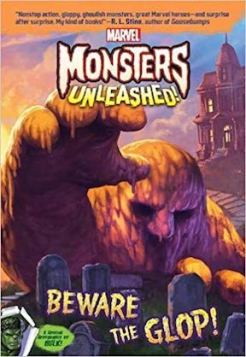
So it didn’t surprise them too much when a blobby monster showed up in their hometown one night. Glop was vaguely human-like in shape, but it was mostly amorphous like Silly Puddy. When it moved, it walked and oozed at the same time. It left a trail of goopy footprints wherever it went.
At first, Ben and his sister were thrilled to see Glop. “We have a real live monster in town!” Cindy whooped with glee. And Ben took pictures of it with his smartphone. “It’s amazing, unbelievable, astonishing!” he concurred.
But Glop was a monster with a ferocious agenda. The first words out of its mouth were (and I quote): “Hhhhhhhuuuuumannnsssss, yyyoouuu aaarrrrrrrrre doooooooomed!” Its voice was like a creaky door being opened slowly, mixed with the bubbling sounds of a pot of boiling water. Clearly the town of Highland Park was in grave danger.
For help, the kids send a desperate text to Kid Kaiju, the world’s #1 monster expert. Thankfully, Kaiju responds with a flurry of timely messages. He knew the origin of Glop and he knew how to stop it. Doing so, however, was going to be a huge challenge for Ben and Cindy.
Pursued by the icky monster, the brother and sister team dashed through the woods, traipsed across a graveyard and sought shelter in a haunted house. Ultimately they found themselves on the campus of Jacob Kurtzberg Middle School. Named after Jack “King of Monsters” Kirby, the school held the secret to defeating Glop.
In the end, the kids don’t totally vanquish Glop (the author wisely makes sure to keep the door open for a sequel). But with the help of Kid Kaiju, a fire-breathing dragon named Slizzik and the school’s weirdo art teacher, they found a way to temporarily halt the monster’s creeping horror.
Of the bunch, the biggest hero of the book was undoubtedly little Cindy. Her brother had a giant monster rep, but he was an ineffectual hero who shrieked in terror at the sight of a single rat. More than a few times, Cindy tricked the monster and saved her brother’s life. She even selflessly protected him from the neighborhood bully. She was more than a tagalong sidekick. She was a pint-sized Buffy Summers.
Glop was stopped but questions remained. “What was that thing?” asked Ben in the penultimate chapter. Was it the Blob? Hedorah? Slimer? Or what? Did it come from Transylvania or outer space? What the Glop?! “There are some things you’re just better off not knowing about,” said his art teacher cryptically. “And this is one of them.”
[Marvel Monsters Unleashed: Beware the Glop! / By Steve Behling / First Printing: July 2017 / ISBN: 9781368002479]
 When it comes to horror comics, nobody does it better than Junji Ito. His efforts—including Uzumaki, Tomie and Frankenstein—are famous for being absurd, obscene and grotesque. If you’re new to the creator’s oeuvre, I recommend starting with Uzumaki. I guarantee you won’t be able to resist its insanely hypnotic spiral iconography.
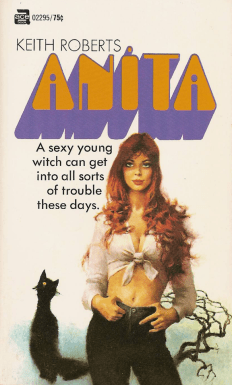 Who’s the most popular witch in the wayward sisterhood? Is it Morgan le Fay? Circe? Baba Yaga? How about Hermione Granger, Willow Rosenberg, Wanda Maximoff or Sabrina Spellman? Laugh if you want, but my favorite witch will always be Wendy, the good little sprite.
 In Maori legend, there are stories of monsters living in rivers and swamps throughout New Zealand. Every child knows about the taniwha—vengeful creatures that slaughter warriors, kidnap maidens and eat babies in one gulp.
 When Professor John Lowson stumbles upon an alien creature sleeping in the swamp, he immediately begins thinking about his lofty reputation. He is, after all, the self-proclaimed “greatest archaeologist in Britain.” Never mind the danger, he says. He wants to bring the beast back to civilization and reap his reward. “Do you think I’m going to let the most profound scientific discovery of all time slip through my fingers?” he asks his colleagues.
 While watching the movie Godzilla: King of the Monsters, one question kept popping into my head: Where was Kong? Surely, he must have heard the rumble of Monster Zero or the bio-sonar signal from Fenway Park. Every time Ghidorah flapped his wings and every time Godzilla retreated to the bottom of the ocean, the giant ape from Skull Island was conspicuous in his absence.
 The first sentence of any novel is important. Not only does it grab the reader’s attention, but it also affords the author an opportunity to craft something eloquent and memorable.
 Within the very first pages of this anthology, author A.E. van Vogt describes the story’s monster like this: “The creature was tiny, but it was a monstrous, many-legged, long-bodied, long-snouted, hideous miniature, a very caricature of abnormal life, a mad creation of an insane imagination.”
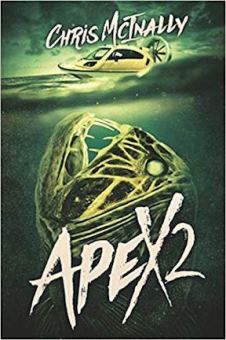
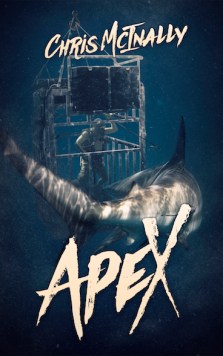 On the very first page of Chris McInally’s novel, a thousand pound, 35-foot mako shark begins chomping on unlucky bastards living near Minerva Lake. But it takes the author a long time to figure out what to call the “watery demon from the deepest layers of hell.”
 The title of this book might be misleading to anyone slightly familiar with French literature. Be forewarned, it has nothing whatsoever to do with a 16th century writer named François Rabelais. There’s no Pantagruel, no grotesque realism, no social satire—nothing literary at all. It’s just a story about a giant monster terrorizing a small island in the South Pacific.
 Monster Book Club