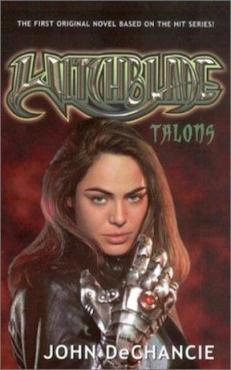
 Witchblade was certainly a big part of the “bad girl” movement in comic books during the 90s. And author John DeChancie doesn’t back away from the sexy witch’s infamous eye-popping transformation in his prose adaptation from 2002.
She was, he wrote, a paradox of dress and undress. “Her metamorphosis produced a filigree of delicate metal work of swirls and arabesques crawling up her body and covering her full breasts and neither portions but leaving little else unexposed. She was nude and yet somehow completely covered.”
Even without the Witchblade gauntlet, Sara “Pez” Pezzini was an eyeful. She dressed like a tomboy, said the author, but she always looked good. “Her jeans were tight and the T-shirt under her jacket was inevitably undersized, allowing her feminine lineaments to come through nicely. She was tall, thin, well proportioned, and had a face that could launch several navies. Legs up to the neck. Oh, those legs! And there were other parts of her body that shaped up just as well.”
Comic books have always been slightly disreputable, and Witchblade along with similar titles such as Vampirella and Lady Death unquestionably took advantage of the media’s lowbrow reputation. This is not a criticism from me btw. Over the years, the character has become iconic and (dare I say it) beloved around the world. She appeared on television in 2001 and even made the transition to anime in 2006.
Witchblade: Talons was a tie-in novel written specifically to supplement the TV series, but DeChancie doesn’t let himself get derailed by continuity minutia. Detective Pezzini wore her Witchblade gauntlet, she seemed comfortable with it and characters (old and new) coexisted without a hitch. There’s no origin story to speak of, but the supernatural tenor of the comic book series was preserved.
Pezzini finds herself in a sticky situation involving a “magical” supercomputer, a werewolf, a “mahjong dragon,” a supernatural assassin, a Romanian crime boss and a bunch of religious zealots from an alternative dimension. Vlad Tepys (the Impaler himself) even shows up for some decapitating fun.
The whole thing is silly and beyond criticism. True believers will be happy to discover that Witchblade retains her bad girl charm in prose format (Pezzini even briefly considers launching a personal website with nude pictures of herself). The details of her ongoing story, however, are rendered inconsequential. But that’s okay. Nobody ever bought a Witchblade comic for the story.
[Witchblade: Talons / By John DeChancie / First Printing: January 2002 / ISBN: 9780743435017]
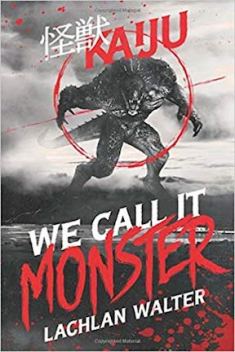 Kaiju novels are a lot of fun. In particular, I enjoy the crazy and extravagant descriptive language used by authors to construct their towering colossi. The books are rarely scary, but the earthshaking monsters are always a hoot.
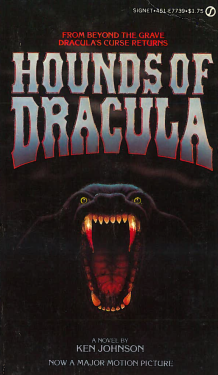 Michael Drake lived a typical and uneventful suburban life. He had a job, a wife, two young kids, a couple of dogs and a sexy neighbor he liked to flirt with. On weekends, he enjoyed camping and fishing.
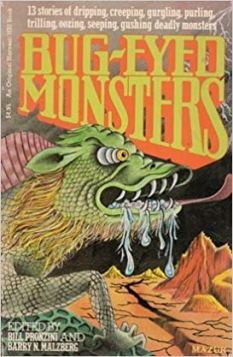 Bug-eyed monsters were popular in the early days of science fiction with their bulging eyes, groping tentacles and dripping ichor. Edgar Rice Burroughs and H.P. Lovecraft (among other writers) built entire careers on the endless confrontation between man and monster.
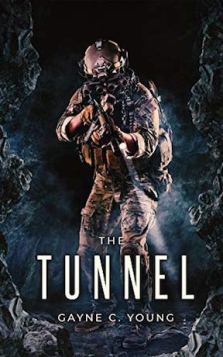 There’s a lot of bad stuff going on at the U.S.-Mexico border. Human smuggling, human trafficking, inhumane detention facilities and indefensible family separation policies are all horrible.
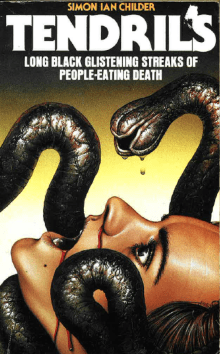 There’s nothing particularly funny about the worms in John Brosnan’s novel. They’re nasty and icky things that look like “a thick thread of dark jelly loosely packed within a transparent membrane.”
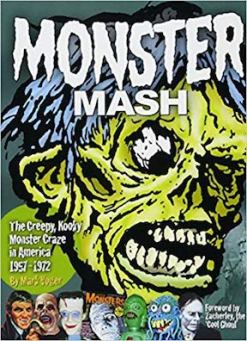 When did nerd culture officially begin? Maybe it started in 1977 when Star Wars (A New Hope) debuted in theaters. Or maybe it was nurtured slowly by the cumulative efforts of Doctor Who, Peter Parker, James Kirk and Kevin Smith. Author Mark Voger suggests that Comic-Con culture began way back in 1957 with the publication of Famous Monsters of Filmland #1.
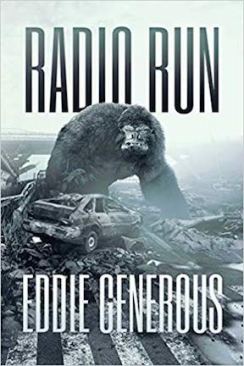 We all know what’s coming. And it’s not going to be pretty. At some point in the future, earthquakes will rock our world. The planet’s axis will shift and the magnetism of the North and South Poles will spin out of control. Oceans will flow in new directions and land mass will change dramatically. Don’t be surprised to wake up one morning and discover entire continents under water.
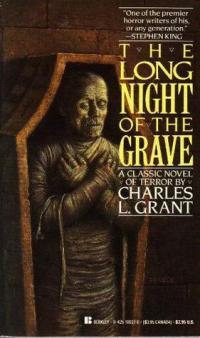 Mummies are creepy and dusty and probably smell like rotten flesh, but they aren’t very scary. Think about it, whom would you rather meet in a dark alley? Nosferatu or Imhotep?
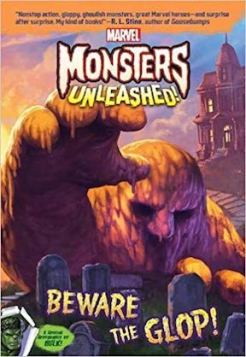 Ben Lee and his sister Cindy believed in monsters. They’d never seen one of course, but that didn’t matter. If there were talking raccoons and seven-foot-tall ambulatory trees in outer space, then why couldn’t there be monsters on Earth?
 Monster Book Club