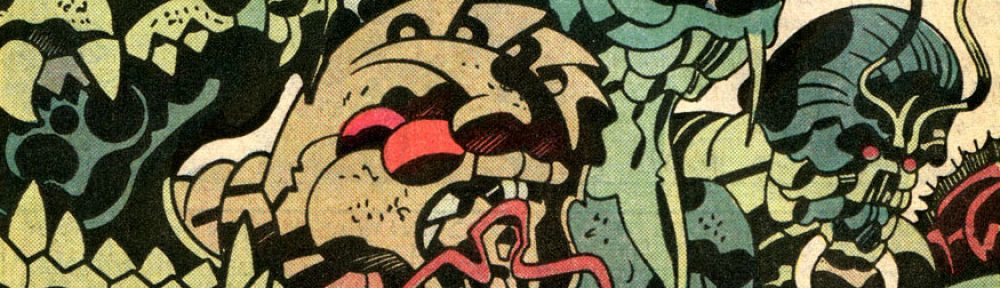
 The Wash was a vast area of mud, quicksand and dangerous tides. Although beautiful from a distance, especially during the summer when the sun sparkled in the morning mist, it was unquestionably Britain’s most inhospitable location.
But love blooms even in the most unlikely places. Just ask Gavin and Liz Royle. Back in 1975, the two young academics fell in love while on a treasure hunt in the treacherous marshland. They never found their hidden booty but they found each other.
They also found the Slime Beast, a reptilian-like swamp creature that slurped human viscera like Nissin Top Ramen. Yum! After a series of grisly murders (and lurid subplots), the gill-man was vanquished in a fiery showdown (see my review of The Slime Beast for more details). Gavin and Liz returned to London, got married, started a family and lived happily ever after. The end.
Now on their 40th wedding anniversary, the couple inexplicably returns to the Wash. Liz thinks it’ll be romantic. Gavin, on the other hand, thinks his wife is daft. Why couldn’t they spend a nice relaxing weekend in Cornwall or Devon or some other sunny vacation spot? Why did they have to return to a place where monsters dwell?
Naturally, things get messy right away. And stinky too. “An overpowering, suffocating smell assailed (Gavin’s) nostrils. Not human excrement or urine, something a thousand times worse. It was the scent of the Slime Beast, a fetid odour incorporating everything that was vile and evil, a putrescence unknown to mankind.”
Gavin knows immediately that another Slime Beast is on the prowl. In tow with a reluctant wildfowling guide, and armed with a satchel of ineffective weapons, he vows to slay the “slime-oozing Satan.” There’s no time for preparation or strategy, the novel is only 111-pages long. Conflict and resolution occur swiftly, and Gavin knows he’s got to hurry before the final chapter arrives.
Fans of the first Guy N. Smith adventure will undoubtedly be interested in this sequel. I definitely was. But honestly, there’s no space for a second (or third) Slime Beast novel on my bookshelf. One is enough. Despite a couple of delightfully horrid moments (and a funny bit about giant crabs), the author doesn’t have anything particularly new or substantive to say. The spawn is no different than the progenitor.
[Spawn of the Slime Beast / By Guy N. Smith / First Printing: June 2015 / ISBN: 9781907846878]
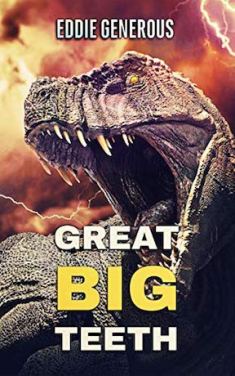 In 1977, a pregnant hippie on a nine-day bender fell down a hole and discovered her version of Pellucidar—a hollowed out, underground chamber filled with dinosaurs. It was an Edgar Rice Burroughs, Jules Verne and Mysterious Island nightmare. Said the author: “Jane Hartman was stuck in an anomaly that spanned several million years, possibly one hundred million years. Hell, maybe longer.”
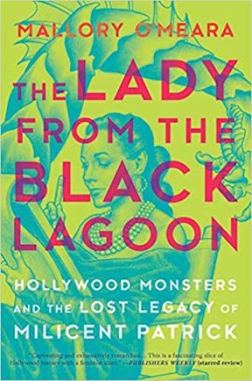 “Women have always been the most important part of monster movies,” says author Mallory O’Meara, “because women are the ones horror happens to. Women have to endure it, fight it and survive it.”
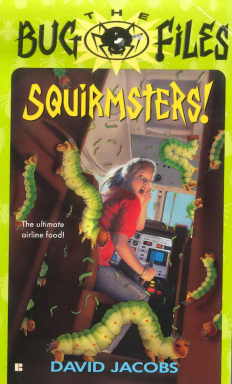 Do “nature run amok” novels qualify as monster novels? Is a coordinated attack of army ants as monstrous as a mob of abominable snowmen? I say “yes.” Rats, worms, spiders, ants, a plague of flies, a swarm of bees, a flock of seagulls—when Mother Nature gets mad, she has a long list of creepy-crawlies on speed dial to do her bidding.
 Witchblade was certainly a big part of the “bad girl” movement in comic books during the 90s. And author John DeChancie doesn’t back away from the sexy witch’s infamous eye-popping transformation in his prose adaptation from 2002.
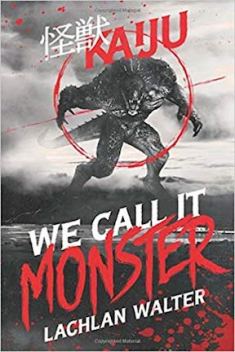 Kaiju novels are a lot of fun. In particular, I enjoy the crazy and extravagant descriptive language used by authors to construct their towering colossi. The books are rarely scary, but the earthshaking monsters are always a hoot.
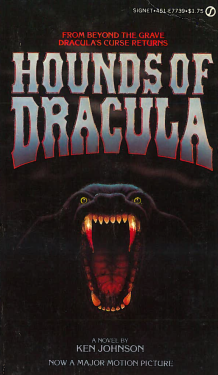 Michael Drake lived a typical and uneventful suburban life. He had a job, a wife, two young kids, a couple of dogs and a sexy neighbor he liked to flirt with. On weekends, he enjoyed camping and fishing.
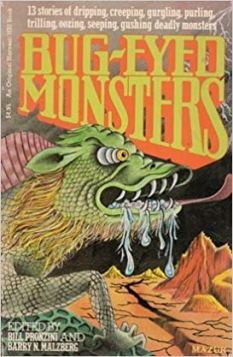 Bug-eyed monsters were popular in the early days of science fiction with their bulging eyes, groping tentacles and dripping ichor. Edgar Rice Burroughs and H.P. Lovecraft (among other writers) built entire careers on the endless confrontation between man and monster.
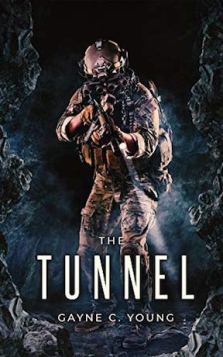 There’s a lot of bad stuff going on at the U.S.-Mexico border. Human smuggling, human trafficking, inhumane detention facilities and indefensible family separation policies are all horrible.
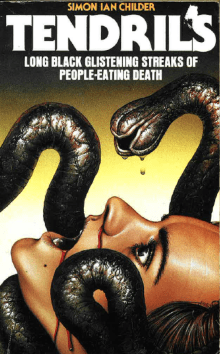 There’s nothing particularly funny about the worms in John Brosnan’s novel. They’re nasty and icky things that look like “a thick thread of dark jelly loosely packed within a transparent membrane.”
